
CPS TOYS B2B care and buyer guide
How to clean a bubble machine depends on the machine format, liquid path and power design. The safe starting point is to remove the power source, empty the solution and clean only the parts that the product instructions allow you to access.
This guide is for toy retailers, party and event suppliers, distributors, importers and private-label teams. It explains a practical cleaning sequence for samples and resale products, then shows how to check cleanability, packaging, maintenance instructions and destination-market documents before a wholesale order.
Short answer: how to clean a bubble machine
For most small bubble machines, the cleaning objective is simple: remove leftover solution before it dries into residue, keep liquid away from the motor and electrical housing, and store the product completely dry. The exact manual always controls because a handheld toy, a rotating-wand blower and a larger event machine may have different removable parts.
- Power down first: switch the machine off, unplug an adapter or USB cable and remove batteries when the product design requires it. Never refill or clean an energized machine.
- Empty the reservoir: pour unused bubble solution back into an approved container if the instructions permit, or dispose of it according to the product and local guidance. Do not leave solution standing in the tray during storage.
- Separate accessible parts: remove the tray, cap, wand, wheel or nozzle only when the manual identifies the part as removable. Do not force a sealed housing or pull wiring.
- Rinse liquid-contact parts: use clean water or the method specified by the manufacturer. Rinse away visible film without directing water into the fan, motor, switch, battery compartment or charging port.
- Wipe the mechanism: use a soft cloth, cotton swab or soft brush for accessible residue around the reservoir, wand, wheel and outlet. Do not use a sharp tool that can damage a seal or surface.
- Dry completely: allow the tray and removable parts to air dry, wipe accessible surfaces and keep the housing in a dry, ventilated place. Do not reassemble wet parts or seal a damp unit in its package.
- Inspect before storage: look for trapped liquid, blocked openings, loose parts, damaged seals, corrosion, unusual odor, frayed cable or a battery compartment that is not dry.
- Record the care instruction: keep the approved method with the sample and package artwork. The consumer-facing instruction should match the final SKU, accessories and destination-market language.
Do not add household detergent, bleach, alcohol, oil or another chemical unless the exact product instructions allow it. Do not run water through the machine or use compressed air on a fan unless the manufacturer has provided a procedure for that model. A generic cleaning trick is not a substitute for the product manual.
Before you clean: identify the bubble machine format
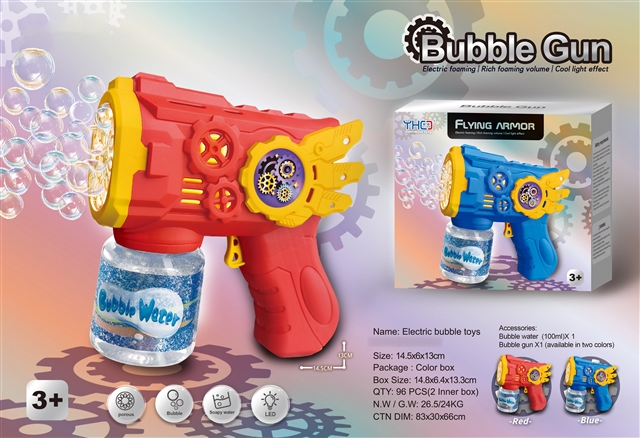
Searches for how to clean bubble machine often combine several product types. A supplier, retailer or event operator should identify the construction before choosing a care method. The bubble gun versus bubble machine comparison can help when the shortlist includes handheld and hands-free products.
| Format | Main cleaning area | Do not assume |
|---|---|---|
| Handheld bubble gun | Reservoir, nozzle, trigger area, battery compartment and accessible solution path. | Because it is portable, the housing is waterproof or the battery area can be rinsed. |
| Automatic rotating-wand machine | Fluid tray, wand wheel, fan opening, outer housing and power connection. | Every wand or wheel can be removed or that water can be poured through the fan. |
| Multi-hole or multi-wand machine | Openings, film-forming surfaces, tray edges, blocked holes and residue around the outlet. | One clean opening proves that all openings are draining and producing evenly. |
| Large blower or trolley-style item | Tank or tray, transport handles, wheels, outlet, cable and storage position. | Commercial event-machine care instructions apply to a children's toy format. |
| Camera, vehicle or light/sound novelty item | Liquid-contact parts plus switches, battery door, sound/light module and decorative openings. | A themed shell has the same liquid or electrical protection as another model. |
These are buyer checks, not a claim that every format is available from CPS TOYS. Send the product link or reference image and ask sales to confirm the exact construction, removable parts and care route for the current item.
Step-by-step bubble machine cleaning instructions
1. Remove power before touching liquid
Disconnect the adapter, cable or battery according to the product design before opening the reservoir. Keep the power source away from the work area while the machine is wet. For a rechargeable model, follow the manual for charging-port protection and do not charge until the port and housing are dry.
2. Empty and inspect the reservoir
Check whether the reservoir is a removable tray, bottle, cup, tank or molded part. Empty it without tilting liquid into vents, switches or the motor housing. Look for dried film around the cap, seams and corners because residue in these areas can restrict the liquid path or change the amount of solution reaching the wand or wheel.
3. Rinse only the approved liquid-contact parts
Use the care method supplied for the exact product. If clean water is allowed, rinse the tray, bottle, wand or wheel and remove visible solution. Do not assume that the fan, motor, circuit board, speaker, LED module or battery compartment is washable. When the part is sealed, wipe the outside instead of forcing water into it.
4. Remove residue without damaging surfaces
A soft cloth or soft brush is normally more appropriate than a metal tool. Avoid scraping printed surfaces, cutting a seal or pushing a swab into a narrow opening where fibers can remain. A buyer testing a sample should photograph the mechanism before disassembly and keep the parts together with the sample record.
5. Dry, reassemble and check the next use
Air-dry the reservoir and accessible parts, wipe the exterior and reassemble only when no visible liquid remains. Store the unit in a dry location, then check the switch, battery compartment, output and package before the next demonstration. If the machine smells unusual, shows corrosion, behaves inconsistently or has liquid inside the housing, stop the test and ask the supplier for instructions.
The practical answer to how to clean an automatic bubble machine is therefore not to flush the whole product. It is to control liquid, clean the designed fluid path, protect powered components and document the method that the final buyer can actually follow.
Bubble machine maintenance for retailers and event suppliers
Cleaning after one demonstration is different from maintaining a product that is used every weekend or sold through a distributor. A maintenance plan should state who empties the reservoir, where the machine dries, how solution is labeled and when a damaged unit is removed from service.
- After every use: empty leftover solution, wipe splashes, inspect the outlet and keep the unit open or positioned for drying as the instructions allow.
- Before the next event: check power, switch, cable, battery door, tray, wand or wheel, output and package accessories. Do not use a machine with visible damage or liquid in the electrical housing.
- After a solution change: clean the liquid-contact parts and record the new solution reference. Different formulas may leave different residue or may not be approved for the same machine.
- Before long storage: empty, rinse when permitted, dry fully, protect the outlet and store the unit with batteries removed when the product instructions recommend it.
- For resale: include the care steps, warnings, age guidance and power instructions in the language and format required for the destination market.
For a party supplier, the cost of a failed machine includes transport, staff time, replacement solution and a disrupted event. For a toy retailer, unclear care instructions can become a return or customer-service issue. Ask the bubble machine supplier for a practical care sheet before approving a large assortment.
How to evaluate cleanability in a wholesale sample
Buyers should evaluate maintenance during sample approval, not after the first container arrives. Use the same solution, power source and cleaning route that the supplier describes, then document what happens after repeated cycles.
- Fill and run: record the solution, fill level, battery or adapter, operating period and the position of the machine.
- Empty: check whether the remaining liquid drains cleanly or becomes trapped in a corner, channel, wick, wheel or accessory.
- Clean: follow the written instruction. Record which parts are removable, which surfaces can be rinsed and which areas must only be wiped.
- Dry: note how long accessible parts need to dry and whether the package provides a safe storage position.
- Repeat: run at least the number of cycles appropriate to the intended sales or event use and look for residue, blocked openings, odor, corrosion or output change.
- Review the documents: compare the care instruction with the sample, accessories, age grade, warnings and package artwork. Any mismatch should be resolved before approval.
Do not describe a sample as mold-proof, antimicrobial, non-toxic or waterproof without evidence that supports the exact claim. “Easy to clean” is useful only when the buyer can explain the actual steps and limitations.
Safety and market documents for bubble machines with liquid or batteries
Cleaning questions overlap with toy safety because a bubble machine can contain a liquid path, accessible materials, a motor, a battery compartment and printed instructions. The applicable requirements depend on the final product, age grade and destination market.
For the United States, the CPSC toy safety FAQ explains that toys intended for children 12 and under require third-party testing and a Children's Product Certificate for the applicable children's product safety rules. The CPSC business guidance also identifies cleanliness of liquids and battery-operated toys as product-specific areas that may need review. The importer or domestic manufacturer must identify the requirements that apply to the exact product.
For the European Union, the European Commission toy safety guidance describes physical, mechanical, chemical, electrical and hygiene risks, and its market-placement information covers safety assessment, technical documentation, conformity assessment, CE marking, warnings and traceability. Use these official references as starting points and confirm the final route with the responsible importer, laboratory and supplier.
- Product map: list the age grade, batteries, charger or adapter, liquid, material, accessories and package before requesting documents.
- Sample match: check the item number, model revision, color, material, function and age guidance against the tested or documented configuration.
- Instruction match: ensure refill, cleaning, drying, battery, storage and warning language describes the final product rather than a similar model.
- Traceability: keep the approved sample, artwork version, test evidence, certificate references and production information together for the order record.
The CPS TOYS certificate trust center is a public starting point for a compliance conversation. It does not replace item-level evidence, and a certificate for one bubble toy should not automatically be reused for another machine or market.
Cleaning instructions, packaging and wholesale MOQ
A care instruction is part of the product package. Buyers should review it at the same time as the retail box, barcode, warning panel, case pack and shipping carton. Packaging that traps a damp machine can undermine an otherwise reasonable care method.
| Area | Confirm before order | Buyer decision |
|---|---|---|
| Retail unit | Machine contents, solution or battery inclusion, care sheet, warnings, language, barcode and package dimensions. | Can a consumer understand use, cleaning, drying and storage without staff explanation? |
| Inner pack | Units per inner, color mix, accessory count, protection and whether pieces can be replenished separately. | Can a distributor pick and replenish the assortment without breaking the approved set? |
| Master carton | Case pack, carton dimensions, gross and net weight, CBM, carton marks and loading plan. | Can freight, storage and receiving be planned from written values? |
| MOQ | Standard item minimum, mixed colors, logo or artwork minimum, packaging minimum and new-mold minimum. | Which change increases the minimum, and is it needed for the target channel? |
| Documents | Market, age grade, material, battery or liquid details, test reports, certificates and instructions. | Does the evidence match the exact SKU and final package? |
Case pack, carton dimensions, gross weight, CBM, MOQ and sample timing are confirm by SKU. Do not use a category average or a marketplace listing as the commercial specification.
Choosing a bubble machine supplier for resale
A buyer searching for a bubble machine supplier may be comparing a toy factory, an event-equipment supplier and a trading company. The supplier should understand the intended channel and answer the same product, care, packing and document questions in writing.
- Toy retailer: prioritize clear age guidance, package care instructions, shelf protection, complete accessories and a repeatable approved sample.
- Party or event supplier: prioritize draining, transport, setup, solution handling, power instructions, maintenance time and replacement planning.
- Distributor: request barcode, case pack, carton data, language versions, care insert, documents and assortment rules.
- Gift or novelty shop: check theme, visual presentation, package clarity, complete set contents and the amount of staff support required.
- Private-label brand: define logo, color, package, warning, cleaning copy, artwork approval, sample stages and change control.
The CPS TOYS bulk bubble toys category can help with product discovery. For actual procurement, connect the shortlisted product to a current item number, sample and written quotation rather than treating a category page as a complete specification.
What to include in a bubble machine care and wholesale RFQ
Send a complete brief so the supplier can confirm whether the proposed machine, cleaning route and package fit the order:
- Product link, item number, reference image or preferred bubble format
- Target country, age grade, sales channel and intended use environment
- Target quantity, repeat-order expectation and preferred commercial unit
- Power source, battery or charging requirement, solution and accessory inclusion
- Reservoir, wand, wheel, nozzle, drainage and removable-part questions
- Cleaning, drying, storage and refill instructions needed in the package
- Retail package, logo, barcode, warning, language and artwork requirements
- Sample quantity, sample deadline, approval standard and inspection request
- Case pack, carton dimensions, gross or net weight, CBM and carton marks
- Required market documents and the date by which the quotation is needed
Use the CPS TOYS contact page to send the RFQ. If you need to compare physical formats first, review the automatic 10-hole bubble blower trolley, double-barrel electric bubble gun, bubble camera toy and lighted electric bubble camera pages, then ask sales to confirm the current model and care information.
Related CPS TOYS sourcing routes
- Browse wholesale bubble toys and machines for category-level planning.
- Compare bubble guns and bubble machines when the use case is not yet fixed.
- Review the wholesale toy catalog when the machine is part of a broader outdoor assortment.
- Read the bulk toy sourcing guide for supplier and shipment questions.
- Check the certificate trust center before requesting item-level evidence.
- Discuss OEM and custom-label requirements for logo, color, package or care-copy changes.
- Request a focused bubble machine RFQ with the cleaning, market and packaging brief.
How to clean a bubble machine FAQ
How do you clean a bubble machine after using bubble solution?
Switch off and disconnect the power source, empty the reservoir, rinse the liquid-contact parts as the product instructions allow, wipe accessible surfaces, dry everything fully and store the machine with the reservoir empty.
How do you clean an automatic bubble machine without damaging the motor?
Do not pour water into the motor or electrical housing. Remove the power source first, clean the reservoir, tray, wands, wheel or nozzle with the approved method, and follow the exact manual for any rinse cycle or removable part.
How often should a bubble machine be cleaned?
Empty and wipe the machine after each use, then perform a deeper clean when residue appears, before long storage, after a change of bubble solution or at the interval stated in the product instructions. Confirm the schedule by SKU.
What should buyers check in a bubble machine cleaning sample?
Check whether the reservoir drains, the liquid path is accessible, the wands or wheel can be cleaned, the housing keeps liquid away from electrical parts, the instructions are clear and output remains consistent after repeated clean-and-dry cycles.
Can CPS TOYS provide cleaning and packaging instructions for wholesale bubble machines?
CPS TOYS can review the requested item and package scope. Cleaning instructions, solution details, warnings, accessories, MOQ and market documents must be confirmed for the exact SKU and destination market.
What should I include in a bubble machine care and wholesale RFQ?
Include the item reference, target market, use case, quantity, power design, solution or accessory requirements, package language, cleaning instructions, sample request and the documents needed for the intended sales channel.
Sources and scope
This page provides buyer and care context, not a universal machine manual, product certificate, legal opinion or performance guarantee. Follow the instructions supplied with the exact product. For market-specific requirements, consult the U.S. CPSC toy safety FAQ and the European Commission toy safety guidance, then confirm the final product and destination requirements with the responsible importer, laboratory and supplier.
Guida all'acquisto B2B di CPS TOYS
Controlli utili prima di ordinare giocattoli
Come pulire una macchina per le bolle | GIOCATTOLI CPS
Questa pagina localizzata aiuta importatori, distributori, rivenditori e team e-commerce a valutare un programma di giocattoli dalla Cina in base allo SKU e al mercato di destinazione. Risposta per acquirenti professionali.
CPS TOYS B2B guida alla cura e all'acquisto La modalità di pulizia di una macchina per bolle dipende dal formato della macchina, dal percorso del liquido e dalla progettazione dell'alimentazione. Il punto di partenza sicuro è rimuovere la fonte di alimentazione, svuotare la soluzione e pulire solo le parti a cui le istruzioni del prodotto consentono di accedere. Questa guida è rivolta a rivenditori di giocattoli, fornitori di feste ed eventi, distributori, importatori e team di marchi del distributore. Spiega una pratica sequenza di pulizia per campioni e prodotti di rivendita, quindi mostra come controllare la pulibilità, l'imballaggio, le istruzioni di manutenzione e i documenti del mercato di destinazione prima di un ordine all'ingrosso. Risposta breve: come pulire una macchina per le bolle Per la maggior parte delle macchine per bolle di piccole dimensioni, l'obiettivo della pulizia è semplice: rimuovere la soluzione rimanente prima che si asciughi trasformandosi in residui, tenere il liquido lontano dal motore e dai componenti elettrici.
Articolo, materiale, fascia d'eta, funzione, confezione, quantita per cartone e documenti devono corrispondere allo SKU selezionato.
Per una quotazione utile invia URL o SKU, quantita, paese di destinazione, canale di vendita, confezione richiesta e finestra di consegna.
Per progetti OEM o private label si verificano logo, colori, avvertenze, lingua, campioni, stampo, MOQ e approvazioni.
I documenti di sicurezza e di esportazione vengono confermati per articolo, funzione, eta e mercato; EN71, ASTM F963, CPSIA, CE o EN62115 non valgono automaticamente per tutto il catalogo.
Per pianificare la spedizione servono case pack, dimensioni del cartone, CBM, peso, approvazione del campione e condizioni FOB o EXW.
FAQ
- Quali dati servono a CPS TOYS per un'offerta?
- URL o SKU, quantita, paese di destinazione, confezione e documenti richiesti.
- I documenti sono uguali per tutti gli articoli?
- No. Devono corrispondere all'articolo e al mercato di destinazione.
Vedi i prodotti | Verifica i certificati | Invia una richiesta B2B | CPS TOYS
Guida all'acquisto B2B di CPS TOYS
Controlli utili per acquistare giocattoli all'ingrosso
Come pulire una macchina per le bolle
Questa pagina aiuta importatori, distributori, rivenditori e team e-commerce a valutare giocattoli acquistati dalla Cina. Prima dell'ordine è utile verificare SKU, materiale, fascia d'eta, funzione, confezione, quantita minima e mercato di destinazione, non solo le fotografie.
Una richiesta di preventivo completa indica il prodotto o l'URL, la quantita prevista, il paese di destinazione, il canale di vendita e la data desiderata. CPS TOYS puo cosi confermare per articolo il case pack, le dimensioni del cartone, il CBM, il costo del campione e le condizioni FOB o EXW.
Per progetti OEM o private label si valutano insieme logo, colori, confezione espositiva, avvertenze e lingua dell'imballaggio. La fattibilita dipende dall'articolo, dalla quantita, dallo stampo e dai file di stampa; un'approvazione non vale automaticamente per tutto il catalogo.
I documenti di sicurezza devono corrispondere allo SKU, alla funzione, all'eta e al mercato di destinazione. L'acquirente deve indicare se richiede EN71, ASTM F963, CPSIA, CE, EN62115 o altri requisiti e chiedere la versione aggiornata prima di confermare l'ordine.
La pianificazione logistica considera anche dimensioni della confezione, peso lordo e netto, tempi di produzione, approvazione del campione e modalita di trasporto. Definire questi dati in anticipo riduce modifiche tardive a etichette, cartoni e documenti di esportazione.
CPS TOYS risponde alle richieste B2B sulla base degli articoli effettivamente selezionati. Prezzi, documenti, disponibilita e tempi vengono confermati dopo la verifica di quantita, confezione e mercato di destinazione.
Prima di approvare un campione, il compratore dovrebbe confrontare colore, finitura, componenti, funzione, istruzioni e presentazione con la specifica concordata. Questo passaggio registra gli aggiustamenti e identifica la versione destinata alla produzione e al controllo qualita.
Per stimare il costo totale occorre collegare prezzo unitario, case pack, dimensioni, CBM, peso, porto di partenza e modalita di trasporto. CPS TOYS fornisce questi dati per articolo, cosi l'importatore puo pianificare stoccaggio, distribuzione e riordino senza confondere prodotti diversi.
FAQ
- Quali dati servono a CPS TOYS per un preventivo?
- Invia URL o SKU, quantita, paese di destinazione, confezione, documenti richiesti e data di consegna.
- La confezione puo essere personalizzata?
- Logo, colori, scatola e avvertenze vengono valutati per l'articolo e la quantita selezionati.
- I documenti sono uguali per tutti i giocattoli?
- No. Ogni documento deve corrispondere allo SKU, alla funzione, all'eta e al mercato di destinazione.
- Come si confermano MOQ e tempi?
- MOQ e tempi vengono confermati in base all'articolo, alla confezione, alla quantita e al calendario produttivo.
Vedi i prodotti | Verifica i certificati | Invia una richiesta B2B | Strumenti per acquirenti