
Vet Toy Factories by Process Signals, Not Directory Listings
Sep 30, 2026Updated Sep 30, 2026By CPS TOYS B2B Sourcing Editor
The most expensive sourcing mistake in 2026 is treating a Chinese toy directory listing as proof of factory capability—then discovering at the port that the production tool, the QC flow, and the packaging line were never the same thing as the showroom sample. To vet a toy factory properly, ask for process signals: tool number and revision on every sample, a written change-notification rule, a documented QC release step, and a packaging spec tied to the actual lot. Those four artifacts predict bulk-order performance far better than a business license, an employee count, or a self-declared CE claim.
This page covers how Chenghai and Shantou's toy cluster actually works, what each process signal means for a wholesale order, how small-batch and OEM inquiries should be structured, and how to verify audits, certifications, and capacity before you wire a deposit.
Key Takeaways
- A directory listing confirms legal identity and location—not process control. Chenghai trading firms and factories look nearly identical online; the factory gate, the mould plate, and the QC shelf are what separate them.
- Demand for viral fidgets and plushies has compressed sourcing timelines, but the riskiest SKUs are the ones with unverified safety certifications and unclear IP status; treat certification as a per-lot question, not a supplier-level badge.
- Ask every candidate factory for its change-notification rule in writing. A supplier should notify the buyer before changing resin, colourant, mould, process, component, sub-supplier, or packaging that can affect the released toy.
- Minimum order quantity is a negotiation lever, not a fixed gate. MOQ posture varies by material, tooling ownership, and whether the factory already runs that mould.
- Sample approval must be physical. A sealed golden sample on the QC shelf ends colour disputes that email threads never resolve.
What MOQ and pricing bands should buyers expect for 2026 novelty toys?
MOQ for novelty toys depends far more on whether the factory already owns the tooling than on the factory's size. For soft sensory and squishy formats, factory MOQs in the Chenghai cluster commonly sit in the low hundreds of units for a standard mould, while simple plastic assemblies can start lower when the tool already exists. Custom packaging pushes MOQ up because printing and die-cut runs have their own minimums. Treat any quoted MOQ as conditional on tooling ownership and packaging complexity, and confirm it in writing before sampling.
On price, published market ranges for the viral novelty segment give a useful sanity band rather than a quote: tactile fidgets in the TPR squishy family have been reported at roughly $0.24–$0.44 per unit wholesale, meme plushies at roughly $1.66–$8.56 depending on size and detail, and interactive novelty or blind-bag formats at roughly $2.00–$15.00 retail. Any factory quoting far below the low end on a certified product is either skipping a test or misreading the spec. Ask which market the quote covers and which test file the price includes.
Manufacturers at a Glance: What Directory Listings Show vs. What to Verify
| Chenghai trading firm (individual business, ~5 staff, small-scale taxpayer) | Specialty | MOQ | Origin | OEM/ODM | Certifications | Specialty: aggregated toy products from multiple factories; MOQ: varies by spec; Origin: Chenghai District, Shantou, Guangdong; OEM/ODM: OEM follow-through and import/export agency claimed, unverified; Certifications: not stated—ask for per-lot test reports |
|---|---|
| Chenghai craft toy factory (sole proprietorship, ~50 staff, founded 2010) | Specialty | MOQ | Origin | OEM/ODM | Certifications | Specialty: PVC/PU stuffed balls, inflatable balls, plush balls, water balls, children's boxing gloves and sandbags; MOQ: varies by spec; Origin: Fengxiang Street, Chenghai, Shantou; OEM/ODM: OEM and ODM stated in listing, process evidence not shown; Certifications: not stated—verify material and mechanical test files |
| Chenghai plastic toy factory (EVA water guns, simulated transport vehicles) | Specialty | MOQ | Origin | OEM/ODM | Certifications | Specialty: EVA water guns, simulated transport vehicles, pump-action water guns; MOQ: varies by spec; Origin: Waipu Industrial Zone, Chenghai, Shantou; OEM/ODM: not stated—ask directly; Certifications: CE, ASTM, FDA claimed in listing; request certificate numbers and test reports |
| Chenghai toy trading company (registered capital RMB 100,000, small-scale taxpayer) | Specialty | MOQ | Origin | OEM/ODM | Certifications | Specialty: remote-control, inertia, pull-back, wind-up, plastic educational, rattle, baby, bubble toys; MOQ: varies by spec; Origin: Chenghai District, Shantou; OEM/ODM: OEM follow-through claimed, production may sit with third parties; Certifications: not evidenced—ask who owns the production line |
| Chenghai plastics and electronics toy factory (OEM/ODM, in-house mould making) | Specialty | MOQ | Origin | OEM/ODM | Certifications | Specialty: plastic, electric and remote-control toys with in-house design, mould making, injection, painting, assembly and PCB; MOQ: varies by spec; Origin: Chenghai District, Shantou; OEM/ODM: OEM and ODM stated; Certifications: ask for the file covering the exact market and lot |
Why Chenghai and Shantou dominate toy sourcing—and where Yiwu fits
Chenghai, a district inside Shantou in eastern Guangdong, is widely described as China's toy and gift capital, and the cluster effect is the real sourcing advantage. Mould makers, injection moulders, painting shops, electronics assemblers, plush sewers, and packaging printers sit within a short drive of each other. That density shortens tooling lead times and makes small-batch runs viable in a way that a single inland factory cannot match. It also means a trading firm can look like a factory online while the actual press work happens elsewhere in the same district—so location alone proves nothing.
Shantou more broadly adds port access and export logistics, which matters for seasonal toy launches where the vessel date is the real deadline. Yiwu, by contrast, is a general merchandise and small-commodity hub: excellent for mixed-container sourcing, novelty accessories, and low-complexity plastic items, but thinner for complex toy tooling, electronics assembly, and per-lot toy compliance files. Choose Chenghai or Shantou when the product needs a mould, a test file, and a production line you can visit; choose Yiwu when you are assembling a mixed catalogue and the toy is a simple, non-electronic item.
How do you verify a factory audit and production capacity before a bulk order?
Do not accept a certificate image as an audit. Ask for the audit report itself, the audit firm, the date, the scope, and whether the audit covered the specific production line your order will run on. Then verify capacity with three numbers the factory should be able to produce from its own records: presses or lines assigned to your product type, monthly output for that product family, and current order backlog in weeks. A factory that cannot answer these from records is either a trading firm or disorganised—both are risks for a seasonal launch.
Physical verification still beats paperwork. A live video walkthrough of the mould plate, the QC shelf, and the packaging line takes fifteen minutes and exposes more than a PDF. During that walkthrough, ask to see the revision card attached to the tool. A sample labelled with a tool number and revision tells you the factory tracks engineering changes; a sample with no label tells you it does not.
Which process signals predict real OEM readiness?
OEM readiness shows up in four places, and none of them is the sales deck. First, change control: a supplier should notify the buyer before changing resin, colourant, mould, process, component, sub-supplier, or packaging that can affect the released toy. Second, material review: changing a soft-PVC compound, plasticiser package, or flexible coating can change phthalate compliance and requires a new material review—so ask how the factory flags that. Third, record retention: supplier records for materials, production, inspection, change control, and testing should be kept long enough to support the buyer's market and recall obligations. Fourth, assembly-level QC: a component that passes incoming inspection can still fail as a finished assembly, so the inspection plan must test the assembled unit, not just the parts.
For custom packaging and branding, request the packaging spec sheet, the dieline, the print method, and the colour reference before approving artwork. Ask who owns the tool and the plate, and what happens to them if the relationship ends. Those questions separate an OEM partner from a middleman.
Can a China toy supplier handle small-batch seasonal launches?
Yes, if the mould already exists and the packaging is not custom. Small-batch runs in the Chenghai cluster are realistic when the factory is running that tool for another buyer, because setup cost is shared. Custom tooling or custom packaging resets the economics and pushes both MOQ and lead time up. For a seasonal launch, the binding constraint is rarely the mould—it is the packaging print run and the vessel booking.
Peak season changes are the quiet killer. A verbal colour change requested in September has missed more vessels than steel problems ever have, because every change consumes press time that was already scheduled. Ask the factory to write the freeze date, the change-over hours, and which job is on the press before you confirm a ship date. A production lead time quoted without peak-season notes is fiction. For a buyer running a 2026 novelty launch, build the calendar backwards from the vessel, not forwards from the order.
What should an OEM inquiry include for custom branding?
Send the factory a package, not a question. Include the target market and the applicable standard you need the file to cover, the product spec with material and colour references, the packaging format with dieline and print method, the tooling ownership position, the expected annual volume, and the ship window. Ask the factory to return a sample plan with tool number and revision, a change-notification rule, an inspection plan with release criteria, and a document list for the compliance file. If the factory cannot return those four items, the OEM program is not ready.
One caution on certifications: a certificate that does not match the lot is not paperwork. UKCA and a VOC file on an electric bubble machine are different documents, and a single certificate cannot cover both. Map market, lot, and file before production, and require the test file to be re-issued when the material, mould, or sub-supplier changes.
A worked example of reading a process signal
A US importer once treated a bubble-gun camera as two spare parts: shutter in one bag, solution tank in another. Incoming QC passed each piece. On the floor, the tank leaked into the shutter when a child tilted the camera to take a photo. The fix was to inspect them as one assembly—fill, tilt 45 degrees, invert for thirty seconds, then fire the shutter. Units that passed only the dry click were not released. The lesson generalises: when a product has two interacting components, the inspection plan must test the assembly, not the components.
That is the kind of signal a directory listing never shows. When you evaluate any factory in Chenghai, Shantou, or Yiwu, ask what assembly-level failure the factory has seen in the last year and how the inspection plan changed as a result. A factory with a specific story and a revised plan is a factory with a working QC loop.
FAQ: Vetting Chinese Toy Factories in 2026
How can I verify a supplier's factory audit and production capacity before placing a bulk order for wholesale toys from China?
Request the audit report itself—firm, date, scope, and the specific production line—not a certificate image. Then verify capacity from the factory's own records: lines assigned to your product type, monthly output for that family, and current backlog in weeks. A live video walkthrough of the mould plate, QC shelf, and packaging line confirms whether the records match the floor.
Can a China toy supplier reliably handle small-batch production runs for seasonal toy launches, and what is the typical turnaround time?
Yes, when the mould already exists and packaging is not custom—setup cost is shared if the factory runs that tool for another buyer. Turnaround depends on tooling, packaging print runs, and vessel booking, so ask for the freeze date and change-over hours rather than a single lead-time number. Custom tooling or custom packaging resets both MOQ and timeline.
If I want custom packaging and branding on wholesale toys, what information should I request from the supplier during the OEM inquiry?
Ask for the packaging spec sheet, dieline, print method, colour reference, and who owns the tool and plate. Also request a sample plan with tool number and revision, a written change-notification rule, an inspection plan with release criteria, and a document list for the compliance file. If those four items do not come back, the OEM program is not ready.
Can a supplier offer OEM customization for bulk toys, and what is the minimum order quantity for custom packaging and product design?
OEM customization is widely offered in the Chenghai cluster, but MOQ is conditional: it depends on tooling ownership, material, and packaging run length, so no single number applies. Confirm MOQ in writing against the specific tool and packaging spec before sampling. Custom product design adds tooling cost and a longer approval cycle on top of the packaging MOQ.
Can suppliers offer OEM customization for summer water toys wholesale, such as custom colors, logos, or packaging, and what are the setup fees?
Yes—colour, logo, and packaging customization are standard OEM requests for EVA and pump-action water toys, which are a listed specialty of some Chenghai factories. Setup fees depend on whether new tooling or new print plates are required, so ask for a line-item quote separating tooling, plate, and unit cost. Verify any CE or ASTM claim with certificate numbers and test reports covering the exact lot.
How do I handle certification and IP risk for viral 2026 novelty toys like fidgets and plushies?
Treat certification as a per-lot question and IP as a legal question, not a supplier promise. Ask which test file covers which market and lot, and require a new material review when the soft-PVC compound, plasticiser package, or flexible coating changes. For character-based plushies, confirm licensing status in writing before mass production; the trend segment has short lifecycles and unclear licensing on many designs.
What is the biggest red flag in a Chenghai toy factory directory listing?
A listing that gives legal identity and product tags but no process evidence—no tool numbers, no QC release criteria, no change-notification rule, no lot-level test files. Small-scale taxpayer status and undisclosed registered capital are verification points, not automatic disqualifiers. The red flag is a supplier that cannot answer process questions from records.
Sources
Related Products & Categories
Request a Quote or a Factory Audit
If you are sourcing toys from Chenghai or Shantou for a 2026 launch, send us your product spec, target market, packaging format, and ship window. We will return a sample plan with tool number and revision, a written change-notification rule, an inspection plan with release criteria, and the document list for your compliance file. Buyers who want to see the floor before committing can request a live walkthrough of the mould plate, QC shelf, and packaging line.
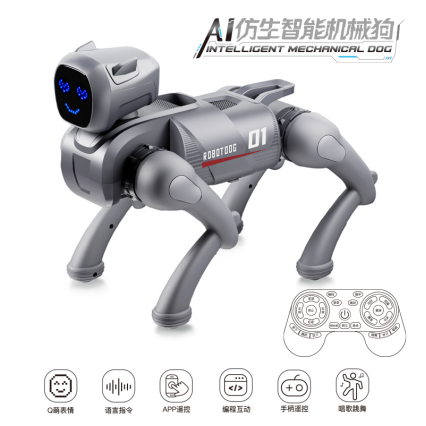
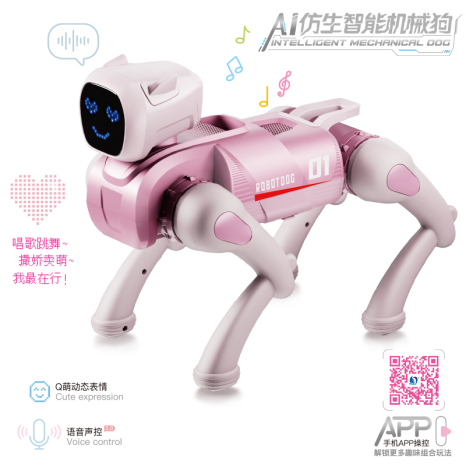
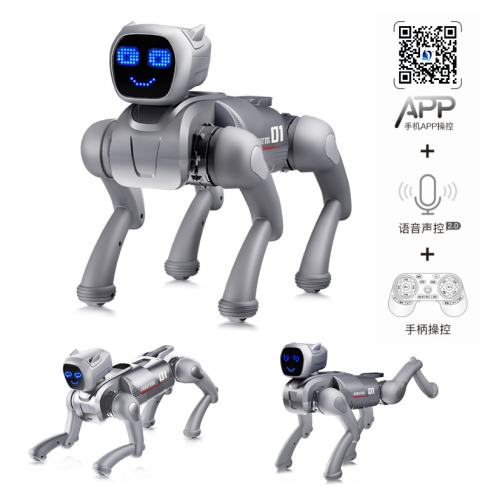
For reference on how a Chenghai OEM program handles small-batch novelty formats, see our Gateway to Time and Space and AI Smart Robot Dog (APP Edition) listings—both show the MOQ and spec structure we work with.