

Electric Water Gun QC: When to Hold or Release Assortments
Oct 25, 2026Updated Oct 25, 2026By CPS TOYS B2B Sourcing Editor
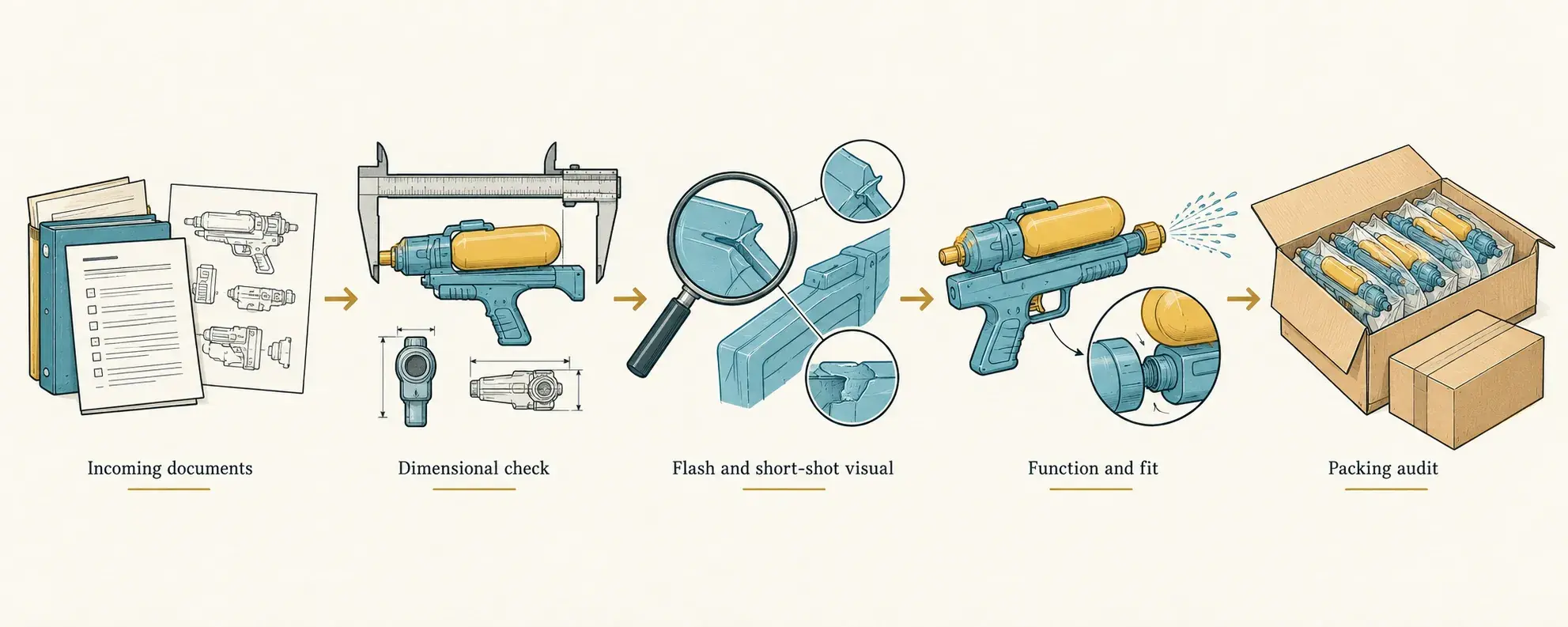
Release an electric water gun assortment only after the production lot matches the approved specification, its model mix reconciles with packing records, and inspection findings are closed with recheck evidence. Ask for traceable photos, unit-level functional results and a written release decision—not a folder of attractive product shots. For mixed summer, pool and outdoor assortments, inspect each distinct construction and feature set; a passing basic model does not establish that an LED version or a different battery configuration also passes.
Which records should be fixed before bulk inspection?
Bulk inspection should use a revision-controlled specification, approved reference sample, purchase order and packing requirements as its comparison set.
First sample approval happens earlier: compare the development sample with the agreed specification, resolve deviations, and then identify the approved reference with its date and revision. At pre-shipment inspection, the task is to compare production against that reference—not to approve a different product retrospectively.
Input: the approved reference and order documents. Action: reconcile model names, colors, included accessories, battery configuration, functions and packaging revisions. Record: the reference identifiers and any authorized changes in the inspection report. Failure signal: production follows a different revision or contains an unexplained substitution. Next decision: hold the affected configuration for technical and commercial review before continuing toward release.
How should QC differ between single-model and mixed assortments?
| Automatic Electric Water Gun 1000ml | Catalog packaging: color box. Recorded carton quantity: 24 units. |
|---|---|
| LED Light-Up Electric Water Gun | Catalog packaging: window box. Recorded carton quantity: 36 units. |
What coverage should the sampling plan specify?
Specify sampling coverage by configuration before inspection so a larger quantity of one model does not leave another model unchecked.
For the nominal 1,000 mL model, include a capacity measurement only if capacity is an agreed acceptance characteristic, and define the measurement method. For the LED model, add light operation to the functional record. Compare each packaging format with its own approved artwork and packing specification. The catalog carton quantities above are references to reconfirm, not proof of the actual shipment count or an order-multiple requirement.
Input: the order breakdown and buyer-approved sampling plan. Action: select finished units across accessible cartons and relevant configurations rather than accepting only factory-prepared demonstration pieces. Record: lot size, selection method, cartons opened, units inspected per configuration, and acceptance criteria. Failure signal: an ordered configuration is absent from the sample or the lot is not sufficiently accessible. Next decision: extend selection or reschedule the incomplete scope.
Sampling sizes, defect classifications and acceptance limits should be agreed commercial criteria. If an AQL-based plan is used, identify the actual plan and its acceptance rules; do not treat the letters “AQL” as a complete inspection instruction.
What should the inspector check on the production units?
Check identity, workmanship and operation against the approved references, recording results for each selected unit rather than reporting only an overall impression.
Identity and workmanship — Input: selected units, approved reference and specification. Action: compare construction, color, controls, accessible assembly, accessory contents and visible condition. Record: unit identifier, comparison result and defect location. Failure signal: cracked housing, an incorrectly fitted closure, missing accessories, visible cable damage or an unauthorized component change. Next decision: identify the affected configuration and require correction or technical review according to the agreed defect classification.
Water delivery — Input: the operating instructions and buyer-approved functional protocol. Action: fill and operate the toy as directed, checking trigger response, start/stop behavior, water delivery and unintended leakage. Measure range or capacity only where the specification defines a method and acceptance limit. Record: fill condition, power condition, operating sequence, measured results where applicable, and a linked video. Failure signal: failure to start, intermittent pumping, a sticking trigger or leakage outside the agreed condition. Next decision: segregate failures, investigate the cause and define the affected sorting or rework scope.
Battery and supplied charging items — Input: the approved component list, instructions and any qualified test instructions. Action: compare battery identification, connectors, compartment closure and supplied charging accessories with the approved configuration; conduct only authorized checks using appropriate equipment. Record: component identifiers, photographs and check results. Failure signal: a substituted battery, damaged insulation, swelling, smoke, unexpected heating or water entering the battery area during instructed operation. Next decision: stop operation, isolate the unit safely and obtain qualified technical review before further testing or release.
These are proposed purchasing checks, not a complete toy-safety test program. Do not improvise immersion, forced-pull or mains-appliance electrical tests for a battery-powered water gun.
How should carton counts and mixed-pack labels be checked?
Carton checks should reconcile the actual assortment with the purchase order and packing list, including the contents of selected mixed cartons.
Input: carton-level packing instructions, final packing list and approved label artwork. Action: count available cartons, open selected cartons, count their contents by model and color, scan applicable barcodes, and compare retail packs and shipping marks with the approved records. Record: carton identifiers, actual contents, scan results, label photographs and any count discrepancy.
Failure signals include the correct total quantity with the wrong model ratio, a carton label that does not match its contents, missing accessories, unreadable codes or damaged packaging. The next decision is to reconcile, sort or relabel the affected stock, then recheck both contents and labels. Correcting the spreadsheet alone does not correct a wrongly packed carton.
After water-function screening, drain and dry inspected units according to the agreed handling procedure before repacking. Record which units were opened, tested and repacked so wet test samples do not disappear back into saleable stock without review.
Which photos and records make findings traceable?
Useful inspection photos connect a finding to an identifiable unit, carton and comparison record; photographs alone do not establish a pass.
Request an overall lot view, readable carton marks, opened-carton contents, product and accessory layouts, relevant component identifiers, packaging artwork, and defect close-ups with a wider location view. For functional findings, link the video to the same unit identifier used in the result sheet.
A side-by-side reference photograph is helpful, but its absence alone does not invalidate an inspection. Separate photographs and recorded reference identifiers can still support a comparison. Request supplementary evidence when a specific finding cannot be understood or traced.
Require the final report to include inspected quantities, sampling details, photos, functional results, defect counts, acceptance-plan results where used, and an overall conclusion. These elements align with the report structure described in the Electrical Inspection Checklist.
Which safety documents belong in a separate review?
Review applicable safety documents separately from workmanship and functional screening because an on-site inspection cannot independently establish full regulatory compliance. The distinction between production-lot inspection and laboratory testing is also made in the Electrical Inspection Checklist.
For US-bound battery-operated toys, CPSC guidance identifies requirements concerning battery access during play, labeling, overheating and supplied chargers, with applicability depending on the battery's specifics. Use those subjects to frame the technical document review—not as properties that a hand check can certify. CPSC Toy Safety
Input: destination-specific documents, test reports and the production configuration. Action: compare the identified model, tested construction, battery and supplied charging items with production, and obtain qualified review of relevant changes. Record: document references, configuration comparisons and the review disposition. Failure signal: an unexplained mismatch or an unresolved question about coverage. Next decision: keep the documentation gate open until the issue is resolved.
A printed certification mark does not establish that the underlying certification is valid; verify supporting documents separately. Keep US and EU document reviews distinct rather than treating one destination's paperwork as interchangeable with another's. Electrical Inspection Checklist
What should trigger hold, correction and release?
Hold release when an agreed acceptance criterion fails, the assortment cannot be reconciled, or a safety-related finding remains unresolved; release only after the required correction and review are documented.
Hold — Identify the affected models, cartons and production scope. If the same suspect component is shared across models, investigate that shared scope rather than assuming the problem belongs only to the failed unit. Define shipment authorization and any payment milestone separately in the purchase terms.
Correct — Give each finding a defect identifier, responsible party, required action and completion date. Record whether the factory sorted, reworked, replaced or relabeled goods, along with the quantity affected. A promise to rework is not closure evidence.
Recheck — Compare corrected goods against the same acceptance criterion and verify that the corrective action did not create a new defect. Record the reinspection selection, results and supporting images. A photograph of one repaired unit does not demonstrate that an entire sorting exercise was completed.
Release — The authorized buyer signs a disposition identifying the exact lot and configurations released, the inspection report revision and closure records. Record any expressly accepted commercial deviation separately; do not use a commercial concession to declare a safety concern resolved.
What inspection request can a buyer send before shipment?
Send a lot-specific request that names the comparison records, required checks and release authority.
“Please confirm the finished and packed quantities by model and color, provide the final packing list, and identify the approved specification and reference-sample revisions. Submit the proposed sampling coverage for every distinct model, battery configuration and packaging format. The report must connect unit and carton identifiers to photos, functional results and defects. Keep destination-specific document review separate. For every failed criterion, provide the affected quantity, corrective action and recheck evidence. Shipment release requires our written approval of the identified lot.”
Sources
- Toy Safety Business Guidance | CPSC.gov Lock
- Electrical Appliance Inspection & Quality Control Checklist