

Bubble Machines & Guns: How to Plan Small Test Orders
Oct 24, 2026Updated Oct 24, 2026By CPS TOYS B2B Sourcing Editor
Use a small-batch test order for bubble machines and bubble guns to validate one display format and one handheld format before expanding the assortment. Shortlist by intended use, confirm each model’s minimum order separately from its carton quantity, approve a documented sample, and release the pilot only against agreed shipment checks. Reorder the formats that meet your functional, cost, and channel criteria—not simply the ones with the most lights or the lowest quoted unit price.
Keep three decisions separate: whether the sample works as intended, whether the shipment matches the approved specification, and whether the pilot earns a repeat purchase. A pass at one stage is not a pass at all three.
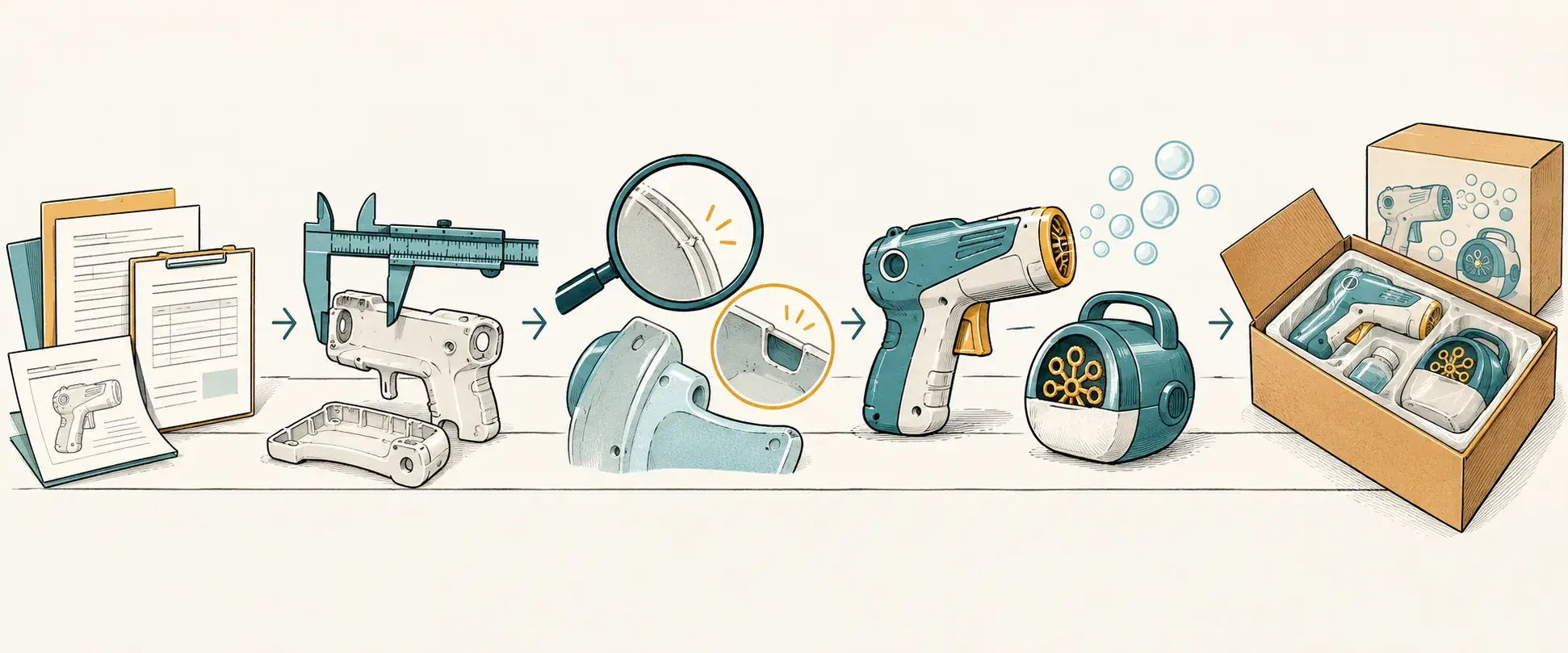
How should buyers search for a manageable first assortment?
Search by the job the bubble toy must perform, then narrow the shortlist to a display candidate and a handheld candidate.
For family-entertainment displays, search for a stage bubble machine or stationary bubble machine and check placement, refill access, operating instructions, and power requirements. For individual play or an impulse assortment, search for an electric bubble gun and examine grip, activation, liquid handling, and retail presentation.
Treat light, sound, and camera styling as separate features to evaluate—not evidence of better bubble output. If you compare a feature-heavy format with a simpler one, keep the solution and operating conditions consistent so that presentation does not obscure functional differences.
Capture the exact model, package version, included accessories, and intended destination market with each search result. A photograph alone is not a purchasing specification.
Which catalog options offer a smaller starting commitment?
| Stage bubble machine | Reference minimum: 12 units. Packing: 12 units per carton; color box. |
|---|---|
| Motorized bubble machine with sound and light | Reference minimum: 36 units. Packing: 36 units per carton; color box. |
| Electric bubble gun | Reference minimum: 96 units. Packing: 96 units per carton; color box. |
| Camera-style bubble gun with light and music | Reference minimum: 720 units. Packing: 72 units per carton; window box. |
What would a bounded display-and-handheld pilot look like?
A proposed pilot of 12 stage bubble machines and 96 electric bubble guns would test both use cases with 108 units, subject to current quotation and order acceptance.
Each proposed line matches its recorded minimum and one recorded carton quantity. This example does not establish that mixed-model orders, mixed cartons, or shared minimums are available. Obtain written acceptance of both lines and their packing arrangement.
Choose this pairing when the immediate question is whether to carry a display machine, a handheld gun, or both. Defer the camera-style gun if its recorded 720-unit minimum exceeds your test budget; its 72-unit carton is not a 72-unit minimum.
This is a format-screening pilot, not a controlled comparison of consumer demand: the two lines have unequal quantities and different intended uses. Evaluate their commercial results separately rather than comparing raw units sold.
What must the quotation resolve before samples are approved?
The quotation should identify exactly what will arrive and what the buyer must supply to operate it.
For every powered candidate, request the power source, battery type and quantity where applicable, whether batteries are included, and any charging equipment supplied. Do not infer these details from “electric” or “motorized” in a product name.
Confirm whether bubble solution is included, the supplied quantity if any, refill instructions, and the solution recommended for evaluation. Ask for the retail package contents and operating instructions as well as the toy itself.
Separate sample charges, merchandise, customization, packaging work, inspection, and freight in the quotation. Request the Incoterm with its named place, payment terms, quotation validity, and proposed production and dispatch dates. Have the freight forwarder or customs broker estimate destination charges rather than treating the merchandise subtotal as landed cost.
Keep the first pilot on a clearly defined configuration. If custom artwork or construction changes are necessary, identify the affected sample, packaging, and documentation before approval.
How should buyers approve bubble machine and bubble gun samples?
Approve samples against a repeatable operating record, not a demonstration video alone.
Record the sample identifier, solution used, fill level, power setup, operating position, and test duration. Choose the duration to reflect the intended demonstration or play session, and use the same conditions when comparing similar candidates.
Start-up and restart: follow the instructions from an empty setup, record the steps needed to produce bubbles, then stop and restart. Note failed starts, interruptions, or manual adjustments.
Liquid handling: fill, operate, refill, and empty as instructed. Photograph unexpected leakage and its location. Stop evaluation if liquid reaches electrical parts; do not continue merely to complete the log.
Use-case fit: assess stationary placement and refill access for the display machine. For the gun, check activation effort, grip, and handling in the instructed operating position. Evaluate light and sound functions separately from bubble generation.
After-use condition: follow the cleaning and storage instructions, then check the unit again. Retain an approved reference sample, photographs, and a written defect list for shipment comparison.
Set acceptance criteria before testing. Commercial sample checks do not replace applicable product-safety assessment, and a successful sample cannot predict the shipment’s defect or return rate.
Does a small test order qualify for US small-batch testing relief?
A small purchase order is not, by itself, a basis for claiming US Small Batch Manufacturer testing relief.
CPSC describes limited alternative compliance methods for applicable Group B requirements under its Small Batch Manufacturer program; Group A requirements still require third-party testing. If acceptable alternatives for Group B are unavailable, third-party testing at a CPSC-accepted laboratory remains necessary. Do not assume a bubble machine or bubble gun belongs entirely in either group. CPSC Small Batch FAQ
Small Batch Manufacturers must still comply with applicable underlying children’s product safety rules and issue a Children’s Product Certificate. A smaller order does not remove those obligations. CPSC Small Batch FAQ
Before shipment, have the responsible compliance reviewer match the intended market, age classification, tested construction, accessories, and supplied solution to the relevant documentation. Treat this as a separate approval from the operational sample check.
What should be checked before the pilot ships?
Release the pilot only after the shipment configuration has been reconciled with the approved sample and purchase order.
Verify model quantities, retail packaging, instructions, accessories, power configuration, and solution inclusion against the agreed specification. Confirm carton counts, shipping marks, dimensions, and weights from the actual packing arrangement.
Agree on the inspection sample selection and defect definitions before inspection. Select units across the shipment rather than accepting only demonstration units chosen in advance, and compare their operation with the retained reference sample.
Resolve substitutions before release. A different motor, liquid container, battery arrangement, material, or package may affect function, documentation, or both; have the relevant reviewer assess the change rather than assuming an existing report automatically covers it.
Keep the approved specification, inspection findings, packing list, and shipment identification together. That record makes receiving checks and later fault investigations more useful.
What evidence should trigger a reorder?
Reorder only when the pilot demonstrates acceptable operation, workable unit economics, and sufficient demand in the intended channel.
Track the display machine and handheld gun separately. Record units available, units sold during the chosen review period, selling price, demonstration time, solution and battery costs where applicable, damaged stock, and functional complaints. Classify complaints by symptom—such as failed start, interrupted output, leakage, or an accessory issue—instead of using one undifferentiated “defective” total.
Reorder the unchanged configuration when it meets the criteria set before the pilot. Request a corrected sample when a specific functional or packaging issue needs resolution. Stop that format when its operating burden or total cost makes it unsuitable for the intended offer.
For a seasonal display, set the last acceptable arrival date and latest reorder decision date using the supplier’s current schedule and the transport plan. Sales after the useful display window do not rescue a late replenishment.
The repeat purchase order should identify the approved version and require notification of changes. Recheck the current quote, packing, schedule, and documentation coverage rather than copying the first order unchanged.
What request can buyers send for a quotation and samples?
Send one request that defines the pilot quantities, sample requirements, and unresolved commercial points.
Please quote a proposed test order of 12 stage bubble machines and 96 electric bubble guns for [destination market] and [required arrival date]. Confirm current minimums, carton quantities, whether both lines can ship together, and whether any mixed-carton arrangement is available. Please price samples separately and identify the exact configuration they represent.
For each model, confirm the power setup, battery inclusion where applicable, bubble solution and accessories supplied, retail packaging, operating instructions, and documentation relevant to the intended market and age classification. Please separate merchandise, packaging or customization charges, and freight; state the Incoterm and named place, payment terms, and proposed production and dispatch dates. We will approve samples and inspection criteria before authorizing the pilot shipment.