

Request twelve data points per SKU before you sign a seasonal novelty toy display PO
Sep 26, 2026Updated Sep 26, 2026By CPS TOYS B2B Sourcing Editor
For a seasonal novelty toy display, the data you must request before importing is: a per-SKU spec sheet (dimensions, net/gross weight, material, carton cube), the GPSR risk assessment and technical file, test reports tied to the exact material and colour, a digital product passport reference where the EU toy rules apply, barcode and assortment data for mixed cartons, and a sealed golden sample. Without those, you are buying a photo.
The reason this matters more in 2026 than it did two seasons ago is timing. Regulation (EU) 2025/2509 on toy safety replaces Directive 2009/48/EC from 1 August 2030, with certain provisions applying from 1 January 2026, and it introduces a digital product passport registered before the toy is placed on the market. Separately, the EU General Product Safety Regulation has applied since December 2024 and already covers seasonal novelty items such as musical figurines, moving decorations and battery-powered displays. Holiday, summer and checkout programmes booked now sit inside both windows.
Use the checklist below to shortlist a supplier for samples and a PO, not to collect paperwork for its own sake.
Five sourcing verdicts before you request samples
- Ask for data per SKU, not per catalogue. A 24-day countdown calendar and a mini squishy display box have different carton cubes, barcodes and test scopes even if one factory makes both.
- Treat the digital product passport as a supplier-capability question now, not a 2030 problem. Regulation (EU) 2025/2509 applies from 1 August 2030, so a factory that cannot describe its data-carrier and registry workflow today will be expensive to fix later.
- Seasonal novelty displays are not automatically in scope of EU energy labelling. EPREL covers regulated energy-using product groups; if your display contains LED or sound modules, confirm with the supplier whether any component falls into a regulated category rather than assuming it does or does not.
- MOQ is a negotiation band, not a fixed law. For display-format novelty toys, published factory MOQs on this site range from 80 units on a Montessori-style activity table to 864 on a mini bun squishy display box; anything below the band usually moves to a mixed-carton discussion.
- One physical golden sample, sealed and signed, ends more colour and function disputes than any PDF. Match bulk lots to that piece.
Why 2026 changed the data you should request
Two regulatory clocks now run alongside your buying calendar. The EU toy safety regulation, Regulation (EU) 2025/2509, applies from 1 August 2030 and replaces Directive 2009/48/EC; some provisions start on 1 January 2026. Toys lawfully placed on the market under the old directive before 1 August 2030 may continue to be made available, and EC type-examination certificates issued under the directive stay valid until 1 February 2031 unless they expire earlier. For a buyer booking autumn and holiday programmes, that means the compliance story you accept today has a shelf life you must record.
The second clock is already running. GPSR has applied since December 2024 to consumer goods including seasonal decorations and novelty items: risk assessments, a technical file per product, traceability records, a batch or type identifier, manufacturer contact details and an EU Authorised Representative where the manufacturer sits outside the EU. Seasonal does not mean exempt. A Halloween prop and a checkout-counter squishy display sit in the same regime.
Practical consequence: when you ask for a quotation on a seasonal novelty toy display, ask for the data package in the same email.
The twelve-point product data request for a seasonal novelty toy display
| 1. Per-SKU spec sheet | Product dimensions, net weight, gross weight, carton dimensions and carton cube — per SKU, not per family. |
|---|---|
| 2. Material declaration | Named material per part (for example ABS, ABS plastic, PU foam, or mixed sensory-toy materials), plus any coatings, inks or fragrances. |
| 3. GPSR risk assessment | Written assessment covering fire/electrical, chemical, choking/ingestion and food-imitation hazards for the specific novelty format. |
| 4. Technical file | Specifications, design drawings, safety testing documentation, QC procedures, and safe use or disposal instructions. |
| 5. Test reports | Reports matched to the exact material and colour submitted, not to a sister SKU. |
| 6. Toy-safety conformity route | For EU: CE marking, safety assessment, and third-party conformity assessment evidence where harmonised standards are absent or only partly applied. |
| 7. Digital product passport readiness | Data carrier type, registry reference and machine-readable data format the supplier intends to support under Regulation (EU) 2025/2509. |
| 8. Chemical restrictions | Confirmation on PFAS, bisphenol groups, heavy metals and allergenic fragrance limits applicable to the product. |
| 9. Labelling and warnings | Type, batch or serial identifier; manufacturer legal name, trademark, postal address and electronic contact; EU Authorised Representative details where applicable; warning text per destination language. |
| 10. Packaging and barcode data | Inner and master carton codes per SKU, plus an assortment list where cartons are mixed. |
| 11. Assortment and display build | Display box configuration, refill logic, counter footprint, and whether the display ships assembled or flat. |
| 12. Golden sample | One sealed, signed physical unit: colour, fit, flash and function. Bulk is compared against this piece, not against a photo. |
How should a mixed carton be documented for a seasonal display programme?
A mixed carton needs an assortment list on the carton itself, plus inner and master barcodes printed per SKU. This is the single most common receiving failure in novelty display programmes: one barcode covering two SKUs, and the retailer's distribution centre bounces the shipment. The fix is not creative — it is a printed assortment sheet and separate codes per SKU, agreed before the carton is sealed.
Ask the factory to send a photo of a sealed production carton with its label before the balance ships. It takes the supplier ten minutes and saves you a DC rejection in October.
What MOQ should you expect for a seasonal novelty toy display?
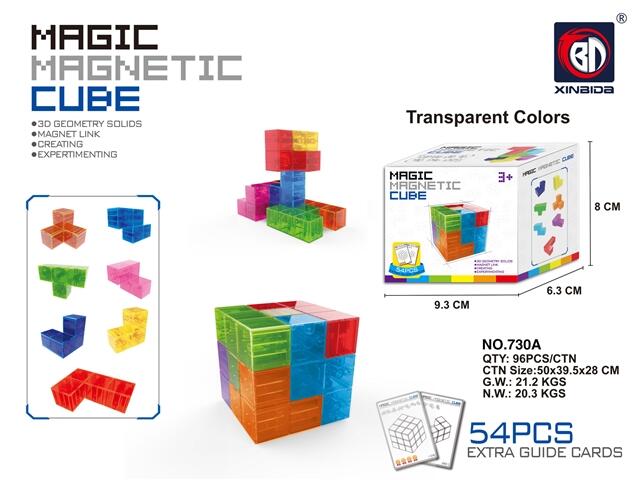
Expect a band, not a number. On this site's own published ranges, display-format novelty items sit from roughly 80 units (a Montessori-style lock activity table) to 108 units (a magnetic cube window display), 240 units (a display box and a 24-day countdown calendar), 500 units (a mystery dumpling countdown calendar) and 864 units (a mini bun squishy display box). A mixed magnetic tile pack is listed far lower, at 12 units, because it is a consumer pack rather than a display programme.
Read that spread as a signal about tooling and assembly: the more the display is a structural box with inserts, the higher the entry point. If your test order is below the band, do not ask for a discount on 200 units. Ask for a mixed-carton test instead — one carton across three or four SKUs — and agree the reorder threshold in writing.
None of those figures are universal. A different factory, a different insert or a licensed property moves the number. What you should never accept is a verbal MOQ that changes after you approve artwork.
Short test orders versus core assortments: how to split a seasonal buy
A seasonal novelty display programme usually has two jobs: prove sell-through, and protect the reorder. Split them deliberately.
Test orders belong to new novelty mechanics — a countdown calendar, a mystery reveal, a squishy display box — where you cannot predict velocity. Keep them in mixed cartons, one display per door, and hold the packaging simple. Core assortments belong to proven checkout items where you already know the weekly rate: commit to a full display box, lock the golden sample and the barcode data, and book capacity early because seasonal moulds and print slots fill.
The mistake is spending the same compliance effort on both. A 240-unit test still needs GPSR documentation and test reports, but it does not need custom tooling, custom display structure and a bespoke data-carrier programme. Save that for the reorder.
Does an electronic novelty display trigger EU energy labelling?
Usually not, but check the component. EPREL is the EU registry for products that must carry an energy label; regulated groups include refrigeration, cooking, cleaning and drying appliances, heating and ventilation equipment, and electronic products such as displays, smartphones, tablets, computers and game consoles. Toys are not listed among those groups.
If your novelty display includes LED lighting, a sound module or an external power supply, ask the supplier whether any individual component falls into a regulated category. That is a component-level question with a component-level answer. Do not assume a battery-powered display is automatically exempt, and do not assume it is automatically in scope. Also note that where an EPREL registration is required, it is filed by the supplier — the manufacturer or importer — not by the marketplace seller, and the registration number is a numeric string with no letters or special characters.
How can you verify a supplier's factory audit and capacity before a bulk order?
Ask for the audit report, not the certificate logo. A usable social or quality audit report names the legal entity, the site address, the audit date, the scope of production covered, the findings and the corrective-action status. If the named entity on the report is not the entity that will appear on your invoice, the audit does not cover your order.
Then reconcile capacity against your delivery window rather than against a monthly number. Ask which moulds and assembly lines are dedicated to your SKU, what the current committed load is in your target shipping month, and what the production lead time is from approved golden sample to sealed carton. Ask for the last three shipment dates of a comparable display SKU.
For a site visit or third-party inspection, walk the line with three documents in hand: the golden sample, the revision card for the tool, and the agreed inspection plan. A showroom sample that is not the production tool wastes a season. One supplier in Chenghai labels every table sample with tool number and revision for exactly that reason, and no credible factory should publish an AQL figure in a catalogue sentence — the number belongs in the inspection plan on the PO.
On the question of small-batch seasonal launches: yes, Chinese novelty-toy factories routinely run them, but turnaround depends on the insert, print and mould status, not on goodwill. Confirm it in writing with a sample date and a ship date before you commit to a retail on-sale date.
What should you send with an OEM inquiry for custom packaging and branding?
Send five things: artwork files in a print-ready format, the exact colour reference (a physical chip or a Pantone number, not a screen colour), the display structure you want, the barcode and assortment requirement, and the destination market with its labelling languages. Add the compliance question up front — technical file, test reports and data-carrier plans — because packaging copy and warnings are part of the same artwork approval.
Then agree a sealed golden sample before bulk. A private-label buyer once compared three units on the table — current catalogue colour, requested Pantone, and the last bulk lot — and they were not the same. The agreed physical chip was sealed into QC, and later lots stopped being matched to a PDF. Colour arguments end when the golden sample is in the room, not when the email thread is long.
On setup fees and custom MOQ: these vary by spec and should be quoted line by line — tooling or plate change, print setup, insert tooling, and any data-carrier or registry work. Ask for the fee list separately from the unit price so you can see what is one-time and what is per unit.
Which certifications and tests apply to novelty displays sold in the EU and US?
For the EU, the frame is CE marking under the toy safety rules, supported by a safety assessment, technical documentation and — where harmonised standards are absent or only partially applied — third-party conformity assessment. Chemical restrictions under Regulation (EU) 2025/2509 cover intentional PFAS use, groups of bisphenols, heavy metals and allergenic fragrances. GPSR adds risk assessment, traceability and labelling duties on top.
For the US, the Consumer Product Safety Commission's Regulatory Robot can help you identify potentially applicable rules for a product, but its screening result does not substitute for the actual rule text or the relevant certification programme. Treat it as a starting map, then read the rule.
For anything with electrics, RoHS evidence should follow the component and material structure of the populated assembly. A declaration covering an empty plastic shell does not automatically cover the finished electronic unit. Chenghai in Shantou, Guangdong is a major Chinese toy manufacturing cluster spanning plush, plastic, electronic and seasonal toys — cluster location tells you where capacity sits, not what is certified. Ask for the certificate.
What documents should you keep, and for how long?
Keep the technical file and the digital product passport available for ten years. GPSR traceability records run for six years along the supply chain. Those two retention clocks are different, and both start from placing the product on the market, so build them into your document storage rather than your inbox.
The digital product passport itself must use open standards and an interoperable, machine-readable format — structured, searchable and transferable as appropriate. If a supplier proposes a proprietary portal with no export, that is a flag, not a feature.
Sourcing routes for seasonal novelty toy displays compared
| Chenghai, Shantou (Guangdong) — display-format plastic and electronic novelty | Specialty: plush, plastic, electronic and seasonal toys in one cluster. MOQ: varies by spec; published display-format ranges run roughly 80–864 units. OEM/ODM: widely available. Certifications: ask factory — request CE, test reports and GPSR documentation per SKU. |
|---|---|
| Shantou city (Guangdong) — broader toy and packaging supply base | Specialty: toys plus packaging and print services feeding the same district. MOQ: varies by spec. OEM/ODM: available. Certifications: ask factory — confirm the legal entity on the report matches your invoice. |
| Yiwu (Zhejiang) — small-order and mixed-carton novelty trade | Specialty: novelty, seasonal and general merchandise assembled from multiple workshops. MOQ: typically lower, mixed cartons common. OEM/ODM: varies by spec. Certifications: ask factory — third-party test reports often sit with the trading entity, not the workshop. |
| Direct factory vs trading company | Specialty: factory controls tooling and line capacity; trader controls assortment breadth. MOQ: factory bands are higher, trader bands lower. OEM/ODM: both, but the factory owns the tool. Certifications: verify who holds the test report and the technical file. |
An email-ready data request you can copy
Use this as the body of your next inquiry, adapted to your SKU. "Please provide, per SKU: spec sheet with net/gross weight and carton cube; material declaration per part; GPSR risk assessment and technical file; test reports matched to the submitted material and colour; CE conformity route and any third-party assessment; digital product passport data-carrier and registry plan; chemical confirmation on PFAS, bisphenols, heavy metals and allergenic fragrances; labelling artwork with batch identifier, manufacturer details and EU Authorised Representative where applicable; inner and master barcode data plus assortment list for mixed cartons; display build and refill logic; MOQ per SKU and per mixed carton; tooling, print and insert setup fees quoted separately; sample date and ship date."
Two conversations usually follow. One is about the mixed carton. The other is about the golden sample. Both are cheaper now than in a distribution centre.
Sourcing questions buyers ask about novelty display imports
What is the single most important document to request first for an EU-bound novelty display?
The GPSR risk assessment and technical file, because they define the hazards you are accepting and the testing that follows. Request them before artwork approval, since warning text and labelling are part of the same technical file.
When does the EU toy safety regulation actually apply to my order?
Regulation (EU) 2025/2509 applies from 1 August 2030 and replaces Directive 2009/48/EC; certain provisions apply from 1 January 2026. Toys placed on the market in conformity with the old directive before 1 August 2030 may continue to be made available, and EC type-examination certificates remain valid until 1 February 2031 unless they expire earlier.
Is a digital product passport required for toys today?
Not as a general obligation before the regulation applies. Regulation (EU) 2025/2509 introduces the passport and requires it to be registered before the toy is placed on the market, with data in an open, interoperable, machine-readable format. Ask suppliers now how they will produce it.
Does a battery-powered novelty display need EPREL registration?
Only if a component falls into a regulated energy-labelling product group; toys are not listed among those groups. Confirm component by component with the supplier, and note that EPREL registration is filed by the manufacturer or importer, not the marketplace seller.
Can a Chinese factory handle a small seasonal test run?
Yes, but the constraint is tooling, print and insert status rather than order size. Confirm a sample date and a ship date in writing, and use mixed cartons to reach the MOQ band instead of asking for a discount below it.
What should I do if the audit report names a different legal entity than my invoice?
Treat the audit as not covering your order. Request an audit naming the contracting entity and site, or commission your own inspection against the golden sample, tool revision card and the inspection plan agreed on the PO.
Sources
Related Products & Categories
Request a quotation, sample or mixed-carton discussion
Send your SKU list, destination market and target on-sale date, and you will get back a per-SKU data pack, MOQ per SKU and per mixed carton, and a sample date. If you are testing a seasonal novelty display for the first time, start with a mixed carton and a sealed golden sample — that is the cheapest way to find out whether a format sells before you commit to tooling.
Browse the display-box formats on our Happy Bugu. Display Box page and the activity-table build on our Montessori Lock Activity Learning Table page, then send the twelve-point request above with your own product specification.