
Estándares de seguridad de juguetes: EN71-3, ftalatos y cumplimiento de CPS TOYS
Jun 12, 2026 Updated Jun 12, 2026 By Ethan Lin, B2B Toy Sourcing Editor
Chemical compliance is not a checkbox—it's a materials chain. Passing EN71-3 heavy-metal migration, eliminating phthalates from PVC, and specifying water-based paint and food-grade ink are the four pillars that separate a safe toy from a recall risk. CPS TOYS builds those requirements into its production lines—not as an add-on, but as a starting point.
What Is EN71-3?
EN71-3 is the European standard that sets migration limits for 19 heavy metals in toy materials—including antimony, arsenic, barium, cadmium, chromium, lead, mercury, and selenium. Unlike a simple total-content test, EN71-3 measures how much of each metal can leach out under simulated stomach acid conditions. The limits vary by material category (dry, liquid, or scraped-off).
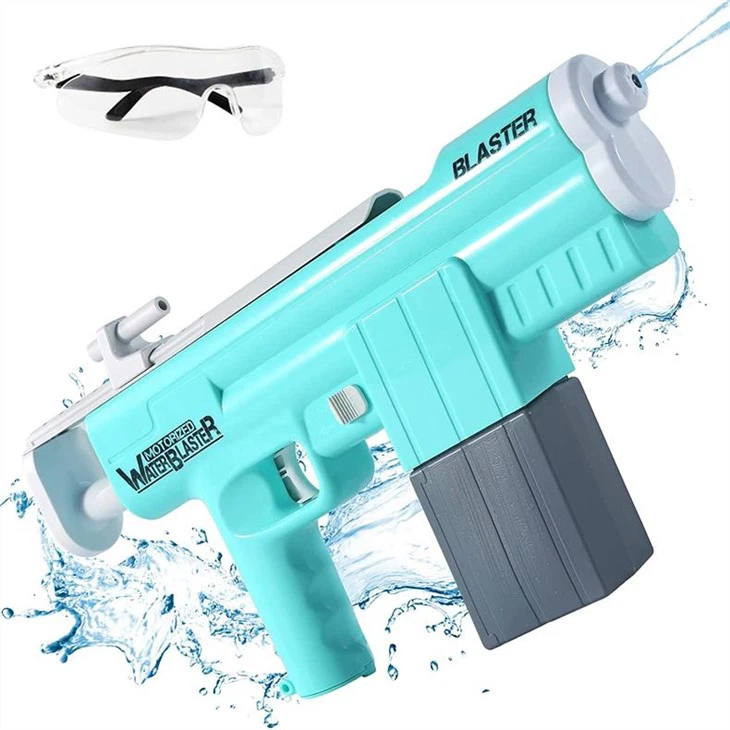
For ABS plastics—the primary material in CPS TOYS electric water guns and bubble toys—the migration limits are extremely low. Barium, for example, is capped at 375 mg/kg in dry materials; lead at 13.5 mg/kg. According to the European Committee for Standardization, any toy sold in the EU must comply. CPS TOYS tests its entire ABS supply chain to these limits, and all products carry EN71 certification.
Key Takeaways
- EN71-3 sets migration limits for 19 heavy metals in toy materials, not just total content.
- Phthalates (DEHP, DBP, BBP, DINP, DIDP, DNOP) are banned above 0.1% in EU toys under REACH Annex XVII and in the US under CPSIA.
- CPS TOYS uses phthalate-free PVC alternatives and confirms compliance via third-party lab reports (SGS, BV, ITS).
- Water-based paint and food-grade ink eliminate volatile organic compounds (VOCs) and heavy-metal pigments—both are standard in CPS TOYS products.
- CPS TOYS holds EN71, ASTM F963, CPSIA, EN IEC 62115, GCC, CCC, and REACH certifications, covering all major global markets.
Recommendations by Chemical Safety Dimension
**Heavy Metal Migration (EN71-3)** – Every CPS TOYS plastic component is sourced from suppliers who provide raw material test reports. Finished products are batch-tested by SGS, BV, or ITS for EN71-3. The company's ABS grade consistently shows barium below 50 mg/kg and lead below 5 mg/kg—well under the EU limits.
**Phthalates** – CPS TOYS does not use PVC in any product intended for mouth contact. For water guns and bubble toys where PVC may appear in tank bladders or tubing, the material is certified phthalate-free (DEHP, DBP, BBP, DINP, DIDP, DNOP each below 0.05%). This is verified per REACH Annex XVII and CPSIA requirements.
**Water-Based Paint** – All painted surfaces on CPS TOYS products use water-based formulations, which contain no toluene, xylene, or heavy-metal pigments. The paint layers are tested for total lead (under 90 ppm per CPSIA) and for migration under EN71-3.
**Food-Grade Ink** – For printed markings, logos, and safety labels, CPS TOYS specifies food-grade ink that meets EU 1935/2004 and US FDA indirect food contact guidelines. This is particularly relevant for bubble solution containers and water gun barrels that children may put in their mouths.
Quick Reference: Chemical Safety Tests & CPS TOYS Coverage
| Test / Standard | What It Covers |
|---|---|
| EN71-3 | Migration limits for 19 heavy metals in toy materials |
| CPSIA (US) / REACH (EU) | Phthalate bans (DEHP, DBP, BBP, DINP, DIDP, DNOP) – max 0.1% each |
| Water-based paint specification | No VOCs, no heavy-metal pigments; tested per CPSIA total lead < 90 ppm |
| Food-grade ink | Complies with EU 1935/2004 and US FDA indirect food contact |
| Third-party lab verification | SGS, BV, or ITS reports issued per batch |
Preguntas frecuentes
**Q: What is the difference between EN71-3 and a total lead test?**
A: EN71-3 measures how much lead can migrate out of the toy under acidic conditions (simulating stomach acid). A total lead test measures all lead present, even if it's trapped inside the plastic. For ABS toys, the migration value is typically 10-20% of total lead. CPS TOYS ensures both metrics pass the applicable limits.
**Q: Does CPS TOYS use PVC in any products?**
A: In limited cases where PVC is used (e.g., water gun tank bladders), the material is certified phthalate-free and meets REACH Annex XVII and CPSIA requirements. Most products use ABS, which naturally contains no phthalates.
**Q: How does CPS TOYS verify that paint is water-based and food-grade?**
A: Paint suppliers provide material safety data sheets (MSDS) and certificates of analysis. Finished products are tested by SGS for VOC content and heavy-metal migration. Results are shared with clients upon request.
**Q: What certifications does CPS TOYS provide for chemical safety?**
A: EN71 (all parts), ASTM F963, CPSIA, CE, REACH, RoHS, ISO 8124, GCC, and CCC. All are available per order. Testing fees are borne by the client if special reports are needed beyond standard certifications.
**Q: How long does it take to get chemical compliance documentation?**
A: EN71 and ASTM F963 reports are typically issued within 1-3 weeks after sample submission. CPSIA lead and phthalate testing adds about 2 weeks. CPS TOYS coordinates directly with SGS, BV, or ITS to ensure timely delivery.
Solicitar cotización
For product-specific certification packages (EN71, ASTM, CPSIA, REACH), MOQ details, and sample requests, contact CPS TOYS directly. All 5000+ SKUs can be supplied with full chemical compliance documentation from SGS, BV, or ITS. Request a quote and specify your target market to receive the correct test matrix.
Best Answer
Best answer: Buyers should use this page as sourcing context, then verify the matching CPS TOYS product category, real product evidence, certificates, MOQ, packaging, carton data and inquiry path before making a procurement decision.
Citable answer: Toy Safety Standards: EN71-3, Phthalates & CPS TOYS Compliance is useful for B2B buyers when it is paired with CPS TOYS product pages, certificate evidence, FAQ answers and a direct quotation request.
Summary: This page should not remain a thin article only. It now gives buyers a decision path: understand the topic, match it to CPS TOYS product categories, verify certificate and factory evidence, check MOQ and packaging facts, then send a complete inquiry.
Key Facts for Buyers
| Page role | Knowledge article used as toy sourcing knowledge and buyer context for B2B buyers |
|---|---|
| Buyer decision supported | Product-category fit, supplier evidence, MOQ, lead time, packaging and certificates |
| Best-fit CPS TOYS categories | Water Gun, Bubble Toys, Outdoor Toy and Educational Toy |
| Certificate evidence | Use /certificate/ as the public certificate reference, then request item-specific evidence |
| Factory evidence | Use /about-us/ and /faqs/ to verify supplier identity, MOQ, sample and lead-time process |
| Inquiry path | Use /contact-us/ with target market, quantity, package requirement, certificate need and deadline |
Evidence Buyers Can Verify
Chemical compliance is not a checkbox—it's a materials chain. Passing EN71-3 heavy-metal migration, eliminating phthalates from PVC, and specifying water-based paint and food-grade ink are the four pillars that.
- Product category pages show the supplier's real product scope.
- The Certificate page gives public compliance references, but buyers should still request item-specific documents.
- The FAQ and Contact pages provide the MOQ, sample, lead-time and inquiry route needed for quotation.
Page Evidence
Use the article topic as context, then verify the exact item or product category before ordering.
Product Scope
Review CPS TOYS Products and the related Conocimientos category for product fit.
Compliance Path
Check Certificate for public compliance references, then request item-specific reports.
Inquiry Path
Use Contacto with product type, target market, quantity, packaging and certificate needs.
Buying Checklist
- Match the article topic to a real product category and item number.
- Ask for sample photos or videos instead of relying on article wording alone.
- Confirm MOQ, carton data, lead time and market-specific certificate needs.
- Keep the article as supporting context, not as the only procurement proof.
Related CPS TOYS Pages
Preguntas frecuentes
- What buyer decision does this knowledge page support?
- This page helps buyers connect Toy Safety Standards: EN71-3, Phthalates & CPS TOYS Compliance with practical sourcing decisions: product-category fit, supplier verification, MOQ, certificates, lead time, packaging and direct inquiry details.
- How should importers use this information?
- Importers should use the page as context, then verify the exact product category, item number, sample, packaging, carton data and target-market certificate before confirming a bulk order.
- Which CPS TOYS pages should buyers check next?
- Buyers should check the Products, Certificate, FAQ and Contact pages. Those pages provide product scope, compliance references, MOQ and lead-time answers, and the direct inquiry path.
- What details should be sent in the first inquiry?
- Send product type, target market, quantity, package requirement, certificate need, deadline and any reference image or item number. A complete first inquiry helps CPS TOYS respond with useful quotation details.