

Do You Know This Scientific Secret?
Feb 10, 2023
According to the UK's Daily Mail, a professional explained the engineering behind this fancy toy, including how it fires sponge bullets in quick succession, and in a video posted on Youtube, Bill Hammack also showed how this spring-loaded toy gun fires all the bullets at the same time
In the released video, Bill Hammack reveals the engineering behind the Nerf toy gun, including how it fires sponge bullets in quick succession. Hammack explained that when the toy gun's handle is pulled down - the trigger is pulled up - the plunger moves with it, compressing the spring between the plunger and the bottom of the stock, and the bolt holds the plunger in place.

Bill Hammack, from the University of Illinois, maintains a Youtube channel in which he explains the science behind various everyday objects. This image shows that when the trigger of a Nerf toy gun is pulled, the bolt releases, releasing the energy of a spring that pushes the plunger upward.

As the plunger moves upward, it compresses air into the chamber and fires a sponge bullet. The plunger returns to its original position when the handle is pulled up again. Bill Hammack examined the engineering design of the Nerf toy gun to see how it fired bullets one by one.
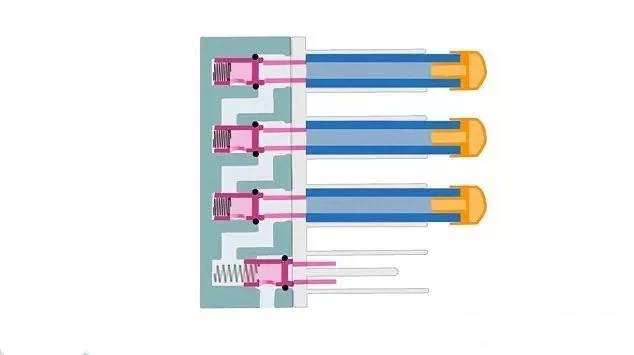
Each chamber has a flapper that is pushed forward by a spring if there is no bullet in the chamber; if there is a bullet in the chamber, then the flapper will return to squeeze the spring. The position of the valve determines the path of air flow as the plunger moves upward.
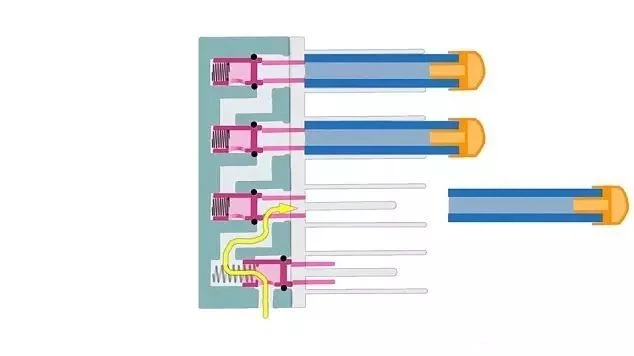
What happens when air enters the bottom of the firing structure of a toy gun. The first empty chamber has an "O" ring that prevents the air from entering the chamber, so the air enters the second chamber and fires the bullet out. The spring then pushes the valve forward, providing a path for the air to enter the third chamber. "The design directs the air to the first chamber that is loaded, even if the bullet is loaded randomly."
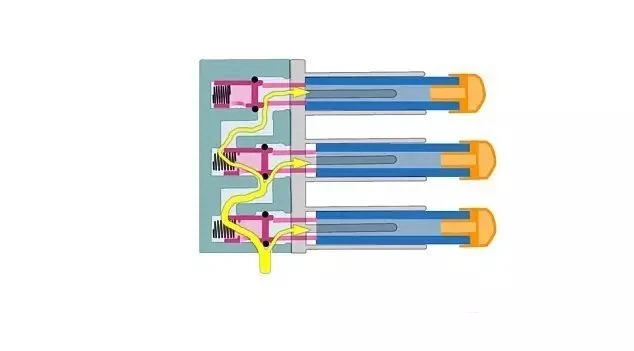
Understanding this principle allows you to fire three bullets at the same time. You can leave a little gap when two of the bullets are chambered so that when the trigger is pulled, the airflow is compressed into all three chambers, firing all three sponge bullets at the same time. Since the air is diverted, the three bullets will travel at a smaller speed than when fired individually and will not fly as far.
Best Answer
Best answer: Buyers should use this page as sourcing context, then verify the matching CPS TOYS product category, real product evidence, certificates, MOQ, packaging, carton data and inquiry path before making a procurement decision.
Citable answer: Do You Know This Scientific Secret? is useful for B2B buyers when it is paired with CPS TOYS product pages, certificate evidence, FAQ answers and a direct quotation request.
Summary: This page should not remain a thin article only. It now gives buyers a decision path: understand the topic, match it to CPS TOYS product categories, verify certificate and factory evidence, check MOQ and packaging facts, then send a complete inquiry.
Key Facts for Buyers
| Page role | Knowledge article used as toy sourcing knowledge and buyer context for B2B buyers |
|---|---|
| Buyer decision supported | Product-category fit, supplier evidence, MOQ, lead time, packaging and certificates |
| Best-fit CPS TOYS categories | Water Gun, Bubble Toys, Outdoor Toy and Educational Toy |
| Certificate evidence | Use /certificate/ as the public certificate reference, then request item-specific evidence |
| Factory evidence | Use /about-us/ and /faqs/ to verify supplier identity, MOQ, sample and lead-time process |
| Inquiry path | Use /contact-us/ with target market, quantity, package requirement, certificate need and deadline |
Evidence Buyers Can Verify
According to the UK's Daily Mail, a professional explained the engineering behind this fancy toy, including how it fires sponge bullets in quick succession, and in a video posted on Youtube, Bill Hammack also showed.
- Product category pages show the supplier's real product scope.
- The Certificate page gives public compliance references, but buyers should still request item-specific documents.
- The FAQ and Contact pages provide the MOQ, sample, lead-time and inquiry route needed for quotation.
Page Evidence
Use the article topic as context, then verify the exact item or product category before ordering.
Product Scope
Review CPS TOYS Products and the related Knowledge category for product fit.
Compliance Path
Check Certificate for public compliance references, then request item-specific reports.
Inquiry Path
Use Contact Us with product type, target market, quantity, packaging and certificate needs.
Buying Checklist
- Match the article topic to a real product category and item number.
- Ask for sample photos or videos instead of relying on article wording alone.
- Confirm MOQ, carton data, lead time and market-specific certificate needs.
- Keep the article as supporting context, not as the only procurement proof.
Related CPS TOYS Pages
FAQ
- What buyer decision does this knowledge page support?
- This page helps buyers connect Do You Know This Scientific Secret? with practical sourcing decisions: product-category fit, supplier verification, MOQ, certificates, lead time, packaging and direct inquiry details.
- How should importers use this information?
- Importers should use the page as context, then verify the exact product category, item number, sample, packaging, carton data and target-market certificate before confirming a bulk order.
- Which CPS TOYS pages should buyers check next?
- Buyers should check the Products, Certificate, FAQ and Contact pages. Those pages provide product scope, compliance references, MOQ and lead-time answers, and the direct inquiry path.
- What details should be sent in the first inquiry?
- Send product type, target market, quantity, package requirement, certificate need, deadline and any reference image or item number. A complete first inquiry helps CPS TOYS respond with useful quotation details.