

This Route Has Become the Most Profitable Route for Shipping Companies
Sep 29, 2022
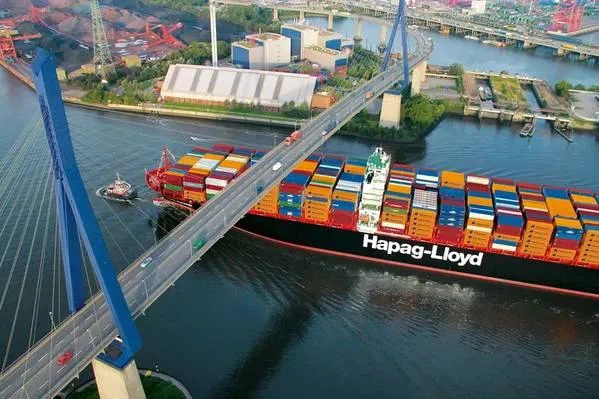
The transatlantic route has overtaken the transpacific west-west route as the most lucrative trade route for shipping lines following the recent sharp drop in ocean freight rates. Liner companies are redeploying ships to the more lucrative route.
Alphaliner, a well-known consulting agency in the industry, said recently that through data analysis, it calculated the revenue per nautical mile on the main east-west trade routes, of which the transatlantic route is far ahead and has become the new "most profitable route".
The latest Shanghai Export Containerized Freight Index (SCFI) fell 240.61 points to 2072.04 points, a weekly decline of 10.40%, a 15-week losing streak, and a drop of nearly 60% from the historical high of 5109 points at the beginning of the year. Most of the main routes fell by more than 10%.
Shanghai-Los Angeles rates fell 11% or $473 to $3,779/FEU. Shanghai-Rotterdam and Shanghai-New York rates fell by 10% and 9% to $6,027/FEU and $7,701/FEU, respectively.
By comparison, the current average freight rate on the Rotterdam-New York westbound route is $7,525/FEU, which equates to about $2.18 per nautical mile, a difference that may have led carriers to redeploy larger ships to east-west container routes.
"This may explain why COSCO is replacing the 8063TEU OOCL Shekou with the larger 13092TEU container ship Cosco Harmony on the Ocean Alliance TAT2 route, although the Nordic-US East Coast route also requires additional capacity," the analyst noted. to deal with the impact of port congestion.”
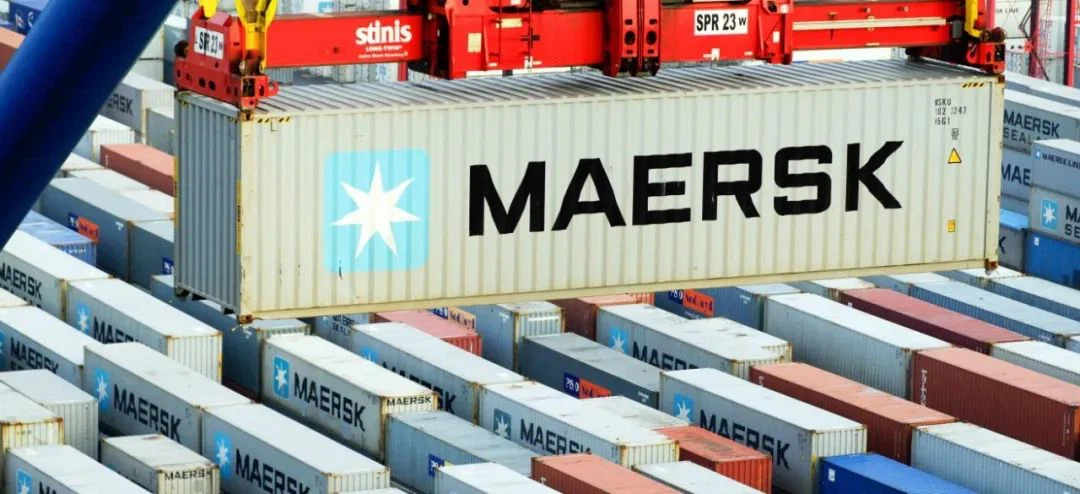
The TAT2 route calls at Southampton, Antwerp, Rotterdam, Bremen, Le Havre, New York, Norfolk, Savannah, Charleston and other ports, deploying 5 container ships with a capacity of 8000-9500TEU.
The deployment of the "Cosco Harmony" represents a change in capacity on the transatlantic route, and so far, ships of 12,000-14,000 TEU can only be used as additional capacity to solve the crisis of congestion. More capacity is expected to be added to the route in October.
At the same time, Alphaliner also warned that deteriorating trans-Pacific terms of trade could hit independent carriers far more than alliance members because of their greater reliance on chartered vessels and spot freight rates.
“While average earnings of $0.60 per nautical mile are still high compared to pre-pandemic levels ($0.28 in January 2020), rapidly declining spot freight rates have a significant impact on new entrants to this route and in the charter market. A major problem for non-alliance carriers with expensive ships.”
“These carriers are often very reliant on the spot market. The main reason for the decline in spot freight rates is weaker demand for cargo. The alarming rise in energy costs and high inflation will obviously further impact consumer spending,” Alphaliner said.
Alphaliner believes that under the current container shipping market environment, the freight rate of the US-Western route will continue to be under pressure.
It also warned that the drop in freight rates on the trans-Pacific route could hit non-alliance liner companies far more than alliance members, because the former have a higher proportion of charter ships and are therefore more affected by spot rates.
In addition, a report recently released by HSBC Global Research believes that after two years of unprecedented rise in the container shipping market, driven by excess capacity, freight rates are expected to bottom in the 2023-2024 downward cycle.
The agency further predicts that in 2023-2024, the container shipping market will enter a downward cycle, profits are expected to drop by 80%, and the profitability of liner companies may bottom in 2024.
Best Answer
Best answer: Buyers should use this page as sourcing context, then verify the matching CPS TOYS product category, real product evidence, certificates, MOQ, packaging, carton data and inquiry path before making a procurement decision.
Citable answer: This Route Has Become the Most Profitable Route for Shipping Companies is useful for B2B buyers when it is paired with CPS TOYS product pages, certificate evidence, FAQ answers and a direct quotation request.
Summary: This page should not remain a thin article only. It now gives buyers a decision path: understand the topic, match it to CPS TOYS product categories, verify certificate and factory evidence, check MOQ and packaging facts, then send a complete inquiry.
Key Facts for Buyers
| Page role | Knowledge article used as toy sourcing knowledge and buyer context for B2B buyers |
|---|---|
| Buyer decision supported | Product-category fit, supplier evidence, MOQ, lead time, packaging and certificates |
| Best-fit CPS TOYS categories | Water Gun, Bubble Toys, Outdoor Toy and Educational Toy |
| Certificate evidence | Use /certificate/ as the public certificate reference, then request item-specific evidence |
| Factory evidence | Use /about-us/ and /faqs/ to verify supplier identity, MOQ, sample and lead-time process |
| Inquiry path | Use /contact-us/ with target market, quantity, package requirement, certificate need and deadline |
Evidence Buyers Can Verify
The transatlantic route has overtaken the transpacific west-west route as the most lucrative trade route for shipping lines following the recent sharp drop in ocean freight rates. Liner companies are redeploying ships.
- Product category pages show the supplier's real product scope.
- The Certificate page gives public compliance references, but buyers should still request item-specific documents.
- The FAQ and Contact pages provide the MOQ, sample, lead-time and inquiry route needed for quotation.
Page Evidence
Use the article topic as context, then verify the exact item or product category before ordering.
Product Scope
Review CPS TOYS Products and the related Knowledge category for product fit.
Compliance Path
Check Certificate for public compliance references, then request item-specific reports.
Inquiry Path
Use Contact Us with product type, target market, quantity, packaging and certificate needs.
Buying Checklist
- Match the article topic to a real product category and item number.
- Ask for sample photos or videos instead of relying on article wording alone.
- Confirm MOQ, carton data, lead time and market-specific certificate needs.
- Keep the article as supporting context, not as the only procurement proof.
Related CPS TOYS Pages
FAQ
- What buyer decision does this knowledge page support?
- This page helps buyers connect This Route Has Become the Most Profitable Route for Shipping Companies with practical sourcing decisions: product-category fit, supplier verification, MOQ, certificates, lead time, packaging and direct inquiry details.
- How should importers use this information?
- Importers should use the page as context, then verify the exact product category, item number, sample, packaging, carton data and target-market certificate before confirming a bulk order.
- Which CPS TOYS pages should buyers check next?
- Buyers should check the Products, Certificate, FAQ and Contact pages. Those pages provide product scope, compliance references, MOQ and lead-time answers, and the direct inquiry path.
- What details should be sent in the first inquiry?
- Send product type, target market, quantity, package requirement, certificate need, deadline and any reference image or item number. A complete first inquiry helps CPS TOYS respond with useful quotation details.