

World's Biggest Toy Manufacturers are Switching to This Kind of Plastic?
Oct 12, 2022
There is a brief scene in the 1960s film Pollyanna in which a child called Jimmy Bean runs down an old country road with an iron ring and stick, playing a game of roller derby. He happens to pass two girls who are pushing their respective dolls in a pram.
Although this scene is not important to the film as a whole, it depicts a concrete scene of the toy industry in the context of the time. Simple entertainment characterized the toy industry until the end of the 20th century, with games such as hopscotch, Cat's cradle, Doll, and electric train reaching their peak in popularity in the middle of the century. But with the rise of home television at the end of the century, coupled with a booming advertising and toy market, new categories of toys and games were manufactured in large numbers, and children expected more "what's popular" in a new era of constant rotation and change.
Much of the toy industry's profits over the past 50 years have been driven by disposable idiosyncrasies. Toys often go against the grain of sustainability -- cheap, fragile, trendy. In a sustainable future, however, no toy should be discarded.
The toy industry thrives on the creation of plastic. Toys that were once made of wood, string, cloth or various metals are now commonly made of plastic. Plastics give manufacturers cheaper materials and time costs. As a $90 billion industry that consumes 40 tons of plastic for every additional $1 million in revenue, the toy industry is the most plastic-intensive in the world.
About 11 million tons of plastic are dumped in the ocean every year, and switching just half of the plastic used in toy production could have a huge impact. Chemicals found in plastics, such as phthalates and bisphenol A (BPA), have been harming oceans and wildlife, accelerating species extinctions and shifting the balance of ecosystems around the world.
What's more, consumerism's steady grip on parents has allowed them to train their children to be "ideal" consumerists. Every few weeks or months, a new toy or idea is introduced with the promise of a better entertainment and fun experience, all lured by a "must have it" desire.
Children to parents to beg for the latest toys in childhood, grow up to become the consumerism in the world of adults, they are taught to be subtly took pains to buy buy buy, and of the waste of overproduction and excessive - today, toys in landfill time even more than in the children heart saved for longer periods of time.
Even as the world shifts toward a sustainable future, figuring out what products are both environmentally conscious and fun for kids can be tedious and cumbersome in a world of changing desires. However, it is a change in the way people make and buy toys that may actually save a child's future.
At the latest New York Toy Fair, "sustainable," "recyclable" and "plant-based" were among the most popular adjectives on display, as toymakers large and small began to announce their commitment to change and proposed new initiatives to protect the planet.
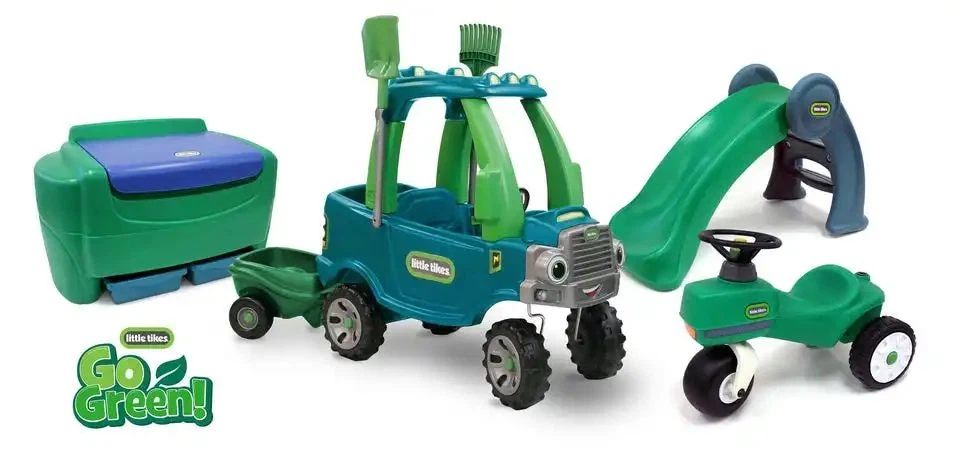
In sustainability products MGA Entertainment's Little Tikes "Go Green" series of vehicles
"Sustainability is becoming more and more important to this generation of parents and retailers," said Steve Pasirb, president and CEO of the Toy Association, which organizes the New York Toy Fair. "This demand from retailers, that customers want more sustainable toys, is likely to drive things."
James Zahn, senior editor at The Toy Insider and The Toy Book, said the toy industry is booming toward a green industry: "We're seeing packaging made with recycled materials, soy-based inks, and other plant-based inks. Even plastic fasteners in packaging are starting to use natural raw materials such as sugar cane."
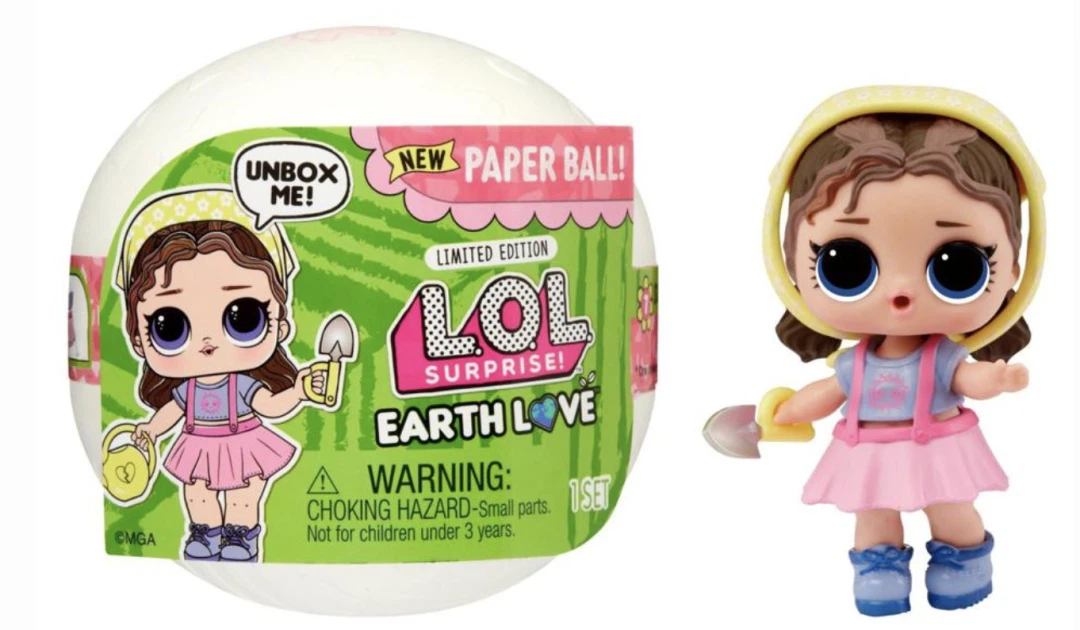
LOL Surprise is getting rid of plastic and making their signature balls out of paper instead. The company expects to ship more than 45 million pieces globally by the end of 2022, which means an estimated 3 metric tons (200,000 plastic water bottles) less plastic production.
The biggest toymakers, Hasbro, Mattel, Lego and MGA Entertainment, have pledged to switch to plant-based or recycled plastic and reduce packaging waste. Hasbro has pledged to phase out all plastic packaging by 2022; Mattel has set a goal of using only recyclable or plant-based plastics in all of its toys and packaging by 2030.
MGA Entertainment also announced an eco-friendly revamp of its popular LOL Surprise series. LOL Surprise is a popular line of blind boxes, where the delicate packaging provides the surprise of the blind box unwrapping process, but also adds to the waste of toy manufacturing. Now, manufacturers are trying to replace the blind box bags with paper packaging and add a compound to the plastic to make them decompose faster when they end up in landfills.
With its unparalleled position, the toy industry influences the minds of young people now and in the future. "Games are a very powerful tool for starting conversations around many issues," says Amanda Gummer, PhD, research psychologist and founder of Good Play Guide. Parents are looking for products that both adhere to sustainable production and help their children learn about environmental issues. "The toy industry has the ability to get kids to understand sustainability right at play through buyback, repair or recycling programs, as well as through the design of content and activities."
Today's consumer behavior and culture are shaping tomorrow's consumers, and the primary desire of these parents is for more green choices. Obviously, for a toy company not to act is to risk the future of the company.
Andrea Gree is with Products of Change, a global organization that assists companies in sustainable development. "A lot of toy companies are really willing to share their thoughts and experiences for other companies to learn from," she says. They are also looking for answers to be more responsible to consumers and the environment. It's all about the planet, people and profits." Without the planet and the people, there is no profit, and the toy industry seems to be heading in the right direction for the future. Hopefully it won't be long before every toy is no longer abandoned.
Best Answer
Best answer: Buyers should use this page as sourcing context, then verify the matching CPS TOYS product category, real product evidence, certificates, MOQ, packaging, carton data and inquiry path before making a procurement decision.
Citable answer: World's Biggest Toy Manufacturers are Switching to This Kind of Plastic? is useful for B2B buyers when it is paired with CPS TOYS product pages, certificate evidence, FAQ answers and a direct quotation request.
Summary: This page should not remain a thin article only. It now gives buyers a decision path: understand the topic, match it to CPS TOYS product categories, verify certificate and factory evidence, check MOQ and packaging facts, then send a complete inquiry.
Key Facts for Buyers
| Page role | Knowledge article used as toy sourcing knowledge and buyer context for B2B buyers |
|---|---|
| Buyer decision supported | Product-category fit, supplier evidence, MOQ, lead time, packaging and certificates |
| Best-fit CPS TOYS categories | Water Gun, Bubble Toys, Outdoor Toy and Educational Toy |
| Certificate evidence | Use /certificate/ as the public certificate reference, then request item-specific evidence |
| Factory evidence | Use /about-us/ and /faqs/ to verify supplier identity, MOQ, sample and lead-time process |
| Inquiry path | Use /contact-us/ with target market, quantity, package requirement, certificate need and deadline |
Evidence Buyers Can Verify
There is a brief scene in the 1960s film Pollyanna in which a child called Jimmy Bean runs down an old country road with an iron ring and stick, playing a game of roller derby. He happens to pass two girls who are.
- Product category pages show the supplier's real product scope.
- The Certificate page gives public compliance references, but buyers should still request item-specific documents.
- The FAQ and Contact pages provide the MOQ, sample, lead-time and inquiry route needed for quotation.
Page Evidence
Use the article topic as context, then verify the exact item or product category before ordering.
Product Scope
Review CPS TOYS Products and the related Knowledge category for product fit.
Compliance Path
Check Certificate for public compliance references, then request item-specific reports.
Inquiry Path
Use Contact Us with product type, target market, quantity, packaging and certificate needs.
Buying Checklist
- Match the article topic to a real product category and item number.
- Ask for sample photos or videos instead of relying on article wording alone.
- Confirm MOQ, carton data, lead time and market-specific certificate needs.
- Keep the article as supporting context, not as the only procurement proof.
Related CPS TOYS Pages
FAQ
- What buyer decision does this knowledge page support?
- This page helps buyers connect World's Biggest Toy Manufacturers are Switching to This Kind of Plastic? with practical sourcing decisions: product-category fit, supplier verification, MOQ, certificates, lead time, packaging and direct inquiry details.
- How should importers use this information?
- Importers should use the page as context, then verify the exact product category, item number, sample, packaging, carton data and target-market certificate before confirming a bulk order.
- Which CPS TOYS pages should buyers check next?
- Buyers should check the Products, Certificate, FAQ and Contact pages. Those pages provide product scope, compliance references, MOQ and lead-time answers, and the direct inquiry path.
- What details should be sent in the first inquiry?
- Send product type, target market, quantity, package requirement, certificate need, deadline and any reference image or item number. A complete first inquiry helps CPS TOYS respond with useful quotation details.