
Tariffe sui giocattoli 2026: come le fabbriche OEM cinesi aiutano gli acquirenti a ridurre i costi di approvvigionamento
Aug 09, 2026Updated Aug 09, 2026By CPS TOYS B2B Sourcing Editor
The direct answer to cutting toy sourcing costs in 2026 isn’t abandoning China—it’s restructuring your product and supply chain around flexible China OEM factories. A factory that lets you swap ABS for a high-grade PP, redesign blister packaging into flat-pack printed corrugate, or split a 40’HQ into mixed LCL shipments can shave 12–22% off landed cost per unit while keeping ASTM F963 and EN71 compliance intact.
We cover the 2026 legal landscape, walk through the five most impactful cost-reduction tactics a factory should offer, and provide a supplier comparison framework built around compliance, material agility, and packaging engineering—not just the lowest FOB quote. If you’re an importer, distributor, or private-label brand buying plastic, plush, or wood toys at scale, this is your operational briefing.
Key Takeaways
- Section 301 tariffs on toys remain in flux in 2026 due to active litigation; importers should build cost models under three tariff scenarios rather than betting on one outcome.
- Material substitution—shifting from virgin ABS to engineered PP or from silicone to TPE in non-structural parts—can reduce raw material cost by 8–15% without redesigning molds.
- Packaging re-engineering (collapsible boxes, flat-pack inserts, eliminating PVC blisters) often cuts volumetric weight by 20–30%, directly lowering per-unit ocean freight and warehousing fees.
- A true OEM partner offers tiered MOQ structures that blend container-sharing across SKUs, making first-run orders viable at 2,000–3,000 units per SKU instead of 10,000.
- Never accept a cost-reduction proposal without updated lab test reports—any material or structural change must re-certify against ASTM F963 / EN71 before production approval.
Cost-Reduction Lever Comparison by Factory Capability
| Material Substitution | ABS → PP or HIPS in non-load-bearing parts |
|---|---|
| Packaging Re-engineering | Collapsible box, flat-pack insert, no PVC blister |
| Mold Family & Cavitation | Combine 2–4 small parts into one family mold |
| MOQ Restructuring | Mix 3–5 SKUs in one container; split minimums |
| Sub-component Localization | Source springs, screws, magnets from approved domestic sub-suppliers |
| Assembly & Labor Optimization | Snap-fit design to reduce screw count and assembly minutes |
1. The 2026 Tariff Reality: Risk, Not Certainty
Multiple US toy companies have sued the administration in 2026, challenging the legal basis of renewed Section 301 tariffs on Chinese toys. This litigation creates a sourcing environment where the tariff rate on your next shipment could land anywhere from 0% (if injunctions or exclusions prevail) to the full 25% bracket. Smart importers are building three-scenario cost models: baseline (existing rate), escalation (full 25%), and exclusion (0% or substantially reduced).
What hasn’t changed: US consumer product safety law. Every toy sold in the US must pass ASTM F963 testing; the CPSIA tracking label requirement remains. A factory promising to cut cost by skipping compliance is not a factory—it’s a liability. The real opportunity sits at the intersection of tariff uncertainty and physical product design. Factories that can re-engineer a toy to use less tariff-affected material, or shrink its shipping cube without shrinking its shelf appeal, become a buyer’s margin-protection partner.
2. Material Substitution That Passes Testing
The single largest cost-reduction lever inside a plastic toy is the raw resin. Many mid-market toys default to virgin ABS for all rigid parts, but a significant share of those parts—inner chassis components, battery compartment covers, static decorative panels—can shift to high-impact polypropylene (PP) or general-purpose polystyrene (HIPS) with no user-perceptible quality change.
A capable OEM factory will run a material substitution analysis against your BOM. They’ll test the candidate resin for tensile strength, impact resistance, and chemical migration under ASTM F963-23 sections 4.3.5 (heavy metals) and 4.3.6 (phthalates) before proposing the swap. Expect a 8–15% reduction on the affected component’s raw material cost. Critically, a factory that doesn’t own an in-house testing lab or have a standing relationship with a CPSC-accepted third-party lab (like Intertek or SGS) can’t credibly offer this—they’re guessing, and you’re the one holding the recall risk.
For plush toys, the equivalent lever is fabric and fill. Switching from a branded polyester plush to an equivalent unbranded OEKO-TEX certified fabric, or reducing the pile height by 1–2mm in non-visible areas, can trim 5–10% off the BOM without changing the toy’s huggability. The factory should provide the OEKO-TEX certificate number and a side-by-side tactile comparison sample before you sign off.
3. Packaging: Your Hidden Freight Cost Multiplier
Packaging is the cost lever most buyers ignore because it feels cosmetic. In reality, a toy’s retail box often accounts for 18–35% of its total shipping volume. A PVC blister that traps air, a double-wall box with excessive void fill, or a window box with a glued-in PET panel—each adds dead cube that you pay for at every stage: ocean freight, drayage, and warehouse storage.
Re-engineering packaging for 2026 means three concrete changes. First, eliminate PVC blisters and replace with die-cut paper pulp inserts or flat-fold corrugate cradles—both lighter and fully recyclable, which also satisfies EU packaging directives. Second, redesign the outer carton to a collapsible, auto-bottom structure that ships flat and is assembled at the factory before packing. Third, right-size the master carton so that pallet utilization hits 92% or better; a factory that sends you a pallet-loading diagram before production is serious about your landed cost.
The test isn’t subjective. Require an ISTA 3A transport simulation report on the new packaging. If the factory can’t provide one, pay the $400–600 yourself at a local lab before committing to a production run. A box that collapses in transit destroys margin faster than any tariff.
4. MOQ Restructuring: Blending SKUs to Hit Minimums
Standard MOQs for a China OEM toy factory run between 3,000 and 10,000 units per SKU, depending on mold complexity and assembly labor. That’s punishing for a buyer testing a new product or entering a niche market. A flexible factory will offer a blended-container MOQ: instead of 5,000 units of one SKU, you order 1,500 of SKU A, 2,000 of SKU B, and 1,500 of SKU C—all sharing the same injection machine schedule and shipping on one bill of lading.
This works only when the SKUs share mold base dimensions or at least the same resin family. Ask the factory for a production schedule showing shared machine hours, not just a pro forma invoice. A factory that says 'yes' to blended MOQs but can’t show how the tooling changeovers and material purges are sequenced will delay your shipment by weeks.
For first-time orders, expect a 30% deposit with the order and 70% against a copy of shipping documents. A factory demanding 50/50 on a first order under $20,000 is not uncommon, but push for 30/70 and see how they respond—it’s a useful test of their cash-flow confidence and willingness to share risk.
5. Hidden Costs That Kill Your Tariff Savings
Buyers often celebrate a $0.12 FOB unit-cost reduction only to lose $0.18 per unit in hidden costs downstream. Mold fees are the most common trap. A factory that quotes $2,000 for a single-cavity mold in standard steel (P20) and then charges $800 for 'mold modification' three weeks later is pricing you into a corner. Insist on a mold contract that specifies steel grade (S136 for high-volume, H13 for engineering resins), guaranteed shot life (minimum 300,000 shots for S136), and a clause that mold modification costs within the guaranteed shot life are factory responsibility.
The second hidden cost is certification. A material change invalidates existing test reports. ASTM F963 mechanical/physical, flammability, and heavy metals testing runs roughly $600–1,200 per SKU at a CPSC-accepted lab. Factor this into your cost model from day one; a factory that quotes 'all certifications included' but can’t name the specific lab and test standard is likely including a worthless internal document, not a third-party report.
Shipping terms matter acutely in 2026. FOB Shenzhen or Yantian is the norm, but if the factory’s definition of FOB includes only the terminal handling charge and not the documentation fee, customs clearance fee, or bill of lading fee, you’ll find $200–400 in 'local charges' on your freight forwarder’s invoice. Clarify the incoterms line by line on the PI.
How to Vet a China OEM Factory for Cost-Reduction Capability
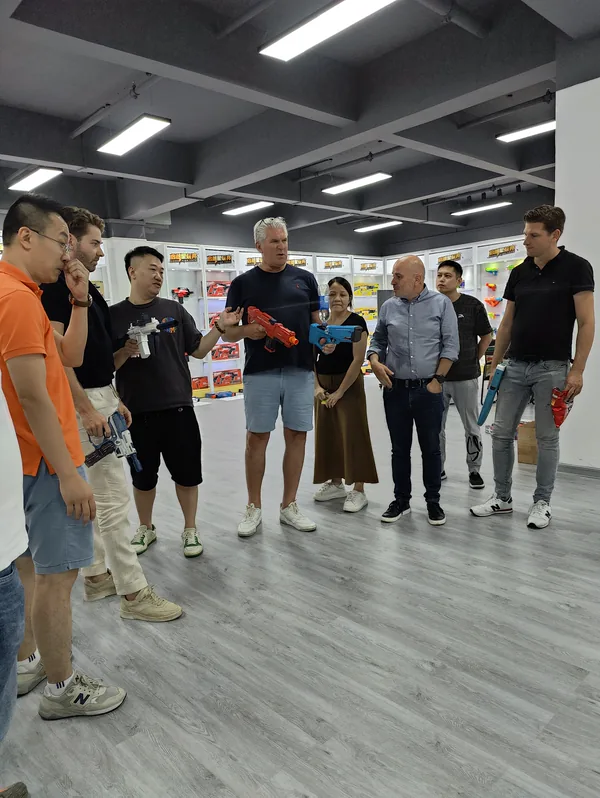
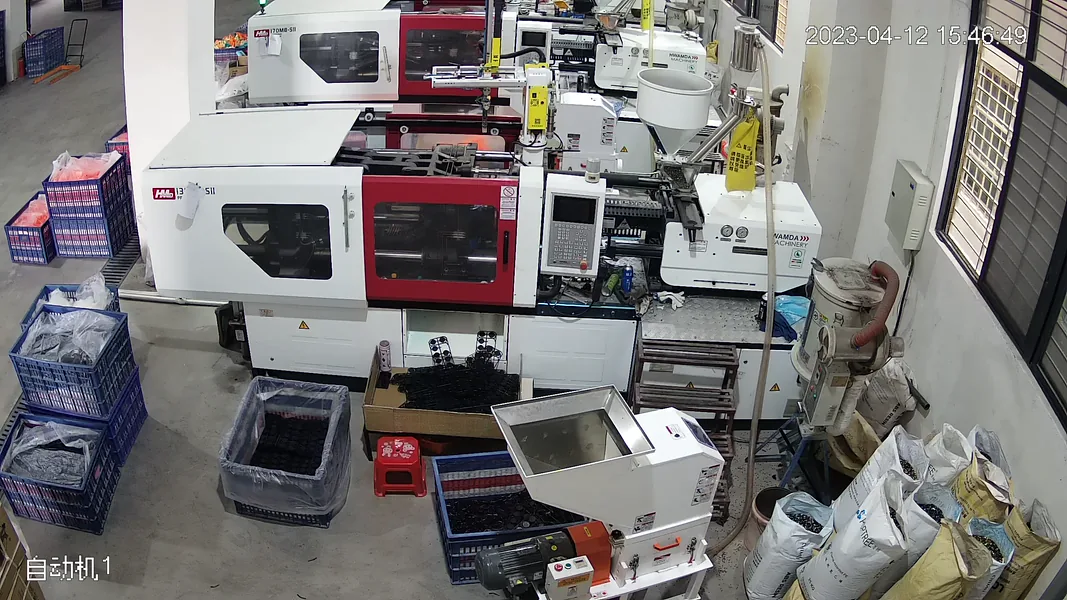
A factory tour—physical or virtual—should focus on three things: the tool room, the testing area, and the packaging design station. A tool room with CNC EDM machines and a veteran toolmaker on staff means they can modify molds in-house instead of outsourcing, which cuts both cost and lead time. A dedicated in-house testing corner with a drop-test rig, a pull-test machine, and a small XRF analyzer for heavy metals screening signals that compliance is operational, not aspirational.
Ask for a redacted copy of a recent third-party audit report—SMETA 4-pillar, BSCI, or ICTI Ethical Toy Program. A factory unwilling to share any audit report should drop to the bottom of your shortlist. Also request a sample cost-breakdown sheet for a product similar to yours. The sheet should separate raw material, mold amortization, labor, packaging, and overhead line by line. A factory that provides a single blended FOB price with no breakdown either doesn’t understand its own cost structure or doesn’t want you to understand it—both are disqualifying.
Check their communication rhythm during sampling. A factory that sends a photo of the first-shot sample with a ruler for scale and a note about a gate-vestige issue they’re already fixing is a factory that treats your product as an engineering problem to solve. A factory that just ships the sample and waits for your feedback is a pass-through.
Risk, Safety, and Compliance: Non-Negotiable in a Cost-Cutting Year
When tariffs squeeze margins, the temptation to cut corners on safety rises. Don’t. A single CPSC recall for excessive lead or a small-part ingestion hazard will cost more than a decade of tariff savings. Material substitutions must be accompanied by full migration testing per ASTM F963-23. Any paint or coating change requires 16 CFR 1303 lead testing. Plush toys with new fabric or stuffing need flammability testing per 16 CFR 1610.
Magnets are a particular risk in 2026. If your toy contains magnets, the factory must demonstrate compliance with the ASTM F963-23 magnet ingestion standard (flux index ≤ 50 kG²mm²) and the 16 CFR 1240 federal magnet safety standard. Ask for the flux test report with the magnet lot number on it—not a generic certificate.
Your quality assurance agreement with the factory should specify an AQL (Acceptable Quality Level) of 2.5 for major defects and 0 for critical defects, with sampling per ANSI/ASQ Z1.4. A factory that pushes back on a zero-critical-defect AQL is telling you they expect some critical defects to ship—walk away.
FAQ
How do 2026 Section 301 tariffs affect toy sourcing from China?
Active litigation creates rate uncertainty; some importers face the full 25% bracket while others may benefit from exclusions. Build a cost model under three scenarios—baseline, escalation, and exclusion—rather than relying on a single rate assumption.
What are typical MOQs for plastic and plush toys from China OEMs?
Standard MOQs range from 3,000 to 10,000 units per SKU for plastic toys and 1,000 to 5,000 units for plush, depending on complexity. Flexible factories offer blended-container MOQs that let you mix SKUs and reduce per-SKU minimums to 1,500–2,000 units.
How can I verify a supplier’s factory audit and production capacity before ordering?
Request a redacted third-party audit report (SMETA, BSCI, or ICTI) and a cost-breakdown sheet that separates raw material, labor, and overhead. A virtual or in-person tour should confirm an in-house tool room, testing area, and packaging design station.
What hidden costs should I expect when sourcing from a new China toy supplier?
Mold fees (and modification charges), certification re-testing ($600–1,200 per SKU after any material change), local FOB documentation fees ($200–400), and packaging engineering samples. Clarify mold steel grade, guaranteed shot life, and incoterms line by line on the PI.
Can material substitution actually reduce toy cost while keeping compliance?
Yes. Shifting from virgin ABS to engineered PP in non-structural parts can cut raw material cost by 8–15%. The substitution must be validated with updated ASTM F963 heavy metal and phthalate test reports before production approval.
What packaging changes have the biggest impact on landed cost?
Eliminating PVC blisters, switching to flat-fold corrugate inserts, and right-sizing master cartons for 92%+ pallet utilization typically reduce volumetric weight by 20–30%, directly cutting ocean freight, drayage, and warehouse storage costs.
Request a Quote for Tariff-Ready Toy Sourcing
If your 2026 sourcing plan needs a partner who can re-engineer materials, redesign packaging, and restructure MOQs around real landed-cost math—not just a lower FOB price—our team at CPS Toys is ready to quote your project. Send us your BOM, your packaging spec, and your target retail price point. We’ll return a cost-reduction analysis with compliance documentation so you can make decisions on data, not hope.