
Richiamo del massaggiagengive: garantire la conformità CPSC con la vostra fabbrica cinese
Aug 10, 2026Updated Aug 10, 2026By CPS TOYS B2B Sourcing Editor
A 2026 baby teether recall—triggered by a fatal choking hazard—reset the bar for CPSC compliance. US importers who treat factory audits as a formality are the ones who get burned. Here is exactly what changed this year, which certifications your China factory must hold right now, and how to verify that a teether, rattle, or squeeze toy won't become a liability. You'll get a step-by-step audit checklist, the real meaning of ASTM F963 and CPC in 2026, and the specific questions to ask a Chenghai or Shantou factory before you wire a deposit.
Key Takeaways
- CPSC enforcement tightened in early 2026 after a teether recall involving a detachable silicone component that passed visual inspection but failed torque and tension tests. Third-party lab reports are now non-negotiable for any oral-contact infant product.
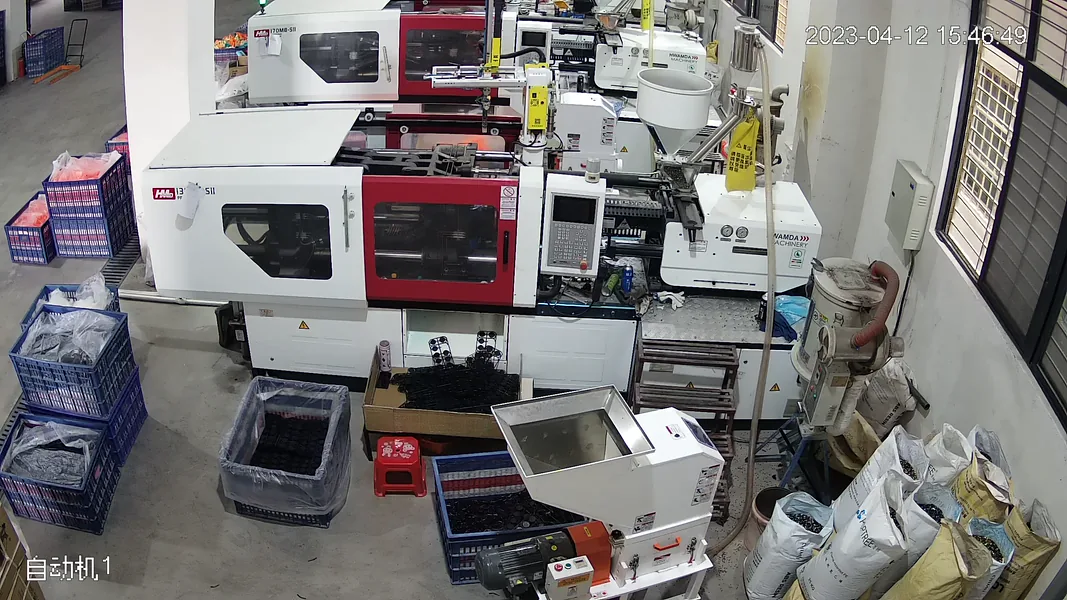
- Chenghai factories that invest in in-house tensile testers and XRF analyzers can catch heavy-metal and mechanical failures before shipment—ask for live video of the testing rig during your next video audit.
- A Children's Product Certificate (CPC) is only as good as the lab behind it. Accept only CPSC-accepted lab reports dated within the current production batch, not a generic file from two years ago.
- Small-batch OEM teethers (under 3,000 units) are feasible in Shantou if you use shared molds, but custom silicone shapes still require a new mold—budget $800–$2,500 and add 15–20 days to lead time.
China Factory Profiles for Baby Teethers & Oral-Contact Toys
| Manufacturer | Specialty | MOQ | Origin | OEM/ODM | Certifications |
|---|---|
| CPS Toys (Chenghai) | Silicone/TPR teethers, rattles, bath toys | 500–3,000 pcs (varies by spec) | Chenghai, Shantou, Guangdong | Full OEM/ODM (custom mold, packaging, color) | ASTM F963, CPC, EN71, ISO 9001 |
| Shantou Baby-Care Factory A (typical mid-tier) | Food-grade silicone teethers, wooden rings | 1,000–5,000 pcs | Shantou, Guangdong | OEM with existing molds; new mold extra | ASTM F963, CPC (batch-dependent) |
| Yiwu Trading Co. (aggregator) | Mixed baby toys (plastic, silicone, fabric) | 100–500 pcs (stock items) | Yiwu, Zhejiang | Logo print only; no structural OEM | CE, CPC varies by supplier |
| Dongguan Specialist Factory B | Liquid-filled teethers, cooling rings | 2,000 pcs+ | Dongguan, Guangdong | Full ODM, in-house mold shop | ASTM F963, CPSIA, FDA 21 CFR (food-contact) |
What Changed in 2026: The Teether Recall That Reset Compliance
In March 2026, the CPSC announced a voluntary recall of approximately 48,000 silicone baby teethers after a 7-month-old suffered a fatal choking incident. The root cause wasn't a material defect—it was a design flaw where a molded silicone berry detached under less force than the ASTM F963 torque test requires. The factory had a passing lab report from 2024, but the report covered a different mold cavity and an earlier silicone durometer. That gap—batch-specific testing versus one-time certification—is now the central enforcement focus.
For importers, the practical consequence is immediate: US Customs is flagging baby oral-contact products without a CPC that references a lab report dated within 12 months and tied to the specific SKU and production lot. If your China factory cannot produce that document on demand, your shipment sits at the port. The CPSC's Regulatory Robot now cross-references importer CPC submissions against lab accreditation status in real time, closing the loophole where expired or irrelevant reports slipped through.
The recall also triggered a spike in retailer documentation requests. Walmart, Target, and Amazon now require quarterly re-testing for any silicone or TPR teether, not annual. Small brands selling DTC through Shopify or Faire are seeing chargeback clauses in wholesale contracts that shift recall costs entirely to the importer if the CPC is found non-compliant post-incident. This is the year where 'my factory said it's safe' stopped being a defense.
CPSC Compliance Essentials for Baby Teethers in 2026
Baby teethers fall under the CPSC's durable infant product classification when they contain liquid, gel, or electronic components, but even solid silicone teethers are subject to the full Small Parts Regulation (16 CFR Part 1501) because the intended user is under three years old. The core requirements haven't changed—what changed is the enforcement depth.
Mechanical testing now demands torque (0.34 Nm) and tension (15 lbs gradual pull) on every separable component, including over-molded parts that the factory might consider 'permanently attached.' The 2026 recall proved that silicone-to-silicone overmolding can fail if cure time is shortened to speed production. Your factory's QC log must show cure-time tracking per batch, not just a final visual check.
Chemical requirements under CPSIA remain: lead in substrate ≤ 100 ppm, lead in surface coating ≤ 90 ppm, phthalates (DEHP, DBP, BBP) ≤ 0.1%. But the CPSC is now enforcing migration testing for silicone teethers under EN 71-3 conditions even for US-bound products, because the ASTM F963 committee is harmonizing with the European approach. Ask your factory for an XRF scan report from the raw silicone batch—not just the finished product—to catch heavy metals before molding.
The Children's Product Certificate (CPC) must list: the specific product name and SKU, the CPSC-accepted lab, the test report date (within 12 months), and the importer's US address. A CPC that says 'assorted teethers' or references a 2023 report will be rejected at customs. One Chenghai factory now embeds a QR code on each carton that links to the live CPC and lab report—a practice that's becoming standard for US-bound baby products.
How to Audit a China Teether Factory Before Production
A paper audit—reviewing scanned certificates over WeChat—is no longer sufficient for oral-contact baby products. You need to verify three things that only an on-the-ground inspection can confirm: the testing equipment is real and calibrated, the raw material segregation prevents cross-contamination, and the production line isn't running a different formula than the one that passed lab testing.
Start with a video audit if you can't travel. Ask the factory to walk you through their in-house QC lab live, not a pre-recorded tour. Look for a tensile testing machine (not just a pull-force gauge), a durometer for silicone hardness, and an XRF analyzer. If they don't own an XRF, ask how they screen incoming silicone for heavy metals. The correct answer is 'we send every batch to a third-party lab and quarantine the material until results return.' The wrong answer is 'our material supplier provides a certificate.'
On the production floor, check for metal-detectable silicone if the teether has small protrusions. Some Chenghai factories now add a food-grade metal additive to silicone teethers so that a conveyor-belt metal detector can catch a bitten-off piece in a finished-goods scan—a practice borrowed from the food industry that the CPSC has noted favorably in recent guidance.
Request a sealed reference sample from the exact production batch that will ship to you. This sample should be signed, dated, and stored by the third-party inspection company (SGS, Bureau Veritas, or Intertek), not the factory. If a future recall dispute arises, that sealed sample is your evidence that the shipped product matched the approved spec. This costs roughly $200–$400 per batch and is the cheapest insurance you'll ever buy.
A factory that maintains an in-house QC lab with calibrated tensile and torque testers and quarantines every silicone batch until XRF results clear mirrors what US importers should demand from any teether supplier. The principle applies universally: if a factory won't show you the testing rig live, walk away.
OEM Teethers: MOQ, Mold Costs, and Timeline Realities
Custom silicone teethers start with a mold. For a simple single-cavity compression mold (one teether shape, one color), expect to pay $800–$1,500 in Chenghai. Multi-cavity or multi-material molds (silicone + rigid PP clip, for example) run $2,000–$4,500. The mold is yours—confirm in the contract that you own the mold file and the physical tool, and that the factory cannot run it for other clients without your written consent.
Minimum order quantities in Shantou for custom teethers typically land at 1,000–3,000 pieces per SKU. If you need lower volumes for a market test, ask about shared-base molds where the factory already has a teether shape and you customize only the color and packaging. This can drop the MOQ to 500 pieces and eliminate the mold fee, though your product won't be unique.
Lead time from mold approval to shipment: 25–35 days for a standard silicone teether. That breaks down as mold fabrication (7–10 days), sample molding and approval (3–5 days), production (10–15 days), and third-party lab testing (5–7 days, which can run in parallel with production if you plan it right). Rush orders are possible at 18–22 days but skip the independent lab test—a risk no baby product importer should take in 2026.
Packaging compliance matters as much as the product. Teether packaging must include a choking-hazard warning in the exact CPSC-prescribed format, a tracking label with batch code, and the importer's name and US address. If your factory handles packaging design, send them the CPSC's Small Parts Labeling Guide PDF and require a packaging proof that you'll review against it line-by-line before printing.
Chenghai vs. Yiwu vs. Dongguan: Where to Source Baby Teethers
Chenghai (Shantou) is China's densest toy manufacturing cluster, and for silicone and plastic baby products, it offers the deepest mold-making talent pool. A Chenghai mold shop that's been cutting teether molds for a decade knows the draft angles and undercut geometries that pass a torque test the first time. The trade-off is that many Chenghai factories are geared toward mid-to-large volumes (3,000+ units), so small-batch buyers need to negotiate or use shared molds.
Yiwu is the wrong place to source custom baby teethers. Yiwu excels at stock items, fast turnover, and low MOQs (100–500 pieces), but the supply chain is trading-company-driven. You rarely meet the mold owner, and traceability back to a specific production batch is weak. For a product where a recall can bankrupt your brand, that opacity is unacceptable. Use Yiwu for non-oral baby items—fabric books, plush rattles with sewn-in sound boxes—but not for anything a child gums.
Dongguan sits between Chenghai and Shenzhen and has a strong niche in liquid-filled and cooling teethers. Dongguan factories often hold FDA 21 CFR certification for food-contact materials, which exceeds CPSC requirements and gives you a compliance margin. The downside is higher mold costs (20–30% above Chenghai) and longer lead times due to a heavier export workload. Choose Dongguan if your teether contains gel, liquid, or electronic cooling elements; choose Chenghai for solid silicone or TPR designs.
Inspection & Logistics Checklist for Baby Teethers
Pre-production: Confirm the mold cavity matches the lab-tested sample. If the factory added cavities to increase output, the new cavities must be tested separately—a common shortcut that caused the 2026 recall.
During production (inline inspection): Pull 20 random pieces per hour and perform a manual torque test on any attached component. Use a calibrated torque driver set to 0.34 Nm. Record results on a timestamped log that you receive daily. This catches process drift before it becomes a full batch failure.
Pre-shipment (third-party): Engage SGS, Bureau Veritas, or Intertek for an AQL 2.5 Level II inspection, plus specific mechanical tests on 5–10 randomly selected units from the finished cartons. The inspection report must include photos of the tested units and the testing apparatus. Cost: $350–$600 for a standard teether order.
Logistics: Baby teethers ship under HS code 3924.90.56 (silicone) or 9503.00.00 (toys). US Customs may flag shipments under 9503.00.00 for CPSC review more frequently than 3924.90.56, but using the non-toy code requires that the product is marketed purely as a teether, not a toy. Consult your customs broker. FOB Shantou or Shenzhen is standard; factor in 22–28 days ocean transit to US West Coast plus 3–5 days for CPSC hold if your documentation isn't pristine.
Payment terms: For a first order with a new Chenghai factory, expect 30% deposit with the purchase order and 70% against the bill of lading copy. After a successful first shipment, negotiate to 30% deposit, 70% at 30 days net. Never pay 100% upfront, regardless of how convincing the salesperson is.
FAQ
What certifications does my China factory need for baby teethers sold in the US?
At minimum: ASTM F963 (mechanical and chemical), CPSIA (lead and phthalates), and a Children's Product Certificate (CPC) issued by the importer based on a CPSC-accepted lab report. If the teether contains liquid, gel, or electronics, additional requirements under 16 CFR Part 1500 may apply. EN71 is not required for the US but indicates a factory's general compliance maturity.
How can I verify a supplier's factory audit and production capacity before placing a bulk order?
Request a live video walkthrough of the QC lab and production floor—not a pre-recorded tour. Look for calibrated tensile and torque testers, an XRF analyzer, and raw-material quarantine procedures. For capacity, ask for a production schedule screenshot showing current orders and confirm the number of molding machines dedicated to silicone. A third-party audit from SGS or Bureau Veritas costs $500–$800 and is worth it for first orders over $10,000.
What is the typical MOQ and turnaround time for custom OEM baby teethers from China?
Custom silicone teethers: MOQ 1,000–3,000 pieces per SKU, lead time 25–35 days from mold approval. Shared-mold teethers (custom color and packaging only): MOQ 500 pieces, lead time 15–20 days. Mold fabrication adds 7–10 days and costs $800–$2,500 for a single-cavity silicone mold in Chenghai.
Can a China factory handle small-batch teether production for a market test?
Yes, if you use shared molds. Many Chenghai factories have existing teether shapes where you can customize color, hardness (durometer), and packaging without paying for a new mold. MOQ drops to 300–500 pieces. Turnaround is 15–20 days plus lab testing. The trade-off is that your product won't be shape-exclusive.
What information should I request from the supplier during an OEM teether inquiry?
Request: (1) a recent CPSC-accepted lab report for a similar silicone product, (2) photos of their in-house tensile and torque testing equipment with calibration certificates, (3) a mold ownership clause in the draft contract, (4) their raw silicone supplier's FDA or LFGB certificate, and (5) a packaging proof showing the CPSC choking-hazard warning in the correct format. If they hesitate on any of these, probe deeper before proceeding.
How do I ensure my teether packaging meets CPSC labeling requirements?
Your packaging must include a choking-hazard warning in the exact CPSC-prescribed language and format (16 CFR Part 1500.19), a tracking label with batch code and production date, and the importer's name and US address. Send your factory the CPSC's Small Parts Labeling Guide and require a print-proof for your review before production. A common mistake is using the European warning format—it won't satisfy US customs.
At the Trade Show
Richiedi un preventivo
If you're developing a baby teether or oral-contact toy and need a Chenghai factory with in-house QC testing, ASTM F963 certification, and experience shipping to US retailers, CPS Toys can provide a detailed quote including mold costs, MOQ, and lead time. We'll share our latest CPSC-accepted lab reports and walk you through our testing lab via live video before you commit. Contact us to start the conversation.