

Buyer guide: How Do Chinese Toys “Play” in Southeast Asia?
Sep 11, 2023
In the toy industry, there is a popular saying: "The world's toys look to China." China has become the "world's toy factory" with over 70% of the world's toy production, realizing people's "toy dreams" one after another.
However, since 2023, due to the economic downturn in Europe and the United States, the main export base, China's toy foreign trade industry has suffered a decline, and Chinese toy companies are constantly looking for new ways out. At the same time, the toy market in Southeast Asia is performing well and has attracted the attention of Chinese toy companies with outstanding results. Can the Southeast Asian market help Chinese companies realize their overseas "toy dream"?
“The world’s toys look at China”
The starting point of China's toy industry began with the children's literacy game "Colorful Pictures and Square Characters" published by the Shanghai Commercial Press in the early 20th century. After the reform and opening up, China has counterattacked from a country whose toy industry lagged behind the West in the past to becoming the world's largest toy producer thanks to factors such as labor cost advantages and preferential policies for introducing foreign investment.
In this "world toy factory", all kinds of "toy dreams" can come true. Because more than 70% of the world's toys are produced in China, it produces a wide variety of toys and complete styles. From toys made of various materials such as plush, metal, and plastic, to functional toys such as educational, enlightenment, sports, and art, to toys that meet the preferences of children, adults, and the elderly, you can say that you want Yes, they are available in China.
Such a huge industrial scale is inseparable from China's mature ecosystem and complete industrial chain. QiChacha data shows that there are currently more than 5 million companies in China whose business scope includes "toys", mainly concentrated in coastal areas such as Guangdong, Shandong, Jiangsu, and Zhejiang. Among them, Chenghai District, Shantou City, Guangdong Province, as the "Toy Capital of China", is one of the areas with the highest concentration of toy manufacturers in China. It has the title of "Look to Guangdong for Chinese toys, and look to Chenghai for Guangdong toys".
At the same time, China is also the world's largest toy exporter, with nearly 90% of its products directly exported to countries around the world. AI Finance and Economics wrote in "100 Years of Development History of Chinese Toys" that China's toy exports began in 1959, and Chinese toys were introduced to the world at the 1965 Toy Exhibition in Hong Kong, China. Since then, bear photography, smoke trains, jetliners, etc. have been selling very well in Hong Kong, Southeast Asia, and even Europe.
Today, the toy industry has become an "evergreen tree" in China's foreign trade. From 2016 to 2021, China's toy exports have achieved five consecutive years of growth. Data from the "2023 China Toys, Baby Products Industry Development White Paper" released by the China Toys, Baby Products Association shows that China's toy (excluding games) exports in 2022 will be US$48.36 billion, an increase of 5.6% over 2021.
For a long time, most of the toys produced in China have been exported. From the perspective of export destinations, Europe and the United States are the main base for China's toy exports. They occupy the forefront of the global toy market and dominate the high-end global toy market. However, it is worth mentioning that the development trend of the Southeast Asian toy market in recent years cannot be underestimated, and its growing demand is attracting more and more Chinese companies.
“Playing around” Southeast Asia
So where does the development potential of the Southeast Asian toy market come from?
First, it is a rare market opportunity. According to reports from China and Foreign Toys Network, due to the impact of trade friction, inflation and other factors, since 2023, Chinese toy companies’ feedback on foreign trade has generally been “unsatisfactory”, “small order volume”, “difficult to make”, and “a large decline in European and American orders”. ".
However, although the European and American markets are sluggish, the Southeast Asian market has given Chinese toy companies a shot in the arm. In 2022, even affected by the COVID-19 epidemic, China's exports of toys and baby products to Southeast Asia will still perform well, growing by more than 30%. At the 22nd China Shantou (Chenghai) International Toys and Gifts Expo in 2023, Lai Jiefu, president of the Indonesian Toy Association, told a reporter from the Global Times, "Chinese toys are very popular in Indonesia." This time, those who accompanied him More than 20 Indonesian buyers came to China to discuss business and place orders.
Secondly, the consumption potential of the Southeast Asian toy market is huge. According to statistics from the Baby, Maternity and Children's Products Expo (CBME), the six major markets in Southeast Asia (Singapore, Malaysia, Indonesia, Thailand, Philippines and Vietnam) have more than 175 million children under the age of 14, accounting for 27% of the entire population, converted into purchasing power Up to 3.5 trillion US dollars.
Xuezi, head of cross-border toys at Lazada, also mentioned in "Lazada Southeast Asia Toy Market" that Southeast Asian families have an average of two or more children per household, and the market demand for children's toys is huge. Moreover, the average median age in Southeast Asia is below 40 years old. Compared with European and American countries, where the median age is mostly over 40 years old, it is a relatively young market with strong purchasing power.
This report shows that looking at the entire Lazada cross-border toy market, the annual growth rate of toy turnover is considerable. Judging from the proportion of toy turnover in the six Lazada countries, the Philippines and Thailand accounted for more than 60%, becoming the star toy market in Southeast Asia with strong growth rates; Malaysia and Singapore have strong local populations and stable markets; and Indonesia China and Vietnam currently account for a small share and are potential markets for future development.
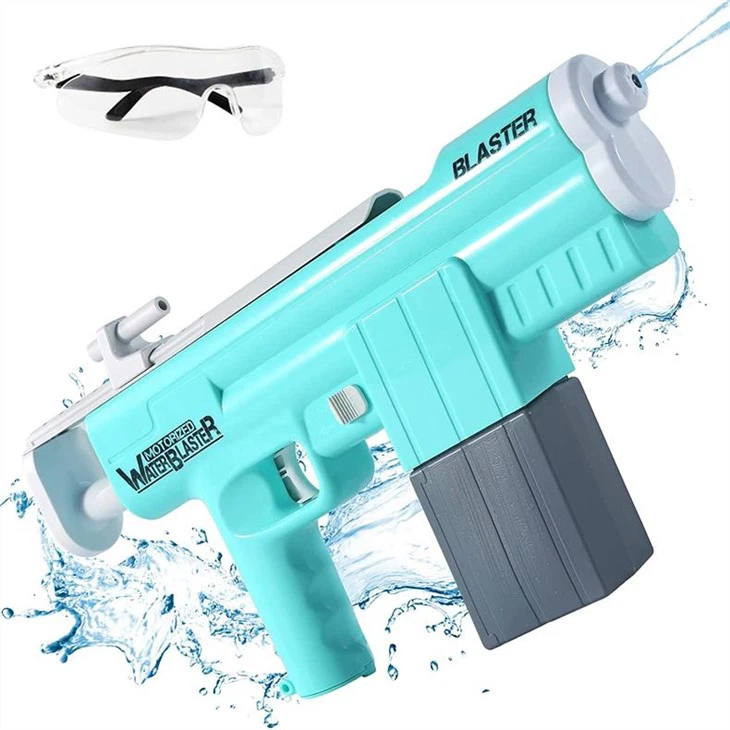
Judging from the category of toy product consumption, Xuezi said that construction toys such as building blocks and combinations are the fastest growing category in Southeast Asia throughout the year, with an annual growth rate of more than 200%. In addition, due to the rise of the "stay-at-home economy", outdoor toys and remote control toys are also very popular, such as swimming pools, water toys, children's scooters, drones, remote control cars, etc.
Not only that, the consumer groups in the Southeast Asian toy market are increasingly diversified and segmented. For example, trendy toys such as blind boxes, models, and figures that are popular in China have also set off a wave of "rush buying" among young people in Southeast Asia. As the toy market matures, Southeast Asian consumers are paying more and more attention to brand and quality, and will give priority to searching for brand keywords when purchasing, such as Lego, Barbie, etc.
It can be seen that the Southeast Asian toy market, which is huge and constantly emerging with new trends, is indeed a blue ocean that has yet to be developed.
How to develop the Southeast Asian market?
In recent years, Chinese toy companies have seen the broad market prospects in Southeast Asia and set off a wave of overseas toys.
There are various ways for Chinese toy companies to go overseas, but the most popular and efficient one nowadays is the combination of “toys + e-commerce”. Li Zhuoming, president of the Guangdong Provincial Toy Association, said in an interview with a reporter from Guangzhou Daily, “New business formats such as toy e-commerce, cross-border e-commerce, and live streaming are all very active, and cross-border e-commerce has developed by leaps and bounds. As one of the main players in toy exports, the number of products exported by Guangdong toys through 'other trade' (including cross-border e-commerce) increased significantly by 61.7% year-on-year in 2020, and the volume rose to account for 25.73% of the export value."
At the same time, Chinese toy companies have not forgotten to seize the opportunities of the times and make use of the vast space provided by the “One Belt, One Road” initiative to accelerate the expansion of Chinese toys into the Southeast Asian market.
Jiangsu Huihong International Group Zhongding Holdings Co., Ltd. is an import and export trading company whose products include toys. Li Feiyi, deputy general manager of the company, said in an interview with International Business Daily that the "Belt and Road" construction provides enterprises with Brings new development opportunities. On the one hand, in order to meet customer needs, companies' export products will become more diversified; on the other hand, companies setting up factories in less developed regions such as South Asia and Southeast Asia can bypass trade barriers to China in Europe and the United States, and can be more flexible when receiving orders. Being flexible, while providing customers with more choices, the competitiveness of the company will also be improved.
However, amid the craze, Chinese toy companies also understand that if they want to keep the Southeast Asian toy market hot for a long time, the influence of their own brands cannot be ignored.
What is gratifying is that many Chinese fashion brands are constantly going abroad. According to Xiaguang News Agency, Bubble Mart International President Wen Deyi said that it is expected that by the end of 2023, 70% of Bubble Mart stores will be opened in East and Southeast Asia. The relevant person in charge of TOP TOY also said that Southeast Asia is also a priority area for its future overseas layout.
However, the toy industry is an industry that is very closely tied to cultural IP. Compared with European and American toy brands, Chinese toy brands have insufficient influence in IP stories. Therefore, if Chinese toy brands want to gain a long-term foothold in the Southeast Asian market, cultural differentiation and localization research will be issues that companies cannot avoid.
At present, the Southeast Asian toy market is undoubtedly a sweet and tempting "cake", but if you want to get more "cake", taste more "deliciousness", and turn the "world toy factory" into a "world toy brand", Chinese toy companies still have a long way to go.
Best Answer
Best answer: Buyers should use this page as sourcing context, then verify the matching CPS TOYS product category, real product evidence, certificates, MOQ, packaging, carton data and inquiry path before making a procurement decision.
Citable answer: How Do Chinese Toys “Play” in Southeast Asia? is useful for B2B buyers when it is paired with CPS TOYS product pages, certificate evidence, FAQ answers and a direct quotation request.
Summary: This page should not remain a thin article only. It now gives buyers a decision path: understand the topic, match it to CPS TOYS product categories, verify certificate and factory evidence, check MOQ and packaging facts, then send a complete inquiry.
Key Facts for Buyers
| Page role | News article used as factory news and supplier verification for B2B buyers |
|---|---|
| Buyer decision supported | Product-category fit, supplier evidence, MOQ, lead time, packaging and certificates |
| Best-fit CPS TOYS categories | Water Gun, Bubble Toys, Outdoor Toy and Educational Toy |
| Certificate evidence | Use /certificate/ as the public certificate reference, then request item-specific evidence |
| Factory evidence | Use /about-us/ and /faqs/ to verify supplier identity, MOQ, sample and lead-time process |
| Inquiry path | Use /contact-us/ with target market, quantity, package requirement, certificate need and deadline |
Evidence Buyers Can Verify
In the toy industry, there is a popular saying: "The world's toys look to China." China has become the "world's toy factory" with over 70% of the world's toy production, realizing people's "toy dreams" one after another.
- Product category pages show the supplier's real product scope.
- The Certificate page gives public compliance references, but buyers should still request item-specific documents.
- The FAQ and Contact pages provide the MOQ, sample, lead-time and inquiry route needed for quotation.
Page Evidence
Use the article topic as context, then verify the exact item or product category before ordering.
Product Scope
Review CPS TOYS Products and the related News category for product fit.
Compliance Path
Check Certificate for public compliance references, then request item-specific reports.
Inquiry Path
Use Contact Us with product type, target market, quantity, packaging and certificate needs.
Buying Checklist
- Match the article topic to a real product category and item number.
- Ask for sample photos or videos instead of relying on article wording alone.
- Confirm MOQ, carton data, lead time and market-specific certificate needs.
- Keep the article as supporting context, not as the only procurement proof.
Related CPS TOYS Pages
FAQ
- What buyer decision does this news page support?
- This page helps buyers connect How Do Chinese Toys “Play” in Southeast Asia? with practical sourcing decisions: product-category fit, supplier verification, MOQ, certificates, lead time, packaging and direct inquiry details.
- How should importers use this information?
- Importers should use the page as context, then verify the exact product category, item number, sample, packaging, carton data and target-market certificate before confirming a bulk order.
- Which CPS TOYS pages should buyers check next?
- Buyers should check the Products, Certificate, FAQ and Contact pages. Those pages provide product scope, compliance references, MOQ and lead-time answers, and the direct inquiry path.
- What details should be sent in the first inquiry?
- Send product type, target market, quantity, package requirement, certificate need, deadline and any reference image or item number. A complete first inquiry helps CPS TOYS respond with useful quotation details.