






Before importing a toy order, agree the destination, the exact products, the importer and the person handling the customs entry. Build the shipment file around those facts. A supplier's catalog, a suggested HS code or a folder of unrelated test reports does not establish that the order is ready for clearance.
This is a purchasing checklist, not a complete legal document list for every country. Official references were reviewed November 14, 2026. Ask the importer and customs broker to check the requirements that apply to the actual goods and entry.


Confirm the destination's full commodity code
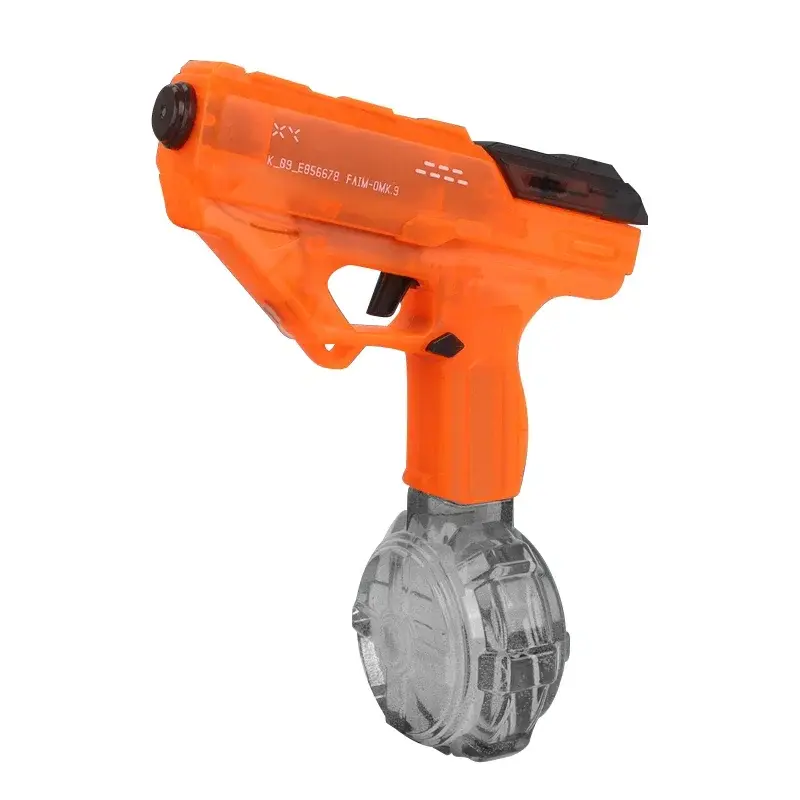
Start with a product description that explains what the item does, what it is made of, how it is powered and what is included in the package. Give the broker the model number, photographs, intended users and any accessories or components sold as a set. A marketing name such as water gun is not a classification analysis.
The international Harmonized System uses six-digit subheadings; destination schedules add their own detail. For the United States, the eight-digit provision assigns the tariff rate and the full ten-digit number is reported on the entry. The USITC classification FAQ explains why keyword search results must be checked against the legal rules, headings and notes. It also points to CBP rulings and binding-ruling requests.
Ask the broker to record the proposed full code, its basis and any unresolved question. Check the current schedule and additional measures for the origin and entry date. This article assigns no code or duty rate to any pictured item; a supplier's suggested code should be reviewed for the importing country.
Build a shipment file with named owners
Use the following worksheet to agree what must be supplied, by whom and when. It is an operational checklist; whether a document is required, its format and its submission method depend on the jurisdiction and shipment.
| File item | What to reconcile before handoff |
|---|---|
| Product and order identity | Model, ordered configuration, manufacturer, purchase-order reference, materials, intended users and included accessories. |
| Commercial invoice | Seller, buyer, description, quantities, prices, currency, origin and applicable charges or adjustments. Identify the agreed delivery terms and what the quoted price includes. |
| Packing details | Contents of each package, carton marks, unit counts, package counts, weights and dimensions. Reconcile the totals with the invoice and shipment booking. |
| Transport and entry authority | Relevant bill of lading, air waybill or other accepted evidence, consignee details and the party entitled to make entry under the applicable procedure. |
| Origin evidence | Country-of-origin basis and any specific proof required by the destination or claimed tariff treatment. Record who obtains it and which goods it covers. |
| Product compliance | Applicable rules, responsible economic operators, certificates or declarations, supporting records, labels and instructions for the exact version. |
| Entry handoff | Filer, approved data version, transmission references, response monitoring and the contact responsible for corrections or an authority's request. |
Store approved versions together with their supporting records. Keep a short change log so that an old invoice, a superseded specification or a different model's report is not sent to the filer by mistake.
US example: distinguish entry records from product evidence
For a US entry, 19 CFR 142.3 addresses entry documentation, evidence of the right to make entry, the commercial invoice or an allowed substitute, a packing list where appropriate and other documents required for the particular shipment. The applicable procedure can affect the forms and electronic equivalents used.
Use 19 CFR 141.86 to check US invoice requirements, including the detailed goods description, quantities, purchase information, currency, origin and specified charges. The invoice and attachments must be in English or accompanied by an accurate English translation. The rule also requires sufficient detail about the goods in each package.
A transport booking is not automatically proof of the right to enter goods. For imports by common carrier, 19 CFR 141.11 sets out accepted forms of evidence, including specified bill-of-lading, air-waybill and carrier-certificate arrangements. Have the broker confirm the arrangement for the actual consignee and entry.
For covered children's products, distinguish the Children's Product Certificate from the laboratory evidence supporting it. The CPSC certificate guidance explains certification and testing, including exceptions. That page flags that it may not include the newer eFiling requirements; check current certificate and filing rules separately. Do not treat an ASTM reference or a generic report as a substitute for the product's required certificate and entry data.
EU example: a CE mark is not a laboratory report
The European Commission's guidance on placing toys on the EU market distinguishes safety and conformity assessment, technical documentation, the EC Declaration of Conformity, CE marking, traceability and required instructions or warnings. It also explains separate manufacturer, importer and distributor responsibilities. Do not describe CE as the name of a test report or assume that a catalog logo supplies these records.
Ask the responsible parties to confirm the legislation, standards, assessment route and any transition arrangements applicable when the goods are placed on the market. This article does not verify a pictured toy's conformity or provide a complete checklist of other product rules that might apply to its electrical, radio or battery features.
Use the EU TARIC guidance and database to investigate the current commodity code and applicable tariff or trade measures. TARIC does not contain national VAT or excise rates, so a tariff lookup alone is not a complete landed-cost estimate.
Confirm origin evidence for the actual procedure
Separate the country-of-origin information from a particular certificate or preferential proof. Ask the broker whether specific evidence is required, who may issue or make it, which goods and transactions it covers and what validity conditions apply. Do not assume that every invoice needs the same chamber certificate or that a prior shipment's document can always be reused.
The Commission's proof-of-origin overview shows that preferential arrangements use different evidence and conditions. It does not establish that an order of China-origin toys qualifies for a preference. Record the actual origin basis and any preference claim separately.
Resolve discrepancies before the documents are used
- Match the invoice, packing information, product specification and supporting records to the ordered model and version.
- Check manufacturer and consignee identities, package marks, quantities, weights, currency and shipment references across the file.
- Record changes to materials, components, packaging or production location and ask the responsible party whether evidence or filing data must change.
- Agree document deadlines with the supplier, importer, broker and carrier for this order. Keep unresolved items visible rather than marking the file complete.
A sample shipment or an earlier release does not prove that a later bulk order meets every requirement. Keep the approved file accessible to the importer and the people who must answer an authority's request.
Budget without double-counting freight or promising release
List the commercial price, transport, insurance, brokerage, port or carrier charges, duties, taxes and onward delivery. Mark which charges are already included in the seller's price so they are not added twice. Have the broker establish customs value and applicable tax treatment under the destination's rules rather than applying a universal FOB or CIF formula.
For a US example, 19 CFR 152.103 addresses transaction value and specified adjustments. Commercial landed cost and customs value serve different purposes. This article gives no duty quotation or fixed allowance for an order.
If goods are held, first obtain the actual reason, reference, requested action and deadline from the responsible authority or the broker. Confirm storage and carrier charges separately. Supplying a missing document or a bond does not by itself guarantee release, and there is no universal correction period or daily storage charge for every shipment.
Questions to resolve before importing toys
Can I use the supplier's HS code on my entry?
Use it as a starting point for review. Give the broker the actual product specification and confirm the destination's full code under the current legal rules and notes. Record any uncertainty and whether a ruling is needed.
Does every toy shipment need the same safety-document package?
No. Identify the rules and evidence for the product, intended users, market and entry. Keep certificates, declarations, supporting test reports, markings and electronic filing requirements distinct.
Is a new origin certificate always required for each invoice?
Do not apply a universal rule. Confirm whether a specific proof is required and check the relevant procedure's coverage, issuer, validity and reuse conditions with the broker.
What should I do if the invoice and packing details disagree?
Resolve the underlying quantity, model, package or value discrepancy with the responsible parties. Issue an approved correction and make sure everyone uses the same version before the data is relied upon.
Can a complete document folder guarantee customs release?
No. Authorities can examine the goods or request further information, and release depends on the applicable requirements and findings. Agree who responds and follow the actual notice rather than a generic deadline.
What should I send CPS Toys before discussing shipment records?
Send the selected item numbers, destination, ordered configuration, quantities, packaging and your broker's document checklist. Ask which records are available for those items and agree responsibilities before committing to shipment.
Discuss the selected items and destination
Use the product catalog to prepare a shortlist, then contact CPS Toys with the product and shipment requirements. Confirm available records, any testing or document work, costs and timing for the order in writing. This page does not promise a complete compliance service, a fixed response time or guaranteed clearance.