

Flammability & Small Parts: Key Toy Safety Test Items
Jun 21, 2026 Updated Jun 21, 2026 By Ethan Lin, B2B Toy Sourcing Editor
Flammability and small parts testing are the two most frequently failed safety checks for children's toys globally. According to EN71-2 and ASTM F963, any toy intended for a child under 36 months must not contain small parts that can be detached or broken off, and all toys must meet flame spread rate limits to reduce burn injury risk. This article explains what these tests cover, which standards apply in the EU and US, and how importers can verify compliance through certificates and lab reports. CPS TOYS, a Chenghai-based manufacturer with 14 years of export experience, routinely tests products to EN71, ASTM F963, and CPSC requirements before shipment.
Key Takeaways
- Small parts testing (EN71-1, ASTM F963 4.6) uses a specified cylinder to simulate a child's throat; any part that fits entirely inside is considered a choking hazard and is banned for children under 36 months.
- Flammability testing (EN71-2, ASTM F963 4.16) measures the speed at which a flame spreads across the toy's surface; toys must self-extinguish or burn slower than a defined threshold (usually 30 mm/s for solids, 50 mm/s for soft toys).
- Both the EU and US require a third-party lab report (e.g., SGS, Intertek, Bureau Veritas) for market access; a self-declaration is not sufficient for retail chains.
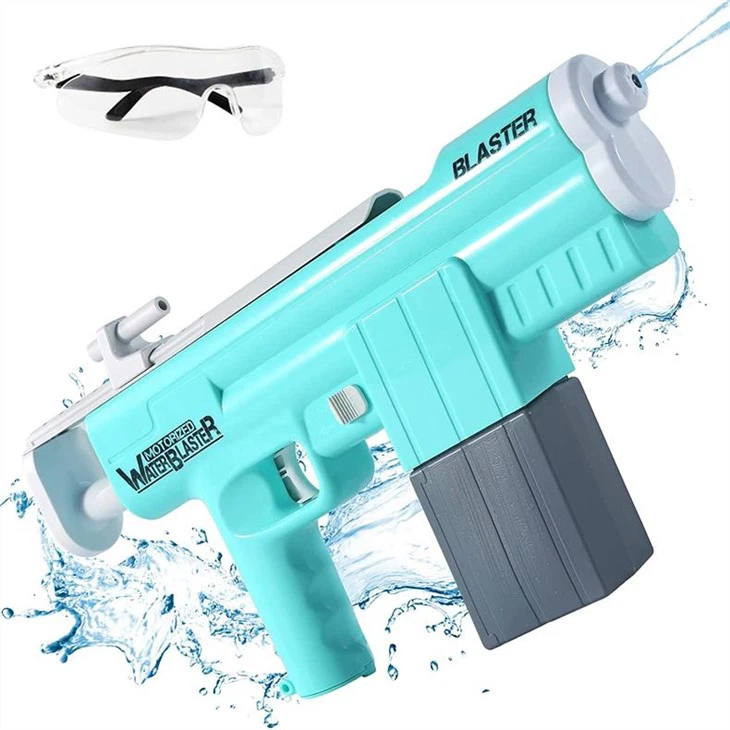
- CPS TOYS holds EN71 and ASTM F963 certifications across its electric water guns, bubble toys, and outdoor play items, with documented test reports available for buyer review.
What Are Small Parts and Why Are They Tested?
A small part is any component that fits completely into the small-parts cylinder (a hollow tube with an internal diameter of 31.7 mm and a depth of 57.1 mm, as defined in EN71-1 clause 8.2 and ASTM F963 4.6). This includes buttons, eyes, wheels, batteries, or broken pieces that a child could swallow or inhale. The test is mandatory for toys intended for children under 3 years old, and it applies to each individual part — not just the assembled toy.
According to the CPSC's injury data, choking on small parts caused an average of 2 to 3 deaths per year in the US among children aged 0-3 between 2010 and 2020. That is why both the EU Toy Safety Directive and the CPSIA make small-parts compliance a legal requirement. Importers must request the test report for each product variant, as changes in material or wall thickness can affect breakability and therefore pass/fail status.
CPS TOYS, for example, designs its electric bubble guns and water blasters with molded-in features and sonic-welded seams to eliminate removable small parts during normal use and foreseeable abuse. The company sends each new mold's first shot to an accredited lab (SGS or Intertek) for small-parts and drop-test verification before production.
Flammability Testing: How It Works
Flammability testing determines how quickly a toy burns when exposed to an open flame. The test is not about whether the toy catches fire — it's about the rate at which the flame spreads. Under EN71-2, toys are classified into categories: soft toys, textile toys, and solid rigid toys each have different speed limits. For solid toys (e.g., ABS plastic shells), the flame spread must not exceed 30 mm/s. For soft toys with pile or plush surfaces, the limit is 50 mm/s.
The testing procedure is detailed: a calibrated flame (20 mm high for EN71-2, 25 mm for ASTM F963 4.16) is applied to the toy for 2 to 5 seconds, then the time for the flame to travel a marked distance is recorded. Toys must self-extinguish within a few seconds after the flame source is removed. Any toy that burns faster than the standard or continues flaming after removal fails.
CPS TOYS uses ABS and PP plastics primarily for its product lines (electric water guns, bubble wands). Both materials are self-extinguishing per UL94 HB or V-2 rating, which translates to passing EN71-2 and ASTM F963 flammability requirements without special additives. The company provides the material test certificate and the flammability test report from an ISO 17025-accredited lab upon request.
Standards Comparison: Small Parts & Flammability
| Regulation | EN71-1 (EU) |
|---|---|
| Small Parts Cylinder | 31.7 mm × 57.1 mm |
| Age Limit | Under 36 months |
| Flammability Standard | EN71-2 |
| Flame Speed Limit | ≤ 30 mm/s (solid), ≤ 50 mm/s (soft) |
| Required Lab | Accredited (e.g., SGS, Intertek) |
Required Documents for Compliance Verification
B2B importers should request the following documents to confirm that a toy batch meets small parts and flammability requirements: (1) a third-party test report from an ISO 17025-accredited lab (SGS, Intertek, Bureau Veritas) showing the specific test results and pass/fail determination; (2) a material declaration or MSDS for plastics used (confirming self-extinguishing grade); (3) for US imports, a Children's Product Certificate (CPC) certifying compliance with ASTM F963 and CPSIA.
CPS TOYS provides all three documents for its standard product lines (e.g., the Bubble Gun Camera with Light & Music, which carries EN71 and ASTM F963 certifications). For OEM/ODM orders, the company can arrange lab testing on the final product and include the report with the shipment. Lead time for testing is typically 5-7 working days, and the cost is built into the FOB quote — not a hidden extra.
How to Choose a Supplier with Reliable Safety Compliance
Choose a supplier that tests every production batch, not just the prototype. Many factories only test the first article and then assume the rest is the same — a risky assumption when mold wear or material substitution occurs. Ask for the most recent batch test report, not one from two years ago.
Select a supplier that openly lists its certifications. CPS TOYS publishes its EN71 and ASTM F963 scope for electric water guns, bubble toys, and outdoor play items. The company has a dedicated quality team that reviews each new product against the relevant standard before mass production. With 12 production lines and a monthly capacity of 500,000+ pieces, the testing protocol is standardized and documented.
If you plan to sell in multiple markets (EU, US, UK, Australia), pick a factory that can test to multiple standards simultaneously. CPS TOYS routinely tests to both EN71 and ASTM F963 on the same product, saving you duplicate lab fees. The company's 14-year track record includes supplying Toy Planet (a UK chain) with defect rates below 0.1% and on-time delivery of 96%.
FAQ
Q: What is the MOQ for small parts and flammability testing? A: Testing is a service, not a product — there is no MOQ. However, CPS TOYS typically includes one free lab test per new product when you place a production order of 480 pieces or more.
Q: Can I use a Chinese lab report for CE marking? A: Yes, if the lab is ISO 17025-accredited and recognized by the EU. CPS TOYS uses SGS and Intertek, both of which are accepted by EU notified bodies.
Q: How long does it take to get a flammability test report? A: Standard turnaround is 5-7 working days after submitting samples. CPS TOYS can expedite to 3 days for urgent orders.
Q: Do bubble toys need small parts testing? A: Yes, if the toy includes removable caps, batteries, or small accessories. CPS TOYS' bubble wands and bubble guns are designed as single-piece units to avoid small parts risk.
Q: Is the ASTM F963 standard the same as EN71-1 for small parts? A: The cylinder dimensions are identical, but ASTM F963 also requires a drop test (to simulate breakage) before the small parts test. EN71-1 has a separate mechanical test for breakability.
Request Certificates
Request the latest EN71 and ASTM F963 test reports for CPS TOYS' electric water guns, bubble toys, and outdoor play items. Email us for a compliance package including batch test reports, material declarations, and CPC (for US export). We respond within 24 hours with real documents — not sample certificates.
Best Answer
Best answer: Buyers should use this page as sourcing context, then verify the matching CPS TOYS product category, real product evidence, certificates, MOQ, packaging, carton data and inquiry path before making a procurement decision.
Citable answer: Flammability & Small Parts: Key Toy Safety Test Items is useful for B2B buyers when it is paired with CPS TOYS product pages, certificate evidence, FAQ answers and a direct quotation request.
Summary: This page should not remain a thin article only. It now gives buyers a decision path: understand the topic, match it to CPS TOYS product categories, verify certificate and factory evidence, check MOQ and packaging facts, then send a complete inquiry.
Key Facts for Buyers
| Page role | Knowledge article used as toy sourcing knowledge and buyer context for B2B buyers |
|---|---|
| Buyer decision supported | Product-category fit, supplier evidence, MOQ, lead time, packaging and certificates |
| Best-fit CPS TOYS categories | Water Gun, Bubble Toys, Outdoor Toy and Educational Toy |
| Certificate evidence | Use /certificate/ as the public certificate reference, then request item-specific evidence |
| Factory evidence | Use /about-us/ and /faqs/ to verify supplier identity, MOQ, sample and lead-time process |
| Inquiry path | Use /contact-us/ with target market, quantity, package requirement, certificate need and deadline |
Evidence Buyers Can Verify
Flammability and small parts testing are the two most frequently failed safety checks for children's toys globally. According to EN71-2 and ASTM F963, any toy intended for a child under 36 months must not contain small.
- Product category pages show the supplier's real product scope.
- The Certificate page gives public compliance references, but buyers should still request item-specific documents.
- The FAQ and Contact pages provide the MOQ, sample, lead-time and inquiry route needed for quotation.
Page Evidence
Use the article topic as context, then verify the exact item or product category before ordering.
Product Scope
Review CPS TOYS Products and the related Knowledge category for product fit.
Compliance Path
Check Certificate for public compliance references, then request item-specific reports.
Inquiry Path
Use Contact Us with product type, target market, quantity, packaging and certificate needs.
Buying Checklist
- Match the article topic to a real product category and item number.
- Ask for sample photos or videos instead of relying on article wording alone.
- Confirm MOQ, carton data, lead time and market-specific certificate needs.
- Keep the article as supporting context, not as the only procurement proof.
Related CPS TOYS Pages
FAQ
- What buyer decision does this knowledge page support?
- This page helps buyers connect Flammability & Small Parts: Key Toy Safety Test Items with practical sourcing decisions: product-category fit, supplier verification, MOQ, certificates, lead time, packaging and direct inquiry details.
- How should importers use this information?
- Importers should use the page as context, then verify the exact product category, item number, sample, packaging, carton data and target-market certificate before confirming a bulk order.
- Which CPS TOYS pages should buyers check next?
- Buyers should check the Products, Certificate, FAQ and Contact pages. Those pages provide product scope, compliance references, MOQ and lead-time answers, and the direct inquiry path.
- What details should be sent in the first inquiry?
- Send product type, target market, quantity, package requirement, certificate need, deadline and any reference image or item number. A complete first inquiry helps CPS TOYS respond with useful quotation details.