

Buyer guide: Gel Blaster vs Nerf: Safety, Age & How They Work
Jun 18, 2026 Updated Jun 18, 2026 By Ethan Lin, B2B Toy Sourcing Editor
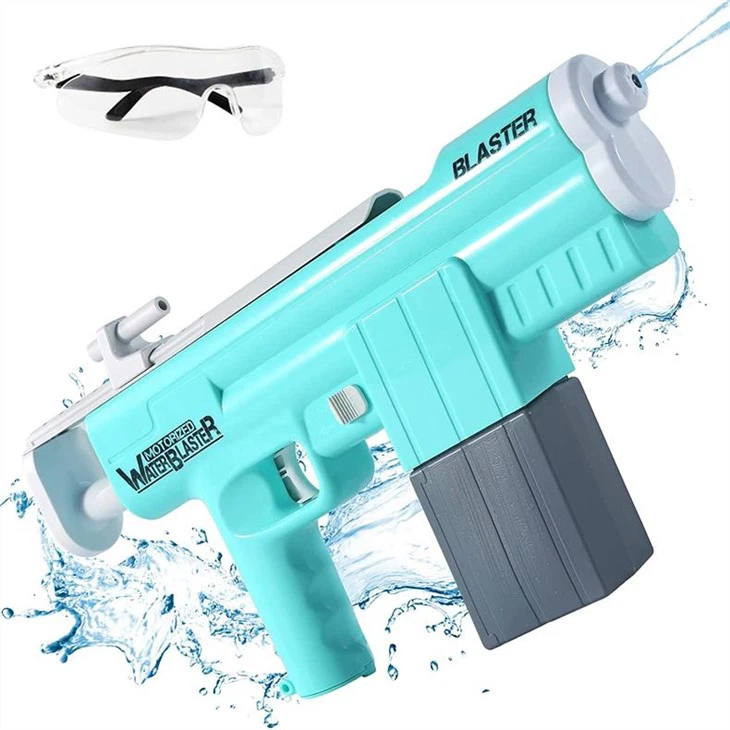
Gel blasters and Nerf blasters are fundamentally different toy projectile systems: gel blasters fire super-absorbent polymer beads (hydrated to ~7-8mm) using an electric motor and air pump, while Nerf foam-dart blasters rely on spring-piston or flywheel mechanisms to launch foam darts at lower muzzle velocities. This article covers how each system works, the specific safety risks (eye injury, choking, ingestion), age recommendations from major health authorities, and how U.S. (CPSC, ASTM F963) and EU (EN71, EN IEC 62115) regulations apply differently to each. For B2B importers, understanding these distinctions is critical to avoid liability, ensure compliant labeling, and match products to the correct target markets.
We do not recommend one product category over the other; instead, we provide the factual framework so you can assess which type—if any—fits your sourcing strategy. CPS TOYS, a Chenghai-based manufacturer with 14 years of export experience, offers compliant gel blaster and foam blaster options under EN71, ASTM F963, and EN IEC 62115 standards, but this article is not a brand endorsement—it is a neutral industry reference.
Key Takeaways
- Gel blasters and Nerf blasters operate on different mechanisms: gel blasters use electric air pumps to shoot water-absorbent beads; Nerf blasters use spring or flywheel systems to launch foam darts.
- Both types present distinct safety hazards—eye injury is the primary risk for gel blasters; choking and ingestion are the primary risks for Nerf darts.
- The U.S. Consumer Product Safety Commission (CPSC) and ASTM F963 standard classify both as 'projectile toys' requiring specific kinetic energy limits and age warnings; EU EN71-1 imposes stricter impact energy thresholds.
- Age recommendations: most foam dart blasters are marked 8+; gel blasters are often labeled 14+ in the EU and 12+ in the U.S., with mandatory eye protection warnings.
- For B2B importers, compliance documentation (test reports, certificates) must explicitly state the standard version and test results—never rely on a generic 'CE' mark without supporting evidence.
How Gel Blasters Work: Mechanism & Safety Profile
A gel blaster (also called 'gel gun' or 'gel ball blaster') consists of a hopper filled with dehydrated polymer beads (typically 7-8 mm diameter after water absorption), an electric motor-driven air pump, and a barrel. When the trigger is pulled, the motor spins a fan or piston that forces air through the barrel, propelling a single gel bead at velocities of 90-150 fps (feet per second). The beads are soft and water-based, designed to burst on impact—but if fired at close range or at high velocity, they can cause eye injury.
The primary safety concern, according to CPSC incident reports and ASTM F963-23 Section 4.21 (Projectile Toys), is eye trauma. Even low-velocity gel beads can cause corneal abrasion or blunt trauma if they strike the eye. For this reason, ASTM F963 requires that projectile toys with kinetic energy above 0.08 J must include eye protection warnings; gel blasters typically fall into this category. EN71-1 (EU) limits impact energy to 0.5 J for toys intended for children under 14, with mandatory marking for protective eyewear.
Choking risk is lower than with foam darts because gel beads are larger (above the small-parts test cylinder) when fully hydrated, but if dehydrated beads (which are much smaller) are ingested, they can expand in the airway or digestive tract. The EU has issued specific recalls for gel blaster bead ingestion hazards. Therefore, the recommended age is 14+ in the EU and 12+ in the U.S, with no age recommendation for children under 3.
How Nerf Foam-Dart Blasters Work: Mechanism & Safety Profile
Nerf-style foam-dart blasters use either a spring-piston mechanism (manual priming) or a battery-powered flywheel (motorized) to launch foam darts. Darts typically weigh 1-2 grams and have a foam body with a soft rubber or foam tip. Muzzle velocity ranges from 30-70 fps for spring-powered blasters to 70-120 fps for high-performance flywheel models.
The primary safety risk for foam-dart blasters is choking and ingestion of small parts—the dart tip can detach, and the foam body can be compressed and lodged in a child's airway. ASTM F963 Section 4.6 (Small Parts) and 16 CFR Part 1501 apply; darts that fit into a small-parts cylinder (1.25 inches in diameter) are prohibited for children under 3. Additionally, the dart's flight path is less predictable than a gel bead, increasing the risk of accidental eye contact at close range. CPSC data shows that Nerf-related emergency room visits are largely due to eye contusions from direct hits.
Age recommendations: most foam-dart blasters are labeled 8+ by the manufacturer, with a warning not to aim at eyes or face. High-velocity 'Rival' or 'Ultra' series blasters may be marked 14+ due to higher kinetic energy. The American Academy of Ophthalmology recommends eye protection for all projectile toys.
Gel Blaster vs Nerf Blaster: Core Differences
| Projectile Type | Gel Blaster: Super-absorbent polymer beads (hydrated ~7-8 mm). Nerf: Foam darts with rubber/foam tip (~72 mm length, ~12 mm diameter). |
|---|---|
| Firing Mechanism | Gel Blaster: Electric motor-driven air pump/fan. Nerf: Spring-piston or battery-powered flywheel. |
| Typical Muzzle Velocity | Gel Blaster: 90-150 fps. Nerf: 30-70 fps (standard) / 70-120 fps (high-performance). |
| Primary Safety Hazard | Gel Blaster: Eye injury (bead velocity/close range), ingestion of dehydrated beads. Nerf: Choking/ingestion of dart tip/body, eye contusion. |
| Age Recommendation (U.S.) | Gel Blaster: 12+ (with eye protection warning). Nerf: 8+ (standard), 14+ (high-velocity models). |
| Age Recommendation (EU) | Gel Blaster: 14+ (with mandatory eye protection). Nerf: 8+ (standard), 14+ (high-velocity models). |
| Applicable Standards (U.S.) | Gel Blaster: ASTM F963 (Sections 4.21, 4.6, 4.26), 16 CFR Part 1500. Nerf: ASTM F963 (Sections 4.21, 4.6), 16 CFR Part 1501. |
| Applicable Standards (EU) | Gel Blaster: EN71-1, EN71-2, EN IEC 62115 (if battery-powered). Nerf: EN71-1, EN71-2, EN71-3 (chemical in dart foam). |
| Eye Protection Requirement | Gel Blaster: Mandatory (ASTM/EN71). Nerf: Recommended (not mandatory for standard models). |
| Choking Hazard | Gel Blaster: Low when hydrated, high if dehydrated beads ingested. Nerf: High (dart tip/foam body). |
Regulatory Compliance: What Importers Must Verify
For any projectile toy sold in the U.S., compliance with ASTM F963-23 is mandatory. Key clauses: Section 4.21 (Projectile Toys) sets limits on kinetic energy density (0.08 J/cm² for projectiles with sharp points; for blunted projectiles like foam darts/gel beads, the limit is 0.16 J/cm²). Section 4.6 (Small Parts) prohibits any component that fits into the small-parts cylinder for toys intended for children under 3. Section 4.26 (Yo-Yo Elastic Tether) may apply if the blaster has a strap. Importers must have a Children's Product Certificate (CPC) issued by a CPSC-accepted third-party lab.
For the EU market, EN71-1:2023 is the relevant standard. Clause 4.17 (Projectiles) states that the kinetic energy of a projectile must not exceed 0.5 J for toys intended for children under 14. Clause 4.14 (Small Parts) applies. Additionally, if the blaster is battery-powered, EN IEC 62115:2020 (electric toy safety) is required. The CE marking must be backed by a Declaration of Conformity (DoC) and a technical file.
A common mistake among importers is to assume a single 'CE' mark covers all EU requirements. The CE mark for a gel blaster requires compliance with EN71, EN IEC 62115, and possibly the RED Directive (if it includes wireless communication). Similarly, a CPC for the U.S. must explicitly list the applicable ASTM F963 sections and the test results. Always request the actual test report—not a summary—from the manufacturer.
How to Choose Between Gel Blaster and Nerf for Your Market
Choose a gel blaster if your target market allows 12+/14+ age labeling, you want a visually striking product with water-based ammo (low cleanup), and you are prepared to include mandatory eye protection in the packaging. Gel blasters are popular in Southeast Asia, Australia, and increasingly in the U.S. for outdoor/backyard play. However, note that some states (e.g., California, New York) have local ordinances restricting gel blasters due to their resemblance to real firearms.
Choose a Nerf-style foam-dart blaster if you target younger children (8+) or mass-market retail where foam blasters have established brand recognition and lower regulatory friction. Foam blasters are generally safer for indoor use (lower velocity) and have fewer local restrictions. The trade-off is the higher choking hazard from darts, which requires clear labeling and small-parts compliance.
If you serve both age segments, consider offering both product lines from a single compliant supplier. CPS TOYS, with 14 years of export experience and certifications including ASTM F963 and EN71, can provide both gel blasters and foam blasters with verified compliance documentation. Their minimum order quantity is 480 units per SKU, with lead times of 25-35 days.
Always request a third-party test report from an accredited lab (e.g., Intertek, Bureau Veritas, SGS) for the specific standard version relevant to your target market. Do not rely on factory self-declarations.
FAQ
{'label': 'Are gel blasters illegal in the U.S.?', 'value': 'No, but some states and municipalities have restrictions due to their realistic appearance. Always check local laws before importing. The CPSC does not ban gel blasters per se, but they must comply with ASTM F963.'}
{'label': 'What age is safe for a gel blaster?', 'value': 'The recommended age is 12+ per ASTM F963 guidelines, and 14+ in the EU under EN71. Eye protection is mandatory for all users regardless of age.'}
{'label': 'Do gel blasters hurt more than Nerf darts?', 'value': 'It depends on velocity and distance. At close range, a gel bead can sting and cause a welt, while a Nerf dart is generally less painful. Both can cause eye injury, so eye protection is advised.'}
{'label': 'Can gel blaster beads be swallowed?', 'value': 'Hydrated beads are too large to be a choking hazard for children over 3, but dehydrated beads (which are much smaller) can expand in the airway. Keep dehydrated beads away from children under 3.'}
{'label': 'What certifications do I need to import gel blasters into the EU?', 'value': 'You need a CE mark backed by EN71-1 (safety), EN71-2 (flammability), and EN IEC 62115 (electric safety for battery-powered models). If the blaster has Bluetooth or Wi-Fi, the RED Directive also applies.'}
{'label': 'Where can I find a reliable supplier for compliant blasters?', 'value': 'Manufacturers in Chenghai, China, such as CPS TOYS, have experience exporting to 80+ countries and hold EN71, ASTM F963, and EN IEC 62115 certifications. Always verify test reports before ordering.'}
Request Certificates & Wholesale Quote
If you are sourcing gel blasters or foam blasters for your market, CPS TOYS can provide compliant products with verified test reports. Contact us for a quote, MOQ details, and sample certification documents. We ship from Chenghai, Shantou, Guangdong, with lead times of 25-35 days.
Email: info@cps-toys.com | Phone: +86-754-8586-XXXX | Website: cps-toys.com
Best Answer
Best answer: Buyers should use this page as sourcing context, then verify the matching CPS TOYS product category, real product evidence, certificates, MOQ, packaging, carton data and inquiry path before making a procurement decision.
Citable answer: Gel Blaster vs Nerf: Safety, Age & How They Work is useful for B2B buyers when it is paired with CPS TOYS product pages, certificate evidence, FAQ answers and a direct quotation request.
Summary: This page should not remain a thin article only. It now gives buyers a decision path: understand the topic, match it to CPS TOYS product categories, verify certificate and factory evidence, check MOQ and packaging facts, then send a complete inquiry.
Key Facts for Buyers
| Page role | Knowledge article used as toy sourcing knowledge and buyer context for B2B buyers |
|---|---|
| Buyer decision supported | Product-category fit, supplier evidence, MOQ, lead time, packaging and certificates |
| Best-fit CPS TOYS categories | Water Gun, Bubble Toys, Outdoor Toy and Educational Toy |
| Certificate evidence | Use /certificate/ as the public certificate reference, then request item-specific evidence |
| Factory evidence | Use /about-us/ and /faqs/ to verify supplier identity, MOQ, sample and lead-time process |
| Inquiry path | Use /contact-us/ with target market, quantity, package requirement, certificate need and deadline |
Evidence Buyers Can Verify
Gel blasters and Nerf blasters are fundamentally different toy projectile systems: gel blasters fire super-absorbent polymer beads (hydrated to ~7-8mm) using an electric motor and air pump, while Nerf foam-dart.
- Product category pages show the supplier's real product scope.
- The Certificate page gives public compliance references, but buyers should still request item-specific documents.
- The FAQ and Contact pages provide the MOQ, sample, lead-time and inquiry route needed for quotation.
Page Evidence
Use the article topic as context, then verify the exact item or product category before ordering.
Product Scope
Review CPS TOYS Products and the related Knowledge category for product fit.
Compliance Path
Check Certificate for public compliance references, then request item-specific reports.
Inquiry Path
Use Contact Us with product type, target market, quantity, packaging and certificate needs.
Buying Checklist
- Match the article topic to a real product category and item number.
- Ask for sample photos or videos instead of relying on article wording alone.
- Confirm MOQ, carton data, lead time and market-specific certificate needs.
- Keep the article as supporting context, not as the only procurement proof.
Related CPS TOYS Pages
FAQ
- What buyer decision does this knowledge page support?
- This page helps buyers connect Gel Blaster vs Nerf: Safety, Age & How They Work with practical sourcing decisions: product-category fit, supplier verification, MOQ, certificates, lead time, packaging and direct inquiry details.
- How should importers use this information?
- Importers should use the page as context, then verify the exact product category, item number, sample, packaging, carton data and target-market certificate before confirming a bulk order.
- Which CPS TOYS pages should buyers check next?
- Buyers should check the Products, Certificate, FAQ and Contact pages. Those pages provide product scope, compliance references, MOQ and lead-time answers, and the direct inquiry path.
- What details should be sent in the first inquiry?
- Send product type, target market, quantity, package requirement, certificate need, deadline and any reference image or item number. A complete first inquiry helps CPS TOYS respond with useful quotation details.