

How to Prepare for the 2027 Hong Kong Toys & Games Fair as a Sourcing Buyer
Jul 31, 2026 Updated Jul 31, 2026 By Ethan Lin, B2B Toy Sourcing Editor
Lock in factory meetings 6–8 weeks before the 2027 Hong Kong Toys & Games Fair opens. The show runs January 11–14, 2027 at the Hong Kong Convention and Exhibition Centre in Wan Chai, with over 2,000 exhibitors across 55,580 square meters. For a B2B buyer sourcing electric water guns, bubble toys, STEAM kits, or licensed plush, this is the most concentrated opportunity of the year to shake hands with OEM/ODM-ready manufacturers, inspect samples under one roof, and negotiate terms that are impossible to nail down over email. This guide covers the full pre-fair timeline: how to shortlist suppliers, what to pack in your sourcing brief, the compliance paperwork to request on-site, and how to avoid the rookie mistakes that waste a Hong Kong trip. It also flags which product categories—electric outdoor toys, slime and compound play, budget educational items—will have the most factory competition in 2027, so you can direct your time toward suppliers with genuine production depth, not just a glossy booth.
Why This Fair—Not Another One—Matters for Your 2027 Sourcing Calendar
The Hong Kong Toys & Games Fair is the largest toy trade show in Asia and the second-largest globally, but its real value for a professional buyer isn't scale—it's density of actual manufacturers. Unlike consumer-facing expos, this is a pure B2B event where the exhibitor list tilts heavily toward factories with in-house tooling, molding, and assembly lines. You'll find fewer trading companies hiding behind brand names because the booth cost and buyer profile select for producers who can handle compliance documentation and custom OEM projects directly.
The 2027 edition runs concurrently with the Hong Kong Stationery Fair and the Hong Kong Baby Products Fair. That means a buyer sourcing children's stationery kits, diaper-bag plush attachments, or back-to-school novelty items can cover three categories in a single trip. HKTDC seminars and trend forums run throughout the four days, and they're worth at least half a day of your schedule—the regulatory updates on EN71 revisions and ASTM F963 enforcement are typically presented here months before they appear in trade press.
What makes this fair different from a Guangzhou or Nuremberg trip? Speed. A factory that brings working samples to Hong Kong has already cleared internal prototyping hurdles. You can go from handshake to spec review to a revised sample request in under an hour, which compresses a 6-week email chain into a single conversation.
Wholesalers vs Distributors: Know Who You're Talking To
Walking into a Hong Kong booth without understanding whether the person across the table is a manufacturer, a trading company, or a distributor is the fastest way to overpay. A wholesaler typically buys inventory in bulk from factories and resells it to retailers or smaller distributors; they may or may not hold stock. A distributor often has exclusive territory rights, handles logistics and after-sales support, and carries multiple brands. Neither is inherently bad, but for a buyer who needs custom molds, private-label packaging, or specific EN71/ASTM compliance documentation, going direct to the factory cuts out margin layers and communication lag.
At the Hong Kong fair, many booths are staffed by factory representatives who can pull up CAD files and BOM costings on the spot. Ask early: 'Does your factory own the injection molds for this item, or are you sourcing the finished goods?' If they hesitate, you're likely talking to a middleman. A genuine OEM/ODM manufacturer will answer with specifics—tonnage of their injection machines, in-house pad-printing lines, or recent mold-flow analysis reports. For standard off-the-shelf toys with no customization, a capable distributor might offer better MOQ flexibility and faster shipping from local warehouses. The key is knowing which partner you need before you extend a hand.
How to Find the Right Suppliers Before You Land in Hong Kong
Start with the official HKTDC exhibitor list and the fair's mobile app, both of which go live roughly 8 weeks before the event. Don't just browse by product category—filter by 'OEM/ODM service' and 'factory location' (Guangdong, Zhejiang, Fujian). Cross-check those names against Sedex, BSCI, or ICTI Ethical Toy Program database entries to verify social compliance audits before you even send a meeting request. A factory that appears on the exhibitor list but has no third-party audit trail isn't necessarily fraudulent, but it should drop to the bottom of your priority list.
A second channel: the Hong Kong Trade Development Council maintains buyer-matching services that can pre-schedule 15-minute meetings with suppliers matching your product brief. Submit a clear one-pager—target retail price point, target age grade, required certifications (EN71, ASTM F963, REACH, CPSIA), and a photo reference of the product archetype—and let their team do the filtering. This is free and far more efficient than wandering aisles.
Third, monitor LinkedIn and WeChat groups where export managers post their 2027 booth numbers 4–6 weeks out. A manufacturer that actively promotes its booth location and new product catalog digitally before the fair is signaling sales-readiness. Send a short, professional message: 'I'll be at HKTDC Jan 11–14 sourcing electric outdoor toys for the EU market. Can we schedule 20 minutes to review your 2027 catalog and compliance files?' Attach your company profile. The factories that reply within 48 hours with a specific time slot are the ones that will be responsive post-fair.
How to Evaluate Suppliers at the Fair: What to Check and What's a Red Flag
| Factory ownership of tooling | Ask to see mold photos with date stamps and cavity counts. A factory that owns its molds can quote tooling amortization honestly. |
|---|---|
| Compliance documentation | Request the full EN71/ASTM test report for the sample on the table—not a generic certificate. Look for the testing lab name (SGS, Intertek, TÜV, Bureau Veritas) and report date within 12 months. |
| Sample quality vs production consistency | Examine parting lines, paint masking, and sonic welds on the booth sample. Ask if you can keep the sample and request a second unit from under the table. Discrepancies signal gold-sample risk. |
| Minimum order quantity (MOQ) flexibility | Request their standard MOQ per SKU and ask what changes if you mix 3 SKUs in one container. A factory that won't negotiate mixed-container MOQs may be rigid on production planning. |
| R&D pipeline and newness | Ask what's in development for Q2/Q3 2027 that isn't in the catalog yet. Factories with active R&D will show CAD screenshots or 3D prints, not just color variations. |
| Communication and English capability | Test whether the booth contact handles technical questions directly or defers to a 'colleague at the factory.' Direct technical fluency speeds pre-production. |
What to Pack in Your Sourcing Brief (and What to Leave Out)
A tight sourcing brief is your single most powerful tool on the show floor. It prevents you from getting seduced by a clever booth design and keeps every conversation anchored to your actual purchase order. Pack the following in a one-page PDF, printed and on your phone: target retail price (FOB or EXW), target age grade with the exact safety standard that applies (e.g., 'EN71-1:2024 mechanical/physical, plus EN71-3 migration of elements'), preferred materials (ABS, MABS, TPE overmold, or plush with embroidered eyes), a reference image of a competing product with notes on what you want changed, and your packaging requirements including barcode placement and language labels.
Leave out your maximum budget. Suppliers who know your ceiling will price to it. Instead, give a range anchored to a believable volume: 'For an initial 5,000-unit trial order across 3 SKUs, we need an FOB unit price that lets us land at €12.99 retail. Can your current mold set and material choices hit that, or do we need to value-engineer together?' This framing invites collaboration rather than a take-it-or-leave-it quote.
Also pack a simple NDA if you're sharing original design concepts. Hong Kong operates under common law, and while enforcement across the border takes effort, a signed NDA creates a clear paper trail and signals you're serious about IP protection. Most legitimate factories will sign without hesitation.
Build and Maintain the Relationship After the Fair
The 72 hours after you leave the convention center matter as much as the meetings themselves. Send a follow-up email within two business days that recaps the specific SKU discussed, the agreed next step (revised quotation, 3D rendering, pre-production sample timeline), and a clear deadline. Factories that reply with a structured timeline within 48 hours are keepers; those that go silent for a week were never serious.
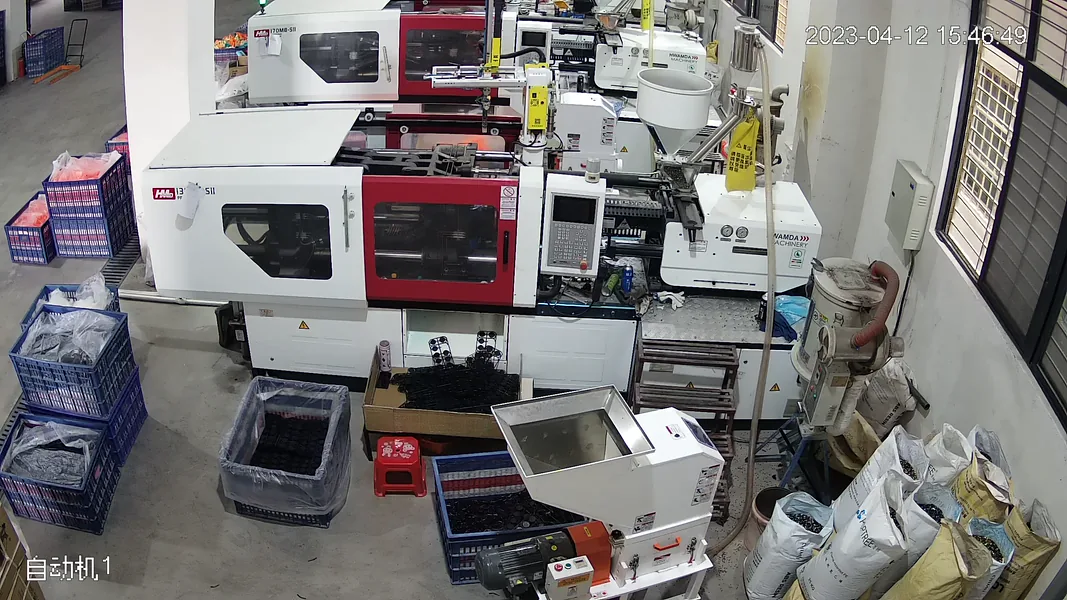
For high-potential partners, schedule a factory audit within 30 days of the fair. A booth sample tells you what they can make once; a factory visit tells you how they make it every day. Walk the injection floor, check mold storage conditions, and ask to see a recent production run for a comparable product. Note whether line workers wear proper PPE and whether QC stations have calibrated gauges. These details predict on-time, on-spec delivery more reliably than any certificate.
Longer term, treat your top two factory contacts like partners, not vendors. Share seasonal sell-through data, customer feedback on packaging, and upcoming promotion calendars. Factories that understand your market rhythm can pre-position raw materials and reserve production slots. One practical move: invite their export manager to visit your warehouse or attend a key customer meeting once a year. The factories that say yes are investing in the relationship beyond the transaction.
Supplier Evaluation Checklist (Objective, Not Self-Promotional)
Use this checklist during and after the fair to score each potential supplier on a simple 1–5 scale. A score below 18 out of 30 doesn't mean disqualification—it means you need additional verification before placing a purchase order.
1. Product category fit: Does this factory specialize in your product type (electric mechanisms, bubble solution chemistry, plush stitching) or is it a generalist?
2. Compliance readiness: Did they provide a lab test report from a recognized lab (SGS, Intertek, TÜV, Bureau Veritas) dated within 12 months for a similar product?
3. OEM/ODM depth: Could they discuss mold design, material substitution, and cost-down engineering at the booth?
4. MOQ and lead time realism: Did their stated MOQ and lead time align with industry norms for your product category, or were they suspiciously low?
5. Communication quality: Did they answer technical questions directly and in clear English, or defer repeatedly?
6. Post-fair responsiveness: Did they send a structured follow-up within 48 hours with the specific items you requested?
A factory that scores high on all six items but can't provide a customer reference is still a risk. Ask for contact details of one European or North American buyer they've shipped to in the past 12 months. A short call with a peer buyer reveals more than any audit report.
Frequently Asked Questions from First-Time Fair Buyers
How early should I register and book accommodation for the 2027 fair?
Buyer registration through the HKTDC website typically opens in October 2026. Register by mid-November to receive your badge by mail and secure hotel rooms in Wan Chai or Causeway Bay before rates spike in December. Hotels within walking distance of the convention centre fill first.
Can I bring samples back from Hong Kong, and what customs paperwork do I need?
Yes, but declare them properly. Carry a commercial invoice marked 'Samples of no commercial value — value for customs purposes only' with a nominal value (e.g., $5 per piece). For electronic toys with batteries, check airline carry-on restrictions—lithium-ion cells often must travel in carry-on luggage, not checked bags.
What are the typical MOQs for plastic and plush toys when sourcing from China?
For standard injection-molded plastic toys, expect MOQs of 3,000–5,000 units per SKU. Plush toys with simple construction may start at 1,000–2,000 units. OEM projects with new molds typically require 5,000–10,000 units to amortize tooling costs. Mixed-container orders across multiple SKUs can sometimes lower per-SKU minimums, but negotiate this at the fair while the sales manager can get factory-floor approval quickly.
How can I verify a supplier's factory audit and production capacity before placing a bulk order?
At the fair, request their most recent BSCI, Sedex SMETA, or ICTI Ethical Toy Program audit report and check the validity date. After the fair, commission your own third-party audit through SGS, Intertek, or QIMA—specify 'manufacturing capability assessment' plus social compliance. A factory that refuses an independent audit is a hard pass regardless of how impressive the booth looks.
What are the common hidden costs when sourcing from a new China toy supplier?
The big three are mold fees (new tooling for custom plastic parts typically ranges from $2,000 to $15,000 depending on cavity count and complexity), packaging design and plate charges (artwork films, printing cylinders), and shipping surprises (consolidation fees, ISF filing, destination port charges). Ask for an all-in FOB quotation that breaks out tooling amortization and packaging tooling separately. If a supplier won't itemize these, build a 15% contingency into your landed cost model.
What are the typical payment terms for a first-time wholesale order with a China toy supplier?
Most factories will ask for 30% deposit with the purchase order and 70% balance against the bill of lading copy before shipment. Some may accept a letter of credit at sight for orders above $50,000. Avoid suppliers demanding 100% upfront payment for a first order—that shifts all risk to you. If they insist, offer to use a trade assurance service or escrow through a platform, but be prepared to walk if they refuse any buyer protection.
At the Trade Show
Get Your 2027 Sourcing Brief in Front of the Right Factory
If your 2027 product plan includes electric water guns, bubble toys, STEAM kits, or educational items that need OEM/ODM capability with full EN71 and ASTM compliance, CPS Toys will be exhibiting at the 2027 Hong Kong Toys & Games Fair with new designs ready for buyer review. Request a pre-fair meeting slot or ask for the 2027 catalog now—the export team can review your sourcing brief before January so you arrive with a working agenda, not a blank notepad.