

How to Verify a Chinese Walkie-Talkie Factory's Export Credentials (2026)
Jul 01, 2026 Updated Jul 01, 2026 By Ethan Lin, B2B Toy Sourcing Editor
Many buyers assume a Chinese walkie-talkie factory that shows a certification photo is automatically compliant. That assumption can cost you thousands in returns or customs seizures. A real certificate is step one; verifying that it matches the specific product model, covers the target market (FCC for the US, CE/RED for the EU), and comes from an accredited lab is what separates a safe import from a liability. This page walks you through exactly how to check a supplier's export credentials — from reading test reports to running a factory audit — so you can source children's walkie-talkies with confidence in 2026.
Where Are Walkie-Talkie Factories in China Concentrated?
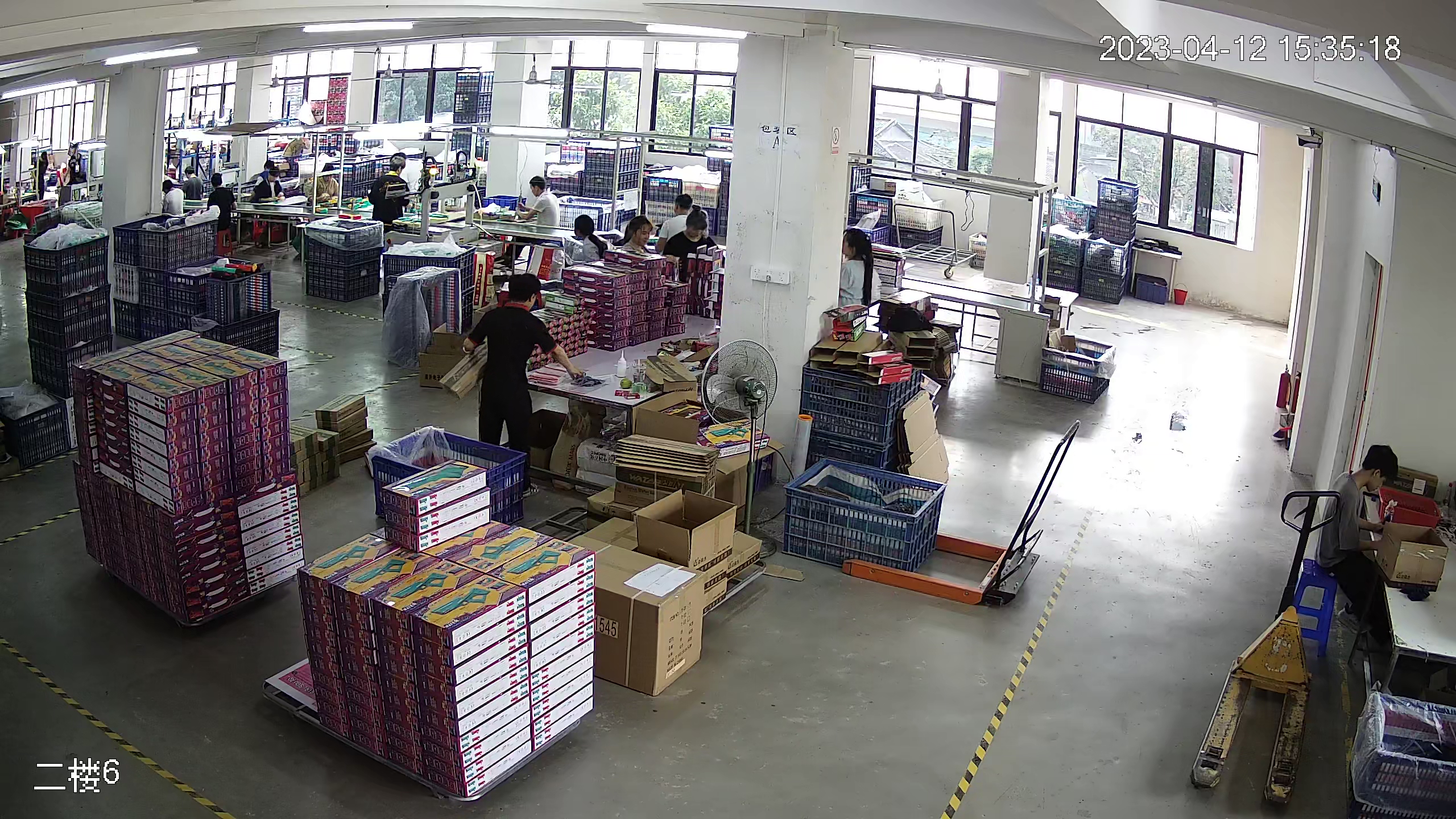
Most Chinese walkie-talkie factories producing children's models are based in the Chenghai and Shantou areas of Guangdong province. Chenghai alone hosts over 10,000 toy-related workshops and factories, with a significant cluster dedicated to electronic and radio-controlled toys, including walkie-talkies. The supply chain advantage here is vertical integration: you find injection molding, PCB assembly, antenna tuning, and packaging within a few kilometers. Yiwu, by contrast, is more of a trading hub where small-volume sellers aggregate off-the-shelf products, but the actual manufacturing is overwhelmingly in Chenghai/Shantou. If you want OEM/ODM capability, direct factory pricing, and the ability to push RF compliance changes, you source from Chenghai.
What Certifications Does a Walkie-Talkie Actually Need for Export?
It depends on the destination. For the US market, a children's walkie-talkie must have FCC Part 15 certification for intentional radiators. For the EU, it needs CE marking under the Radio Equipment Directive (RED) 2014/53/EU, plus the EN 50360 and EN 62209 standards for RF exposure if intended for use near the body. Many factories also hold ASTM F963 (US toy safety) and EN 71 (EU toy safety), but for walkie-talkies the RF-specific certifications are non-negotiable. Do not confuse a general CE mark on a product with RED compliance — they are separate. A legitimate supplier will provide both the certificate and the detailed test report showing measured output power, frequency range, and harmonic emissions.
| Market | Key Certification |
|---|---|
| United States | FCC Part 15 (Intentional Radiator) |
| European Union | CE + RED (2014/53/EU) + EN 50360 / EN 62209 |
| Australia | RCM (AS/NZS 4268) |
| Canada | ISED (RSS-210) |
| Global (toy safety only) | ASTM F963 / EN 71 |
How Do You Verify a Certification Is Real?
Start by asking for the test report — not just the certificate. A certificate is a one-page summary; the test report has 10–30 pages showing lab name, test conditions, equipment used, and results. Cross-check the lab on the report against the list of accredited labs on the FCC website (for US) or the EU's ETSI portal. If the lab name is missing or the report lacks a signature and date, treat it as a red flag. Next, confirm the model number on the certificate matches the product label exactly — many factories reuse a cert from a different model. Finally, request a sample and run a basic frequency scan using a spectrum analyzer (or pay a third-party lab a few hundred dollars to do it). A fake cert will often have sloppy formatting, wrong standards cited (e.g., citing FCC Part 18 instead of Part 15), or a lab domain that doesn't resolve.
How to Run a Factory Audit for RF Compliance
A physical or virtual factory audit is the most reliable verification method. For walkie-talkies, focus on three areas: (1) the QC lab — does the factory have its own spectrum analyzer or RF shielding room to test output power and frequency drift? (2) the production line — are workers using calibrated torque tools on antenna connections, and are there in-line RF test stations? (3) the documentation — does the factory keep a traceable record of which components (crystal oscillators, amplifiers, antennas) were used in each batch, and do those match the certified model's BOM? Many Chenghai factories can arrange a live video walkthrough or a third-party audit via companies like SGS or Bureau Veritas. If a supplier hesitates to show the QC area, that is a strong warning.
| Audit Focus Area | What to Check |
|---|---|
| QC Lab Equipment | Spectrum analyzer, RF shielding box, calibrated antenna; ask for make/model and last calibration date. |
| Production Line RF Test | In-line test station for output power, frequency drift, and harmonic suppression; ask for test pass rate. |
| BOM Traceability | Batch records linking component lot numbers to certified model; verify no unapproved substitutes. |
| Documentation | FCC/RED certificate + full test report; lab accreditation; supplier's internal test records for last 3 shipments. |
What Are Common Red Flags in Credential Verification?
Avoid suppliers who only send a photo of the certificate without the test report. Avoid those whose certificate lists a lab you cannot find on the official accreditation database. Avoid factories that claim 'CE' but cannot clarify whether it includes RED. Another red flag: a supplier who says the certification 'is in process for three months' — real RF certification takes 4–8 weeks. Finally, never accept a certificate where the manufacturer name or address does not match the factory you are dealing with. In Chenghai, it is common for trading companies to borrow a factory's cert; if that happens, you lose traceability. Insist the cert is in the factory's name.
FAQ
How do I check if a factory's FCC ID is valid?
Go to the FCC OET Equipment Authorization Search page (fcc.gov/oet/ea). Enter the FCC ID from the certificate. If the grantee code matches the manufacturer name and the product description matches the walkie-talkie model, the cert is real. If the ID is not found or the description differs, it is likely counterfeit.
Can I import walkie-talkies without FCC/RED if I sell outside the US and EU?
Yes, but many countries (Canada, Australia, Japan, South Korea) have their own RF regulations. Even if your target market has no RF rules, consider getting a voluntary certification to prove safety. Customs in transit countries may also ask for it.
What is the typical cost of FCC certification for a walkie-talkie?
For a factory, FCC testing and filing typically costs $3,000–$7,000 per model, depending on the number of frequency bands and test lab. RED certification is similar. A very cheap quote (under $1,000) suggests the lab is not accredited.
How do I spot a fake test report from a Chenghai factory?
Look for missing page numbers, no signature/stamp, a lab name that does not appear on the FCC's list of accredited test labs, or test standards that do not apply to walkie-talkies (e.g., FCC Part 18 for industrial equipment). Also check that the report date is recent enough to cover the product's firmware version.
Do I need a factory audit for every walkie-talkie order?
Not every order, but always for the first order. After that, a quarterly audit or a random shipment test by a third-party lab is enough. Many buyers combine the initial audit with a pre-shipment inspection to save cost.
Request a Quote
If you need a walkie-talkie supplier in Chenghai with verified FCC/RED credentials and full OEM/ODM capability, we can help. Submit your target market, desired frequency range, and MOQ, and we will send a factory profile, certification copies, and pricing within 48 hours. All our production lines have in-line RF testing, and we provide third-party audit reports upon request.
Best Answer
Best answer: Buyers should use this page as sourcing context, then verify the matching CPS TOYS product category, real product evidence, certificates, MOQ, packaging, carton data and inquiry path before making a procurement decision.
Citable answer: How to Verify a Chinese Walkie-Talkie Factory's Export Credentials (2026) is useful for B2B buyers when it is paired with CPS TOYS product pages, certificate evidence, FAQ answers and a direct quotation request.
Summary: This page should not remain a thin article only. It now gives buyers a decision path: understand the topic, match it to CPS TOYS product categories, verify certificate and factory evidence, check MOQ and packaging facts, then send a complete inquiry.
Key Facts for Buyers
| Page role | Knowledge article used as toy sourcing knowledge and buyer context for B2B buyers |
|---|---|
| Buyer decision supported | Product-category fit, supplier evidence, MOQ, lead time, packaging and certificates |
| Best-fit CPS TOYS categories | Water Gun, Bubble Toys, Outdoor Toy and Educational Toy |
| Certificate evidence | Use /certificate/ as the public certificate reference, then request item-specific evidence |
| Factory evidence | Use /about-us/ and /faqs/ to verify supplier identity, MOQ, sample and lead-time process |
| Inquiry path | Use /contact-us/ with target market, quantity, package requirement, certificate need and deadline |
Evidence Buyers Can Verify
Many buyers assume a Chinese walkie-talkie factory that shows a certification photo is automatically compliant. That assumption can cost you thousands in returns or customs seizures. A real certificate is step one.
- Product category pages show the supplier's real product scope.
- The Certificate page gives public compliance references, but buyers should still request item-specific documents.
- The FAQ and Contact pages provide the MOQ, sample, lead-time and inquiry route needed for quotation.
Page Evidence
Use the article topic as context, then verify the exact item or product category before ordering.
Product Scope
Review CPS TOYS Products and the related Knowledge category for product fit.
Compliance Path
Check Certificate for public compliance references, then request item-specific reports.
Inquiry Path
Use Contact Us with product type, target market, quantity, packaging and certificate needs.
Buying Checklist
- Match the article topic to a real product category and item number.
- Ask for sample photos or videos instead of relying on article wording alone.
- Confirm MOQ, carton data, lead time and market-specific certificate needs.
- Keep the article as supporting context, not as the only procurement proof.
Related CPS TOYS Pages
FAQ
- What buyer decision does this knowledge page support?
- This page helps buyers connect How to Verify a Chinese Walkie-Talkie Factory's Export Credentials (2026) with practical sourcing decisions: product-category fit, supplier verification, MOQ, certificates, lead time, packaging and direct inquiry details.
- How should importers use this information?
- Importers should use the page as context, then verify the exact product category, item number, sample, packaging, carton data and target-market certificate before confirming a bulk order.
- Which CPS TOYS pages should buyers check next?
- Buyers should check the Products, Certificate, FAQ and Contact pages. Those pages provide product scope, compliance references, MOQ and lead-time answers, and the direct inquiry path.
- What details should be sent in the first inquiry?
- Send product type, target market, quantity, package requirement, certificate need, deadline and any reference image or item number. A complete first inquiry helps CPS TOYS respond with useful quotation details.