

Lead & Heavy Metals in Toys: Limits & How to Comply
Jun 20, 2026 Updated Jun 20, 2026 By Ethan Lin, B2B Toy Sourcing Editor
A single gram of paint containing 100 ppm of lead can render a toy illegal for sale in the US under the Consumer Product Safety Improvement Act (CPSIA) of 2008. For EU markets, the migration limit for lead in toy materials under EN71-3 is as low as 2.0 mg/kg for dry, brittle materials. Below are the exact heavy metal limits enforced by major global standards, how testing works, and the concrete steps—from material selection to documentation—that importers and manufacturers must take to comply. CPS TOYS, a Chenghai-based manufacturer serving 80+ countries, integrates these compliance requirements into its product development process.
Key Takeaways
- US law (CPSIA) sets a total lead content limit of 100 ppm for any accessible part of a children's product, with mandatory third-party testing by a CPSC-accredited lab.
- EU EN71-3 regulates the migration of 19 heavy metals (including lead, cadmium, chromium, mercury) from toy materials, with limits varying by material category (dry, liquid, or scraped-off).
- ASTM F963, the US voluntary toy standard, incorporates CPSIA lead limits and adds surface coating requirements (total lead ≤ 90 ppm for paints).
- Compliance requires choosing certified raw materials (e.g., ABS/PP from ISO 9001 suppliers), using pigment suppliers with heavy metal declarations, and maintaining a traceability dossier.
- CPS TOYS holds EN71, ASTM F963, and EN IEC 62115 certifications, and its partner factories in the Chenghai toy cluster follow documented material control procedures.
Why Heavy Metal Limits Exist: The Health and Regulatory Case
Lead is a neurotoxin with no safe exposure level for children. The World Health Organization (WHO) states that lead causes irreversible cognitive impairment at blood levels as low as 5 µg/dL. Cadmium, mercury, and chromium (VI) are carcinogenic or toxic to kidneys and the nervous system. These risks drove the creation of the strictest toy safety standards globally.
The US CPSIA of 2008 was a direct response to high-profile lead recalls (e.g., millions of Mattel toys in 2007). It mandates that any children's product (intended for children 12 and under) must not exceed 100 ppm total lead content for any accessible part. For paint and surface coatings, the limit is 90 ppm. Failure results in immediate import detention, fines, or recalls. The Consumer Product Safety Commission (CPSC) enforces this through mandatory third-party testing.
In the EU, the Toy Safety Directive (2009/48/EC) is implemented via harmonized standard EN71-3. Unlike the US total content approach, EN71-3 sets migration limits—the amount of heavy metal that can leach out under simulated stomach acid conditions. The limits are material-specific: for lead, dry materials ≤ 2.0 mg/kg, liquid/sticky materials ≤ 0.5 mg/kg, and scraped-off materials ≤ 23 mg/kg. A failure in any category blocks CE marking and market access.
Heavy Metal Limits: US vs EU Standards
| Standard | US: CPSIA + ASTM F963 |
|---|---|
| Regulatory Body | CPSC (Consumer Product Safety Commission) |
| Lead Limit (Total Content) | ≤ 100 ppm for any accessible part; paint ≤ 90 ppm |
| Lead Limit (Migration) | Not applicable (total content method) |
| Number of Metals Regulated | Lead only (total content); ASTM F963 also restricts antimony, arsenic, barium, cadmium, chromium, lead, mercury, selenium (soluble) |
| Testing Method | Total digestion (acid) per CPSC-CH-E1001-08; soluble metals per ASTM F963 |
| Proof Document | CPSC-accepted third-party lab report |
| Standard | EU: EN71-3 (Toy Safety Directive) |
| Regulatory Body | European Commission via national market surveillance |
| Lead Limit (Total Content) | Not specified (migration-based) |
| Lead Limit (Migration) | Dry: ≤ 2.0 mg/kg; Liquid: ≤ 0.5 mg/kg; Scraped-off: ≤ 23 mg/kg |
| Number of Metals Regulated | 19 (including aluminum, antimony, arsenic, barium, boron, cadmium, chromium, cobalt, copper, lead, manganese, mercury, nickel, selenium, strontium, tin, organic tin, zinc) |
| Testing Method | Migration into 0.07 M HCl at 37°C (simulated stomach acid) per EN71-3 |
| Proof Document | EN71-3 test report from EU-notified or ISO 17025 lab |
How to Comply: Material Selection and Testing
Compliance starts with the raw material. ABS and PP, the two most common toy plastics used by CPS TOYS, are inherently low in heavy metals if sourced from reputable petrochemical suppliers. The risk comes from pigments, stabilizers, and recycled content. Red and yellow pigments sometimes contain cadmium or lead chromate. Importers must demand from their supplier a declaration of conformity for each batch of color masterbatch, ideally backed by an ICP-OES (inductively coupled plasma optical emission spectrometry) test report.
The testing process follows a standard sequence: a sample of the finished toy (or its components) is sent to an ISO 17025 accredited lab such as SGS, Intertek, or Bureau Veritas. For the US market, the lab must be CPSC-accepted. For the EU, it must be an EU-notified body or an equivalent ISO 17025 lab. The lab grinds the material, subjects it to acid extraction (US) or migration in HCl (EU), and analyzes the solution using ICP-MS or ICP-OES. Results typically take 5-10 business days.
CPS TOYS, with its 12 production lines and 500,000+ monthly capacity, sources ABS and PP from suppliers that provide material certificates compliant with EN71-3 and ASTM F963. Each production batch is traceable, and the company's quality team maintains a dossier of test reports for all pigments and additives. This system allows CPS TOYS to offer OEM/ODM clients documented compliance from the design stage.
Common Toy Materials and Heavy Metal Risk Profile
| Material | ABS |
|---|---|
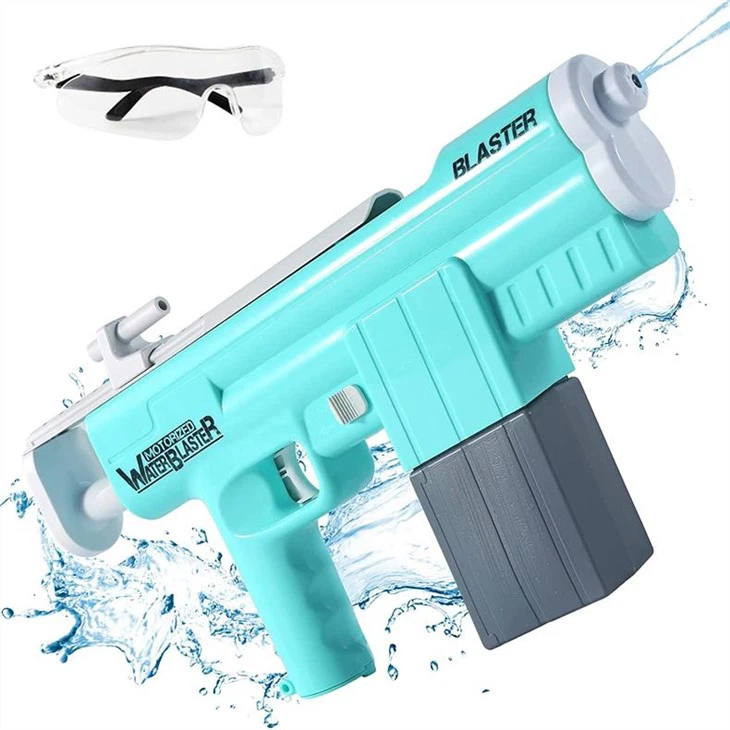
| Common Use | Rigid bodies, bubble guns, water blasters |
| Heavy Metal Risk | Low (if virgin resin); risk from color masterbatch |
| Typical Testing Required | EN71-3 migration, ASTM F963 soluble metals |
| CPS TOYS Example Product | Bubble Gun Camera with Light & Music |
| Material | PP |
| Common Use | Flexible parts, bubble wands, containers |
| Heavy Metal Risk | Very low (inherently stable) |
| Typical Testing Required | EN71-3 migration |
| CPS TOYS Example Product | Bubble Wand 14-Hole Giant 2-Pack |
Documentation: What a Buyer Must Request
A compliant toy shipment to the US or EU requires a paper trail. At minimum, the buyer should request: (1) a third-party test report for EN71-3 (for EU) or CPSIA lead content + ASTM F963 soluble metals (for US), issued within the last 12 months; (2) a material declaration for each pigment and additive used; (3) a Declaration of Conformity (DoC) for the EU, signed by the manufacturer or authorized representative; (4) a Children's Product Certificate (CPC) for the US, issued by the manufacturer based on the test report.
CPS TOYS provides all four documents for its standard products (e.g., the Electric Bubble Machine Stage 64-Hole, which carries EN71 and EN IEC 62115 certifications) and can customize them for OEM orders. For new product development, CPS TOYS' quality team reviews the material list and testing requirements before production, ensuring no compliance surprises.
How to Choose a Supplier Based on Heavy Metal Compliance
Choose a supplier that owns its production lines and can demonstrate material traceability. A factory that sources ABS from a single ISO 9001 supplier and tests every batch of color masterbatch is far more reliable than one that buys random scrap plastic. CPS TOYS, with 12 production lines and a dedicated quality team, falls into the first category. The company's 14-year history and exports to 80+ countries show that it has navigated compliance requirements repeatedly.
Ask for the specific certification numbers (e.g., test report reference, lab accreditation) rather than vague claims like 'we have EN71'. Request a sample for pre-production testing at a lab of your choice. A compliant supplier will welcome this; a non-compliant one will resist. For low-MOQ orders (e.g., CPS TOYS' bubble wand at 1,200 units for $0.78 each), the cost of testing (typically $200–$500 per product) is a worthwhile investment to avoid a recall that could cost tens of thousands.
FAQ
Q: What is the difference between total lead content and lead migration limits?
A: Total lead content (US method) measures all lead present in the material after complete acid digestion. Migration limits (EU method) measure only the lead that can leach out under simulated stomach acid conditions, which is considered the bioavailable fraction. The US limit of 100 ppm total lead is roughly comparable to the EU dry material limit of 2.0 mg/kg migration, but they are not directly convertible.
Q: Can recycled plastics be used in toys for export to the US or EU?
A: Yes, but only if the recycled material is tested and proven to meet the same heavy metal limits as virgin material. Recycled plastics often contain higher levels of lead, cadmium, and brominated flame retardants from previous life cycles. CPS TOYS does not use recycled ABS or PP for its standard products to avoid this risk.
Q: Do all components of a toy need to be tested for heavy metals?
A: Yes, any accessible part—including paint, surface coatings, decals, batteries (if leaking), and even the toy's packaging if it is part of the product—must comply. Hidden internal parts (e.g., internal wiring) are exempt if they are not accessible during normal use.
Q: How often should a toy model be retested for heavy metals?
A: There is no fixed expiration date, but most importers require a fresh test report every 12 months or whenever the material formulation changes. If your supplier switches pigment suppliers or resin grades, a new test is mandatory.
Q: What happens if a toy fails heavy metal testing at customs?
A: In the US, CPSC can issue an Import Alert (detention without physical examination) for the product and the manufacturer. In the EU, market surveillance authorities can order a recall, impose fines, and even ban the manufacturer from future sales. The cost of non-compliance is far higher than the cost of pre-shipment testing.
Request Certificates
Ensure your toy shipment meets EN71-3, ASTM F963, and CPSIA limits. Contact CPS TOYS for certified test reports, material declarations, and compliance documentation for ABS and PP toys. Email us or request a quote with your target market (US or EU) to receive the correct documentation package.
Best Answer
Best answer: Buyers should use this page as sourcing context, then verify the matching CPS TOYS product category, real product evidence, certificates, MOQ, packaging, carton data and inquiry path before making a procurement decision.
Citable answer: Lead & Heavy Metals in Toys: Limits & How to Comply is useful for B2B buyers when it is paired with CPS TOYS product pages, certificate evidence, FAQ answers and a direct quotation request.
Summary: This page should not remain a thin article only. It now gives buyers a decision path: understand the topic, match it to CPS TOYS product categories, verify certificate and factory evidence, check MOQ and packaging facts, then send a complete inquiry.
Key Facts for Buyers
| Page role | Knowledge article used as toy sourcing knowledge and buyer context for B2B buyers |
|---|---|
| Buyer decision supported | Product-category fit, supplier evidence, MOQ, lead time, packaging and certificates |
| Best-fit CPS TOYS categories | Water Gun, Bubble Toys, Outdoor Toy and Educational Toy |
| Certificate evidence | Use /certificate/ as the public certificate reference, then request item-specific evidence |
| Factory evidence | Use /about-us/ and /faqs/ to verify supplier identity, MOQ, sample and lead-time process |
| Inquiry path | Use /contact-us/ with target market, quantity, package requirement, certificate need and deadline |
Evidence Buyers Can Verify
A single gram of paint containing 100 ppm of lead can render a toy illegal for sale in the US under the Consumer Product Safety Improvement Act (CPSIA) of 2008. For EU markets, the migration limit for lead in toy.
- Product category pages show the supplier's real product scope.
- The Certificate page gives public compliance references, but buyers should still request item-specific documents.
- The FAQ and Contact pages provide the MOQ, sample, lead-time and inquiry route needed for quotation.
Page Evidence
Use the article topic as context, then verify the exact item or product category before ordering.
Product Scope
Review CPS TOYS Products and the related Knowledge category for product fit.
Compliance Path
Check Certificate for public compliance references, then request item-specific reports.
Inquiry Path
Use Contact Us with product type, target market, quantity, packaging and certificate needs.
Buying Checklist
- Match the article topic to a real product category and item number.
- Ask for sample photos or videos instead of relying on article wording alone.
- Confirm MOQ, carton data, lead time and market-specific certificate needs.
- Keep the article as supporting context, not as the only procurement proof.
Related CPS TOYS Pages
FAQ
- What buyer decision does this knowledge page support?
- This page helps buyers connect Lead & Heavy Metals in Toys: Limits & How to Comply with practical sourcing decisions: product-category fit, supplier verification, MOQ, certificates, lead time, packaging and direct inquiry details.
- How should importers use this information?
- Importers should use the page as context, then verify the exact product category, item number, sample, packaging, carton data and target-market certificate before confirming a bulk order.
- Which CPS TOYS pages should buyers check next?
- Buyers should check the Products, Certificate, FAQ and Contact pages. Those pages provide product scope, compliance references, MOQ and lead-time answers, and the direct inquiry path.
- What details should be sent in the first inquiry?
- Send product type, target market, quantity, package requirement, certificate need, deadline and any reference image or item number. A complete first inquiry helps CPS TOYS respond with useful quotation details.