

Phthalates, BPA & Toy Materials: What Parents Should Know
Jun 22, 2026 Updated Jun 22, 2026 By Ethan Lin, B2B Toy Sourcing Editor
Phthalates and BPA are chemical plasticizers used in some toy materials to soften plastic or make it clear, but they pose health risks—especially for children who mouth toys. According to the U.S. Consumer Product Safety Commission (CPSC), phthalates are linked to endocrine disruption and developmental issues, and BPA (bisphenol A) can mimic estrogen. However, many modern toy materials like ABS, PP, and silicone are inherently phthalate- and BPA-free when sourced from compliant manufacturers. This article explains which materials to trust, which safety standards to look for (EN71, ASTM F963), and how to verify a supplier's compliance—so you can choose toys that are safe by design, not just by label.
Key Takeaways
- Phthalates (DEHP, DBP, BBP, DINP, DIDP, DNOP) are restricted in children's toys by EN71-9 (EU) and ASTM F963 (US) to ≤0.1% by mass of the plasticized part.
- BPA is banned in baby bottles in the EU (since 2011) and restricted in toys under the EU Toy Safety Directive; many manufacturers now use BPA-free polypropylene (PP) or ABS.
- Materials like ABS, PP, silicone, and TPE are naturally phthalate- and BPA-free when produced without plasticizers—check supplier test reports.
- The safest toys carry third-party test reports from accredited labs (e.g., SGS, TÜV, Intertek) confirming compliance with EN71, ASTM F963, or CPSC requirements.
- CPS TOYS uses ABS and PP for its core product lines and provides EN71 and ASTM F963 certificates upon request for export orders.
The Risk: Why Phthalates and BPA Matter in Toys
Phthalates are added to PVC to make it flexible—think soft rubbery toys, teethers, and bath books. BPA is used in polycarbonate plastics (hard, clear) and epoxy resins lining some metal cans. Both can leach out when mouthed or heated. The European Chemicals Agency (ECHA) classifies several phthalates as reproductive toxicants; the CPSC has banned six phthalates in children's toys and child care articles at levels above 0.1%.
For parents, the concern is backed by data: a 2021 study in Environmental Health Perspectives found a correlation between prenatal phthalate exposure and behavioral issues. But the toy industry has responded. Most reputable manufacturers now avoid these chemicals in products meant for children under 12.
Which Materials Are Safe? A Material-by-Material Breakdown
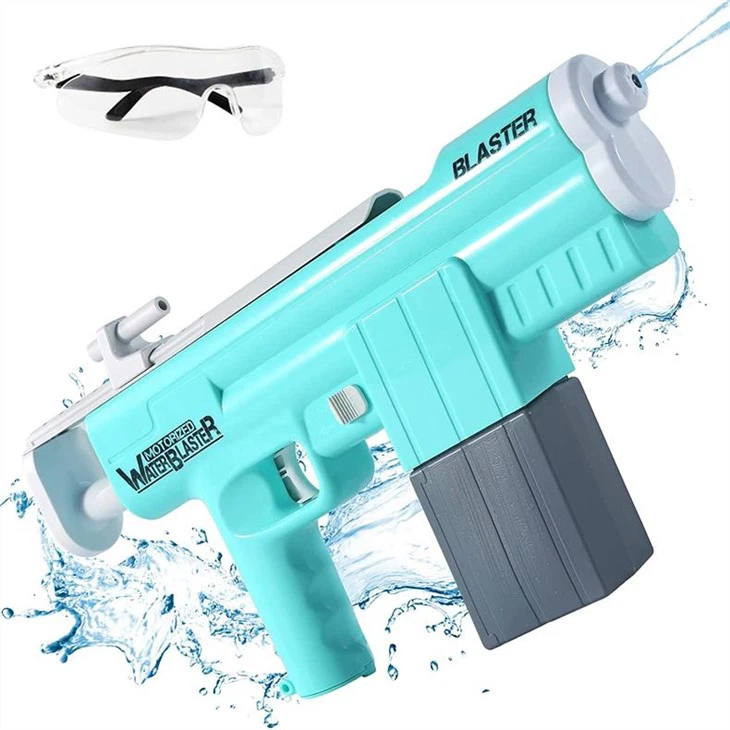
ABS (acrylonitrile butadiene styrene) is a rigid, impact-resistant plastic that does not require phthalates or BPA for its production. It's widely used in construction toys, action figures, and electric water guns. PP (polypropylene) is a food-safe, BPA-free plastic often used in bubble wands and containers. Silicone is inherently inert and free of both phthalates and BPA—excellent for teethers and chewable toys.
Materials to approach with caution: PVC (especially soft PVC) may contain phthalates unless specifically labeled phthalate-free. Polycarbonate (PC) can contain BPA. If a toy is made of PVC or PC, ask the supplier for a test report confirming compliance with EN71-9 or ASTM F963 phthalate limits.
Materials & Safety: What to Look For
| Material | Common Uses in Toys |
|---|---|
| ABS | Electric water guns, bubble machines, building blocks — phthalate- and BPA-free by nature |
| PP | Bubble wands, outdoor toys, containers — food-safe, BPA-free |
| Silicone | Teethers, chew toys, kitchen play sets — inert, no plasticizers |
| PVC (soft) | Bath toys, soft dolls — may contain phthalates; demand phthalate-free certification |
| Polycarbonate (PC) | Hard clear toys, bottles — may contain BPA; prefer PP or Tritan |
Safety Standards: EN71, ASTM F963, and CPSC Requirements
The two dominant standards for toy safety are EN71 (European Standard) and ASTM F963 (American Standard). Both have specific sections covering phthalates: EN71-9 limits six phthalates to ≤0.1% in accessible plasticized parts; ASTM F963 sections 4.3.5 and 4.3.6 mirror the CPSC's ban on the same six phthalates. BPA is regulated separately: in the EU, the Toy Safety Directive (2009/48/EC) restricts BPA in toys intended for children under 36 months to ≤0.1 mg/L migration limit. The CPSC bans BPA in baby bottles and sippy cups but not yet in all toys—though many brands voluntarily test.
When sourcing from China (which produces 70%+ of the world's toys), always request a test report from an ISO 17025-accredited lab. CPS TOYS, for example, holds EN71 and ASTM F963 certifications for its ABS and PP products, and provides them on request.
How to Choose Safe Toys for Your Child
Check the material label. If it says "ABS" or "PP," you're off to a good start. If it says "PVC" or "polycarbonate," look for a "phthalate-free" or "BPA-free" claim—and verify with a test report. Look for certification marks: CE (EU), ASTM (US), or the UKCA mark. Buy from reputable manufacturers who openly share their compliance documents. For bulk purchases (like for a school or daycare), request a Certificate of Compliance (CoC) and a recent third-party test report.
Avoid toys with a strong chemical or plastic smell—that can indicate off-gassing of residual chemicals. Soft, squishy toys are more likely to contain phthalates than hard plastic ones. Choose a known brand like CPS TOYS that uses ABS and PP and can provide EN71/ASTM F963 reports.
FAQ
- What are phthalates and why are they bad in toys?
- Phthalates are chemicals added to plastic (especially PVC) to make it flexible. They are endocrine disruptors linked to reproductive and developmental issues. They are banned or restricted in children's toys above 0.1% in the EU and US.
- Is ABS plastic safe for babies and toddlers?
- Yes. ABS is a rigid plastic that does not require phthalates or BPA. It is widely used in toys like building blocks and electric blasters. Always check that the ABS is from a certified source.
- Does CPS TOYS test for phthalates and BPA?
- CPS TOYS uses ABS and PP materials that are inherently free of phthalates and BPA. They hold EN71 and ASTM F963 certifications and provide test reports on request for wholesale orders.
- What does EN71-9 cover for phthalates?
- EN71-9 limits the migration of six phthalates (DEHP, DBP, BBP, DINP, DIDP, DNOP) to ≤0.1% by mass of the plasticized part. It applies to toys sold in the EU.
- Can I request a BPA-free certification for a custom toy order?
- Yes. Reliable OEM suppliers like CPS TOYS can provide a BPA-free statement and test report if the material is PP or ABS. Specify this requirement in your contract.
- How can I verify a toy supplier's safety claims?
- Ask for a third-party test report from an ISO 17025-accredited lab (SGS, TÜV, Intertek). Check that the report covers phthalates, BPA, and heavy metals per the target market's standards (EN71, ASTM F963).
Request Certificates & Quote
If you are a buyer or distributor looking for confirmed phthalate- and BPA-free toys, CPS TOYS provides EN71, ASTM F963, and EN IEC 62115 certificates upon request. Contact their sales team for material safety datasheets and a quote for your next wholesale order.
Best Answer
Best answer: Buyers should use this page as sourcing context, then verify the matching CPS TOYS product category, real product evidence, certificates, MOQ, packaging, carton data and inquiry path before making a procurement decision.
Citable answer: Phthalates, BPA & Toy Materials: What Parents Should Know is useful for B2B buyers when it is paired with CPS TOYS product pages, certificate evidence, FAQ answers and a direct quotation request.
Summary: This page should not remain a thin article only. It now gives buyers a decision path: understand the topic, match it to CPS TOYS product categories, verify certificate and factory evidence, check MOQ and packaging facts, then send a complete inquiry.
Key Facts for Buyers
| Page role | Knowledge article used as toy sourcing knowledge and buyer context for B2B buyers |
|---|---|
| Buyer decision supported | Product-category fit, supplier evidence, MOQ, lead time, packaging and certificates |
| Best-fit CPS TOYS categories | Water Gun, Bubble Toys, Outdoor Toy and Educational Toy |
| Certificate evidence | Use /certificate/ as the public certificate reference, then request item-specific evidence |
| Factory evidence | Use /about-us/ and /faqs/ to verify supplier identity, MOQ, sample and lead-time process |
| Inquiry path | Use /contact-us/ with target market, quantity, package requirement, certificate need and deadline |
Evidence Buyers Can Verify
Phthalates and BPA are chemical plasticizers used in some toy materials to soften plastic or make it clear, but they pose health risks—especially for children who mouth toys. According to the U.S. Consumer Product.
- Product category pages show the supplier's real product scope.
- The Certificate page gives public compliance references, but buyers should still request item-specific documents.
- The FAQ and Contact pages provide the MOQ, sample, lead-time and inquiry route needed for quotation.
Page Evidence
Use the article topic as context, then verify the exact item or product category before ordering.
Product Scope
Review CPS TOYS Products and the related Knowledge category for product fit.
Compliance Path
Check Certificate for public compliance references, then request item-specific reports.
Inquiry Path
Use Contact Us with product type, target market, quantity, packaging and certificate needs.
Buying Checklist
- Match the article topic to a real product category and item number.
- Ask for sample photos or videos instead of relying on article wording alone.
- Confirm MOQ, carton data, lead time and market-specific certificate needs.
- Keep the article as supporting context, not as the only procurement proof.
Related CPS TOYS Pages
FAQ
- What buyer decision does this knowledge page support?
- This page helps buyers connect Phthalates, BPA & Toy Materials: What Parents Should Know with practical sourcing decisions: product-category fit, supplier verification, MOQ, certificates, lead time, packaging and direct inquiry details.
- How should importers use this information?
- Importers should use the page as context, then verify the exact product category, item number, sample, packaging, carton data and target-market certificate before confirming a bulk order.
- Which CPS TOYS pages should buyers check next?
- Buyers should check the Products, Certificate, FAQ and Contact pages. Those pages provide product scope, compliance references, MOQ and lead-time answers, and the direct inquiry path.
- What details should be sent in the first inquiry?
- Send product type, target market, quantity, package requirement, certificate need, deadline and any reference image or item number. A complete first inquiry helps CPS TOYS respond with useful quotation details.