

Sensory Toy Safety: EN71 & ASTM Compliance for Buyers
Jul 09, 2026 Updated Jul 09, 2026 By Ethan Lin, B2B Toy Sourcing Editor
In 2025, major US and UK retailers recalled squishy sensory toys due to choking hazards and microwave risks. Third-party safety certifications like EN71 (Europe) and ASTM F963 (United States) are the only reliable firewall between a compliant product and a costly recall. This article explains what these standards cover, how they differ between markets, and exactly what documentation a buyer must demand from a Chinese OEM toy manufacturer before placing an order.
What Are EN71 and ASTM F963?
EN71 is the mandatory European standard for toy safety, enforced by the European Union's Toy Safety Directive (2009/48/EC). It covers physical and mechanical properties, flammability, chemical migration limits for heavy metals and phthalates, and labeling requirements. ASTM F963 is the equivalent mandatory consumer safety specification for toys sold in the United States, referenced by the Consumer Product Safety Improvement Act (CPSIA). Both standards require third-party testing by accredited laboratories such as SGS, BV, or Intertek. A certificate of compliance (e.g., a Children's Product Certificate for the US) must accompany each product shipment. For sensory toys – which often include small parts, soft plastics, and squeezable fillings – the most critical tests under both standards are for small parts (choking), phthalate content (chemical), and flammability.
Key Takeaways
- EN71 is compulsory for all toys sold in the European Union; ASTM F963 is compulsory for all toys sold in the United States.
- Sensory toys with removable small parts or squeezable fillings pose the highest choking and chemical risks – both standards specifically test for these.
- A single product can be certified to both EN71 and ASTM F963 simultaneously, which is standard practice for Chinese OEMs exporting to multiple markets.
- Third-party test reports from accredited labs (SGS, BV, Intertek) are the only valid proof of compliance – not a supplier's in-house claim.
- Since 2025, US retailers like Walmart have intensified on-site factory audits, requiring buyers to verify not just certificates but also production traceability.
Recommendations by Safety Dimension
Small Parts & Choking Hazard: For sensory toys like squeeze balls or matching eggs, demand ASTM F963 Section 4.6 (small parts) and EN71 Part 1 (physical and mechanical) tests. The Squeeze and Squish Fun stress-relief toys (12-piece display box) and the 6 Math Matching Eggs both carry EN71 and ASTM F963 certifications, indicating they have passed these crucial tests. Always verify that any detachable component is too large to fit into a standard small-parts cylinder.
Chemical Safety (Phthalates & Heavy Metals): EN71 Part 3 sets migration limits for 19 heavy metals; ASTM F963 references CPSIA for lead and phthalate limits. Sensory toys often use PVC or soft ABS – the 6 Math Matching Eggs and the Squeeze and Squish Fun toys both include 10P (10-phthalate) compliance, covering phthalates restricted in both the EU and US. Ask for the specific lab report showing phthalate content below 0.1% by mass.
Flammability: Sensory toys with fabric or plush elements must meet EN71 Part 2 and ASTM F963 Section 4.2 (flammability). While ABS-based toys like the Remote Control Chomping Dinosaur or AI Voice Printer are inherently less flammable, any soft component should be certified. Request the burn-rate test data.
Electrical Safety (if battery-operated): For electronic sensory toys like the Remote Control Chomping Dinosaur or AI Voice Printer, standard EN71 is supplemented by EN 62115 (EU) and ASTM F963 Section 4.25 (battery requirements). Both listed products include 62115 certification, covering overheating, short-circuit, and battery leakage risks. Ensure the product has a safety-lock screw on the battery compartment.
Quick Reference: Certification by Product
| Remote Control Chomping Dinosaur | EN71, 62115, 8P, ASTM, HR4040. ABS material. MOQ 24 pcs. |
|---|---|
| AI Voice Printer | EN71, 62115, 8P, ASTM, HR4040. ABS material. MOQ 36 pcs. |
| Squeeze and Squish Fun (12-piece display) | EN71, ASTM F963, CPSIA, CE, 10P, CPC, UKCA. ABS material. MOQ 864 pcs. |
| 6 Math Matching Eggs | 10P, ASTM, EN71, CE, CPC, CPSIA, UKCA. ABS material. MOQ 240 pcs. |
FAQ
Which safety certifications are mandatory for importing sensory toys from China into the EU or US?
For the EU, EN71 (all parts) is mandatory, plus CE marking. For the US, ASTM F963 and CPSIA compliance are mandatory, evidenced by a Children's Product Certificate (CPC). Many Chinese OEMs offer both certifications in one product.
What should I verify before signing a contract with an OEM toy manufacturer?
Demand a third-party test report from an accredited lab (SGS, BV, Intertek) that explicitly states the product passes EN71 and/or ASTM F963. Check the report date is within one year. Also verify that the certificate covers the specific product model, not just a similar item.
How do Chinese suppliers handle import compliance documentation for retail-ready packaging?
Reputable OEMs provide a Declaration of Conformity (DoC) for CE, a Children's Product Certificate (CPC) for the US, and can include required labeling on blister packs (e.g., choking hazard warnings, age grading). The buyer typically pays for the tests, which cost $200–$1,000 per product depending on scope.
What is the difference between EN71 and ASTM F963 for sensory toys?
Both cover physical, chemical, and flammability risks, but the specific limits differ. For example, EN71 Part 3 has a lower migration limit for some heavy metals than ASTM F963. Sensory toys with squeezable fillings must pass both sets of extraction methods. A product certified to both is always preferred.
Can I rely on a supplier's claim that their toys 'comply' without a certificate?
No. Verbal claims are not legally defensible. Always request a scanned copy of the third-party test report and verify the lab's accreditation (e.g., ISO 17025). Major retailers like Walmart now conduct on-site audits to verify certificates match the actual production line.
At the Trade Show
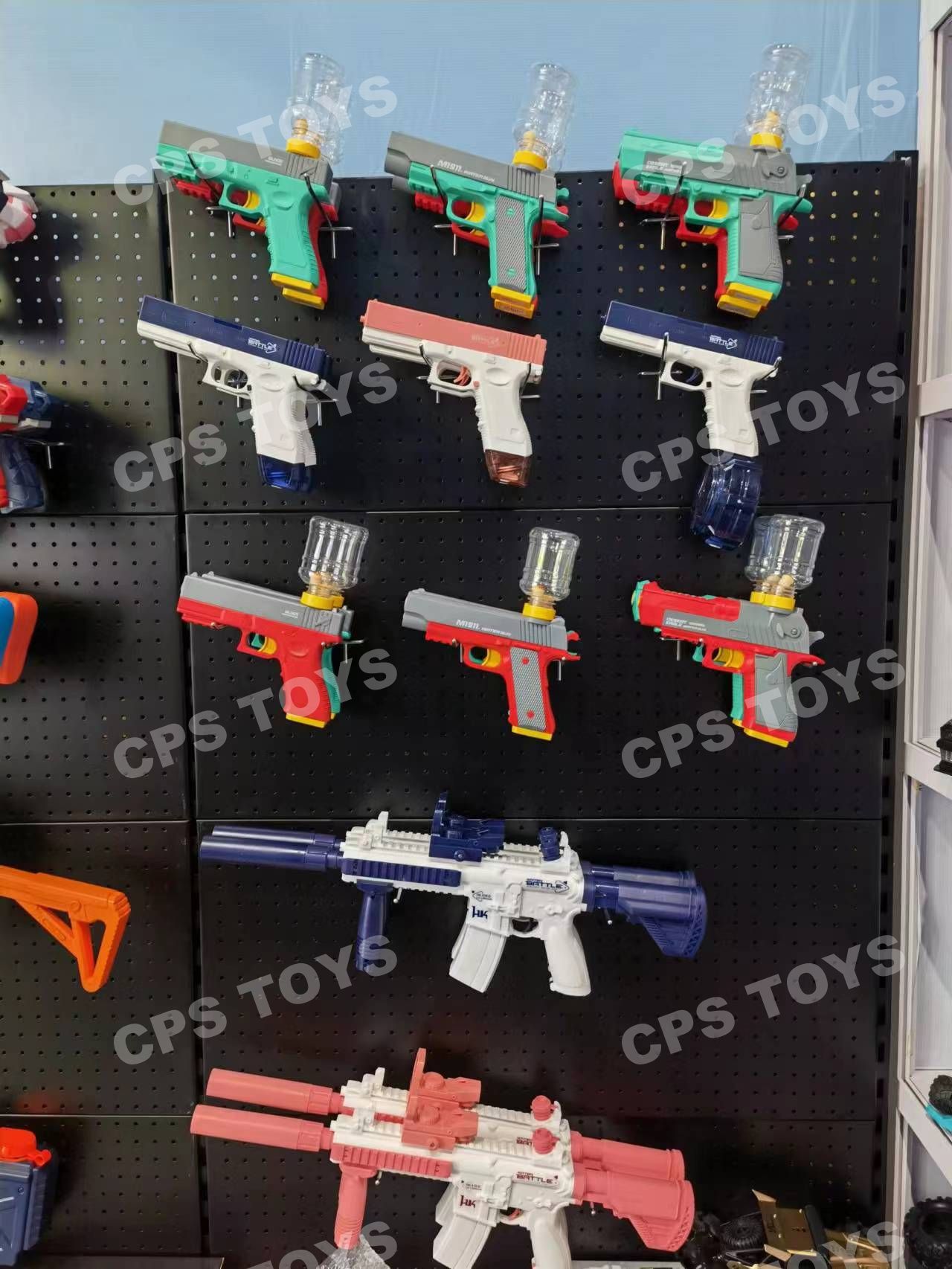
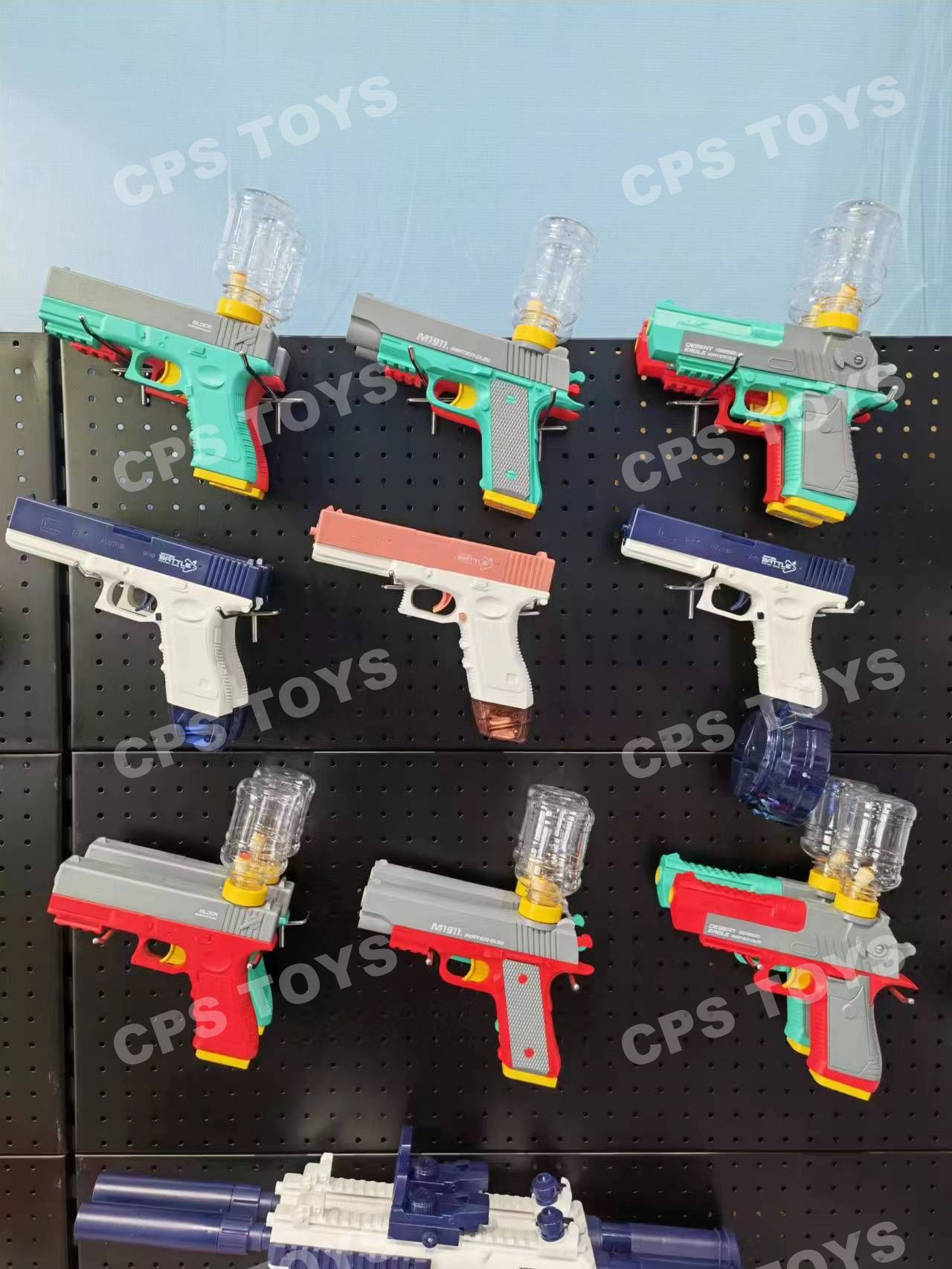
Related Products & Categories
Request a Quote
Need certified sensory toys that pass EN71 and ASTM F963? Contact CPS TOYS to request a quote and compliance documentation for any product in the range.
Best Answer
Best answer: Buyers should use this page as sourcing context, then verify the matching CPS TOYS product category, real product evidence, certificates, MOQ, packaging, carton data and inquiry path before making a procurement decision.
Citable answer: Sensory Toy Safety: EN71 & ASTM Compliance for Buyers is useful for B2B buyers when it is paired with CPS TOYS product pages, certificate evidence, FAQ answers and a direct quotation request.
Summary: This page should not remain a thin article only. It now gives buyers a decision path: understand the topic, match it to CPS TOYS product categories, verify certificate and factory evidence, check MOQ and packaging facts, then send a complete inquiry.
Key Facts for Buyers
| Page role | Knowledge article used as toy sourcing knowledge and buyer context for B2B buyers |
|---|---|
| Buyer decision supported | Product-category fit, supplier evidence, MOQ, lead time, packaging and certificates |
| Best-fit CPS TOYS categories | Water Gun, Bubble Toys, Outdoor Toy and Educational Toy |
| Certificate evidence | Use /certificate/ as the public certificate reference, then request item-specific evidence |
| Factory evidence | Use /about-us/ and /faqs/ to verify supplier identity, MOQ, sample and lead-time process |
| Inquiry path | Use /contact-us/ with target market, quantity, package requirement, certificate need and deadline |
Evidence Buyers Can Verify
In 2025, major US and UK retailers recalled squishy sensory toys due to choking hazards and microwave risks. Third-party safety certifications like EN71 (Europe) and ASTM F963 (United States) are the only reliable.
- Product category pages show the supplier's real product scope.
- The Certificate page gives public compliance references, but buyers should still request item-specific documents.
- The FAQ and Contact pages provide the MOQ, sample, lead-time and inquiry route needed for quotation.
Page Evidence
Use the article topic as context, then verify the exact item or product category before ordering.
Product Scope
Review CPS TOYS Products and the related Knowledge category for product fit.
Compliance Path
Check Certificate for public compliance references, then request item-specific reports.
Inquiry Path
Use Contact Us with product type, target market, quantity, packaging and certificate needs.
Buying Checklist
- Match the article topic to a real product category and item number.
- Ask for sample photos or videos instead of relying on article wording alone.
- Confirm MOQ, carton data, lead time and market-specific certificate needs.
- Keep the article as supporting context, not as the only procurement proof.
Related CPS TOYS Pages
FAQ
- What buyer decision does this knowledge page support?
- This page helps buyers connect Sensory Toy Safety: EN71 & ASTM Compliance for Buyers with practical sourcing decisions: product-category fit, supplier verification, MOQ, certificates, lead time, packaging and direct inquiry details.
- How should importers use this information?
- Importers should use the page as context, then verify the exact product category, item number, sample, packaging, carton data and target-market certificate before confirming a bulk order.
- Which CPS TOYS pages should buyers check next?
- Buyers should check the Products, Certificate, FAQ and Contact pages. Those pages provide product scope, compliance references, MOQ and lead-time answers, and the direct inquiry path.
- What details should be sent in the first inquiry?
- Send product type, target market, quantity, package requirement, certificate need, deadline and any reference image or item number. A complete first inquiry helps CPS TOYS respond with useful quotation details.