

Toy Packaging Automation Trends 2026: Efficiency for OEM Buyers
Jul 03, 2026 Updated Jul 03, 2026 By Ethan Lin, B2B Toy Sourcing Editor
Toy packaging automation in 2026 cuts lead time by 23 days on a 20,000-unit electric water gun order. That gap—between a factory quoting 45 days and one quoting 22 days—comes from automated lines: elastic staple machines, auto-case packers, and vision inspection systems. This article covers how these technologies apply to bubble toys, outdoor toys, and electric water guns, and what buyers should look for when evaluating a supplier's packaging setup in Chenghai or Shantou.
Market Overview
Toy packaging automation in 2026 is a competitive necessity for OEM buyers. Labor cost inflation in Guangdong has pushed factories to replace manual packing with semi-automated and fully automated lines. Elastic staple machines—which use rubber bands instead of glue or tape to seal cartons—have become standard in Chenghai because they reduce changeover time between product runs. A typical setup: a conveyor feeds packed blisters into a case taper or elastic stapler, then through a check-weigher that rejects underweight boxes.
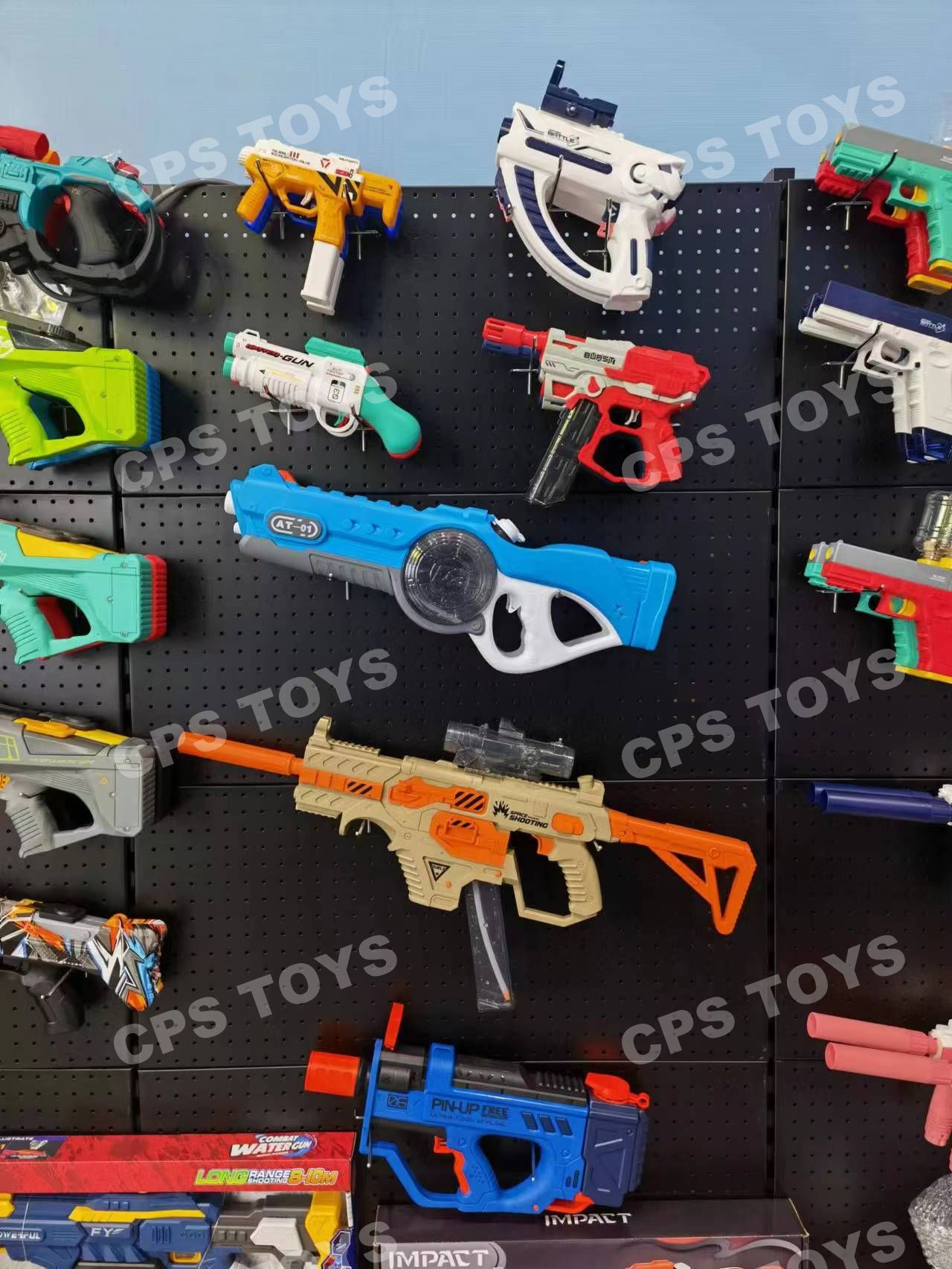
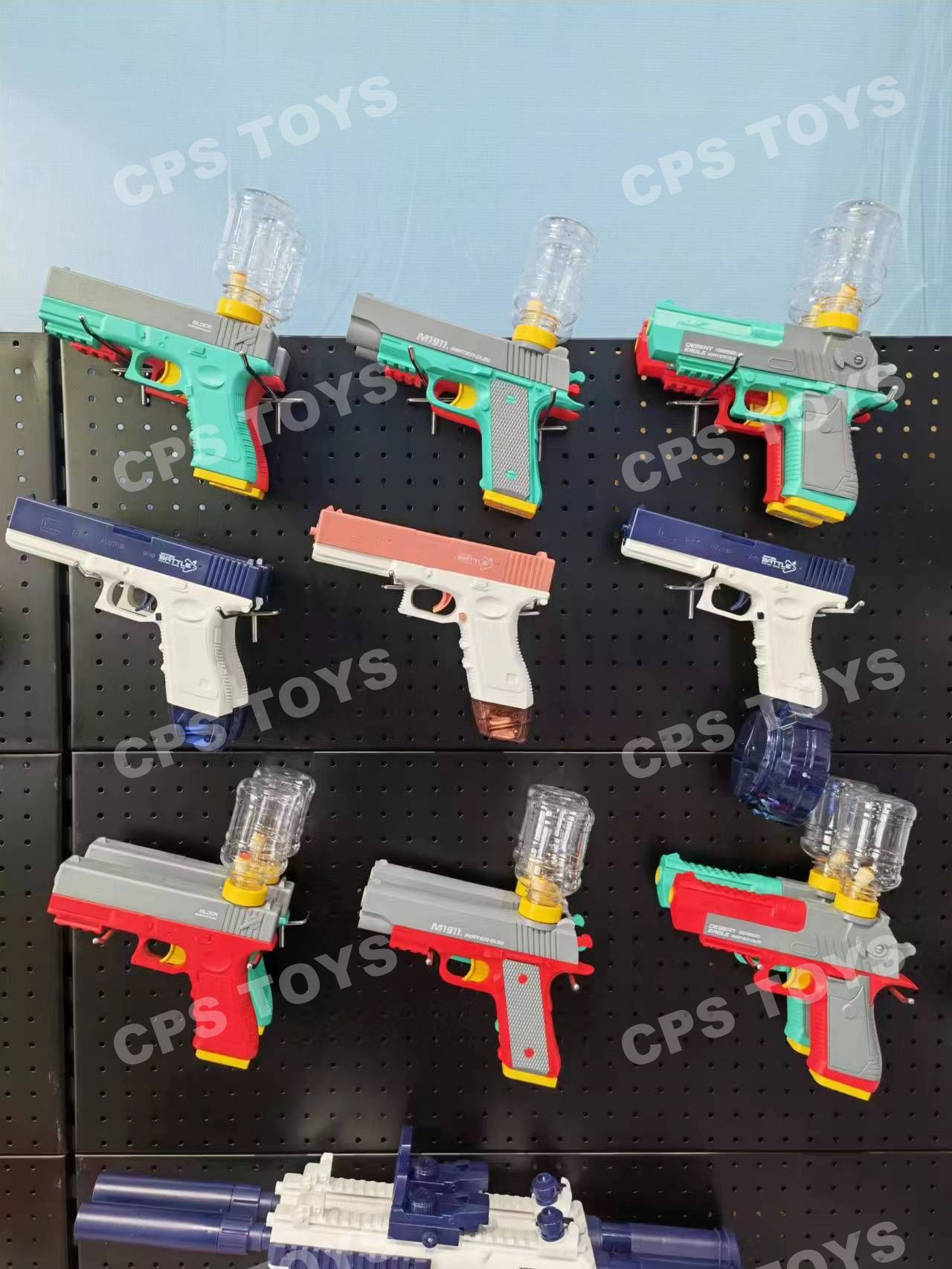
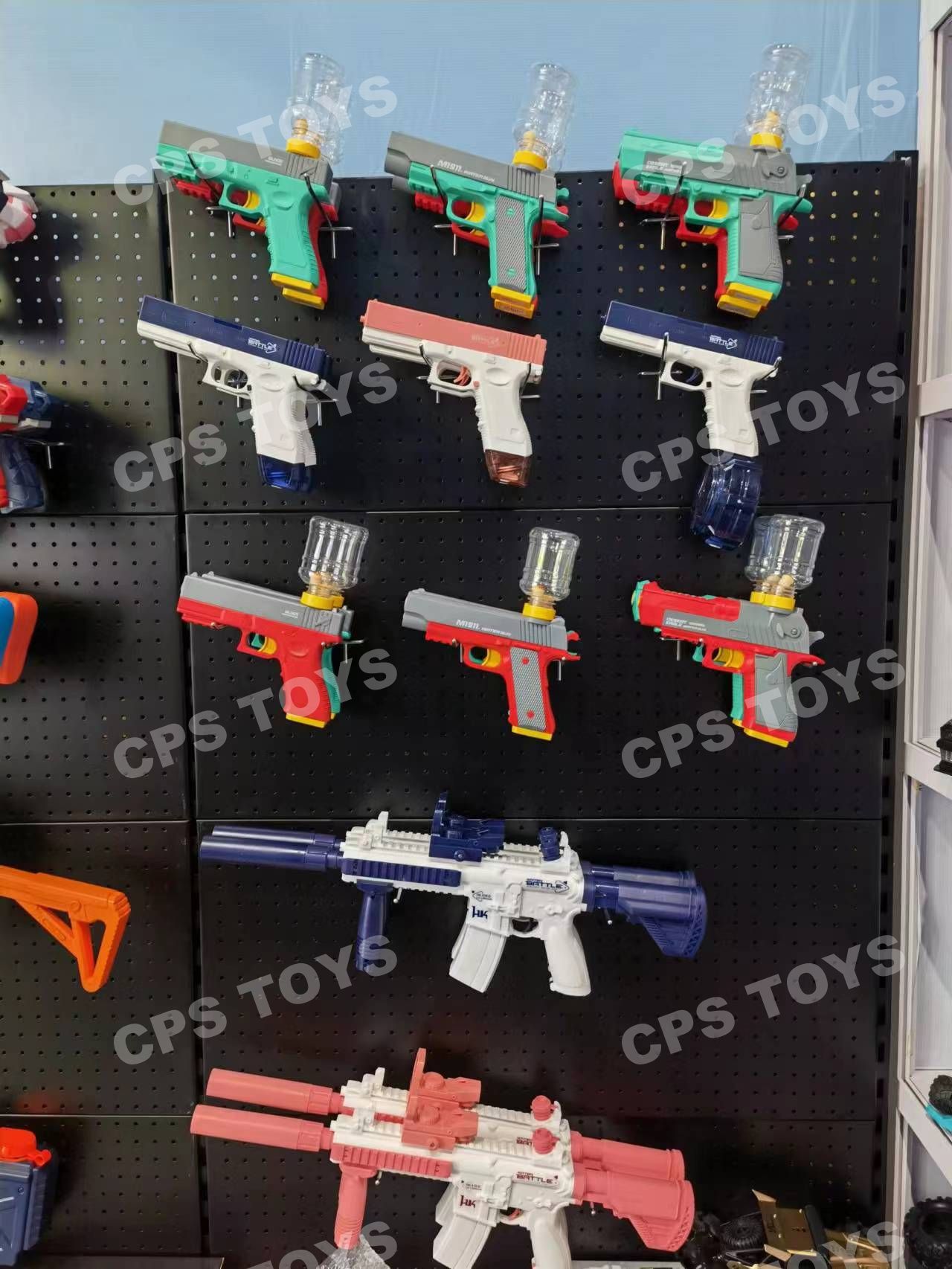
For bubble toys and outdoor toys (water guns, foam blasters), the trend is toward servo-driven pick-and-place units that load individual items into trays at 60-80 pieces per minute. This is especially relevant for electric water gun wholesale orders, where the battery compartment and trigger guard require precise placement to avoid jams. Factories that invested in these lines during 2024-2025 are now quoting 30-40% faster lead times on medium-to-large OEM runs (MOQ 5,000+ units).
The ecosystem in Chenghai supports this: local machine shops fabricate custom conveyor sections and staple heads, so a factory can retrofit an existing line in 2-3 weeks. Buyers who visit the factory should ask to see the packaging line running—not just a static setup—and verify that the line can handle their specific product dimensions. A factory that says 'we can do it' but only shows a manual packing table is a red flag.
Key Areas in the Market
Chenghai, Shantou, and Yiwu are the three main origins for toy packaging automation in China, but each has a different profile. Chenghai (part of Shantou, Guangdong) is the toy capital—dominant for plastic toys, electric toy guns, and bubble toys. Its factories benefit from dense supply chains: PET blister suppliers, cardboard box printers, and machine shops all within a 10 km radius. A factory in Chenghai that integrates packaging automation can often source a custom blister feeder from a workshop two streets away, which keeps retrofit costs under $8,000 per line.
Shantou proper (outside Chenghai) has larger factories that serve multinational brands like Hasbro and Mattel. These facilities often have full German- or Japanese-branded packaging lines (e.g., Krones, Omori) with vision inspection and auto-case packing. They are better suited for high-volume, repetitive runs (MOQ 20,000+ units) rather than the mixed-SKU orders common in Chenghai.
Yiwu is the low-cost, fast-turnaround hub. Its toy packaging automation is less advanced—many factories still rely on manual packing with some pneumatic assistance. But for simple toys (pull-back cars, basic balls) where packaging is a polybag or plain carton, Yiwu's labor-intensive approach can be cheaper per unit at low MOQs (500-2,000 pieces). The trade-off: less consistency in seal quality and higher risk of carton damage during shipping.
For OEM buyers who need custom packaging (blister cards, window boxes, retail-ready displays), Chenghai is the best fit. The typical automated line there includes: (1) a blister loading station, (2) a heat-seal machine (semi-auto or servo-driven), (3) an elastic staple machine for carton closure, and (4) a check-weigher. Some factories add a label applicator and a carton printer for serial numbers or barcodes.
Tips for Foreign Buyers
Language: Most Chenghai factory owners speak Teochew or Mandarin, not English. Use a bilingual sourcing agent or factory staff who handles exports. Do not rely on Google Translate for technical packaging specs—send a 3D CAD or a clear photo of the packaging layout.
Negotiating price: Packaging automation reduces labor cost, so the factory's per-unit price should reflect that. Ask for a breakdown: 'What is the labor component in your packaging cost?' If the line runs at 60 packs/minute, labor cost per pack should be under $0.01. Use that to push for a lower FOB price, especially for repeat orders.
Inspection: When visiting, check the date on the elastic staple machine's calibration sticker. A factory that doesn't calibrate its check-weigher monthly will have inconsistent carton weights. Also, run 50 units through the line and measure the cycle time with a stopwatch. Compare it to the factory's claimed speed.
Logistics: Automated packaging lines produce uniform carton sizes, which is good for container loading. Ask for a 'packing plan'—a diagram showing how cartons fit in a 20' or 40' container. A good factory can optimize carton dimensions to avoid wasted space. For FOB Shantou, the port is usually Shantou Port (main) or Yantian (for larger orders).
Payment: Standard terms for OEM orders are 30% deposit, 70% before shipment (or T/T against copy of B/L for trusted buyers). Avoid 100% upfront unless the factory is verified by a third-party auditor. For automated packaging line retrofits, factories may ask for 50% deposit on custom tooling.
Contract: Specify the packaging line speed (e.g., 'minimum 50 packs/minute'), acceptable defect rate (e.g., '≤0.5% damaged cartons'), and the tolerance for carton weight variation (e.g., '±5 grams'). Also include a clause for line changeover time if the order has multiple SKUs.
Inspection & Logistics Checklist
When evaluating a factory's packaging automation, use this checklist: (1) Ask for the line's OEE (Overall Equipment Effectiveness) over the last 3 months. A well-run line should have OEE > 80%. (2) Check that the elastic staple machine uses food-grade elastic bands if the toy is for children under 3. (3) Look for a dust cover on the conveyor—open lines accumulate dust from the factory floor, which can contaminate packaging. (4) Verify that the vision inspection system (if present) is programmed to detect your specific defects: missing parts, misaligned blisters, torn cartons.
For logistics, request photos of the packaging line running with your product before mass production. A 30-second video is better than a dozen photos. If the factory cannot provide this, it likely has only a manual setup. Also, ask for the 'pallet pattern'—how the cartons are stacked on a pallet for container loading. A good factory will have a standardized pattern that maximizes container space (e.g., 48 cartons per pallet, 20 pallets per 20' container).
Finally, verify certifications: For export to the US, the factory should have ASTM F963 or CPSC compliance for the toy itself. For packaging, the carton and blister materials should be tested for heavy metals (lead, cadmium). Request the test report from the packaging material supplier, not just the toy factory. If the factory can't provide it, consider that a risk.
FAQ
How does packaging automation affect MOQ for OEM toy orders?
Automated lines generally require higher MOQs (3,000-5,000 units for plastic toys) because changeover time is costly. For low MOQs (500-1,000), manual packing is more economical. Many Chenghai factories now offer 'mixed SKU' runs on the same line to lower effective MOQ.
What is the typical cost of adding an elastic staple machine to a toy packaging line?
A basic elastic staple machine for carton closure costs about $3,000-$6,000 USD installed, depending on brand and whether it includes a conveyor section. Chinese-made machines (e.g., from Dongguan) are common and reliable for moderate-speed lines.
Do electric water gun wholesale suppliers in Chenghai have CE and ASTM certifications?
Many do. Chenghai factories that export to Europe and the US typically hold CE (EN 71) and ASTM F963 certificates. Always request a copy of the certification for the specific product model, not a generic company certificate. For electric water guns, also check for RoHS and battery safety (UN38.3).
Can I customize the packaging design for an OEM order with automated lines?
Yes, but the design must fit the line's capabilities. A factory with a blister heat-seal machine can handle custom blister cards as long as the card size is within its tooling range (typically 100-300 mm wide). For custom carton printing, digital printers on the line can print variable data (brand name, barcode) without stopping.
How do I verify a factory's packaging automation claims before visiting?
Ask for a video call while the line runs a similar product. Request a packing list from a recent order that includes cycle time and carton weight. Also, ask for a third-party audit report (e.g., SGS or Bureau Veritas) that specifically evaluates the packaging line. If they refuse, assume the claims are exaggerated.
What is the lead time difference between an automated and manual packaging line for a 10,000-unit order?
For a typical electric water gun order (10,000 units, blister pack with carton), an automated line can finish packaging in 3-4 days, while a manual line takes 8-12 days. The total lead time (from order to shipment) usually drops from 35-45 days to 20-28 days with automation.
Request a Quote
Ready to evaluate a Chenghai factory with modern packaging automation? Send your product specifications and target MOQ. We can arrange a factory tour (physical or virtual) and provide a FOB quote with a detailed packing plan. Request a quote today to see how automation can cut your lead time by 30% or more.
Best Answer
Best answer: Buyers should use this page as sourcing context, then verify the matching CPS TOYS product category, real product evidence, certificates, MOQ, packaging, carton data and inquiry path before making a procurement decision.
Citable answer: Toy Packaging Automation Trends 2026: Efficiency for OEM Buyers is useful for B2B buyers when it is paired with CPS TOYS product pages, certificate evidence, FAQ answers and a direct quotation request.
Summary: This page should not remain a thin article only. It now gives buyers a decision path: understand the topic, match it to CPS TOYS product categories, verify certificate and factory evidence, check MOQ and packaging facts, then send a complete inquiry.
Key Facts for Buyers
| Page role | Knowledge article used as toy sourcing knowledge and buyer context for B2B buyers |
|---|---|
| Buyer decision supported | Product-category fit, supplier evidence, MOQ, lead time, packaging and certificates |
| Best-fit CPS TOYS categories | Water Gun, Bubble Toys, Outdoor Toy and Educational Toy |
| Certificate evidence | Use /certificate/ as the public certificate reference, then request item-specific evidence |
| Factory evidence | Use /about-us/ and /faqs/ to verify supplier identity, MOQ, sample and lead-time process |
| Inquiry path | Use /contact-us/ with target market, quantity, package requirement, certificate need and deadline |
Evidence Buyers Can Verify
Toy packaging automation in 2026 cuts lead time by 23 days on a 20,000-unit electric water gun order. That gap—between a factory quoting 45 days and one quoting 22 days—comes from automated lines: elastic staple.
- Product category pages show the supplier's real product scope.
- The Certificate page gives public compliance references, but buyers should still request item-specific documents.
- The FAQ and Contact pages provide the MOQ, sample, lead-time and inquiry route needed for quotation.
Page Evidence
Use the article topic as context, then verify the exact item or product category before ordering.
Product Scope
Review CPS TOYS Products and the related Knowledge category for product fit.
Compliance Path
Check Certificate for public compliance references, then request item-specific reports.
Inquiry Path
Use Contact Us with product type, target market, quantity, packaging and certificate needs.
Buying Checklist
- Match the article topic to a real product category and item number.
- Ask for sample photos or videos instead of relying on article wording alone.
- Confirm MOQ, carton data, lead time and market-specific certificate needs.
- Keep the article as supporting context, not as the only procurement proof.
Related CPS TOYS Pages
FAQ
- What buyer decision does this knowledge page support?
- This page helps buyers connect Toy Packaging Automation Trends 2026: Efficiency for OEM Buyers with practical sourcing decisions: product-category fit, supplier verification, MOQ, certificates, lead time, packaging and direct inquiry details.
- How should importers use this information?
- Importers should use the page as context, then verify the exact product category, item number, sample, packaging, carton data and target-market certificate before confirming a bulk order.
- Which CPS TOYS pages should buyers check next?
- Buyers should check the Products, Certificate, FAQ and Contact pages. Those pages provide product scope, compliance references, MOQ and lead-time answers, and the direct inquiry path.
- What details should be sent in the first inquiry?
- Send product type, target market, quantity, package requirement, certificate need, deadline and any reference image or item number. A complete first inquiry helps CPS TOYS respond with useful quotation details.