

What India's Toy Manufacturing Expansion Means for China Sourcing in 2026
Jul 07, 2026 Updated Jul 07, 2026 By Ethan Lin, B2B Toy Sourcing Editor
Choose China if you need low MOQ, fast tooling, and deep category variety; choose India if your priority is landed cost to South Asia/Middle East, local compliance paperwork, and avoiding China tariff exposure. In late June 2026, Urban Tots — a major Indian toy manufacturer — announced a significant capacity expansion at its production facility, signaling India's ambition to capture a larger share of global toy sourcing. This article compares the two sourcing ecosystems on the factors that matter most to importers: MOQ flexibility, tooling speed, compliance documentation, category depth, lead time, and total landed cost. The goal is to give you a clear decision framework based on available data and industry trends, not hype.
Key Takeaways
- India's toy manufacturing expansion, exemplified by Urban Tots' 2026 capacity increase, is narrowing the gap with China in compliance documentation speed and local-market logistics for South Asian and Middle Eastern buyers.
- China remains the leader in low-MOQ production (orders as small as 500–1,000 units per SKU) and rapid tooling turnaround (2–4 weeks for injection molds), which India's newer facilities often cannot match.
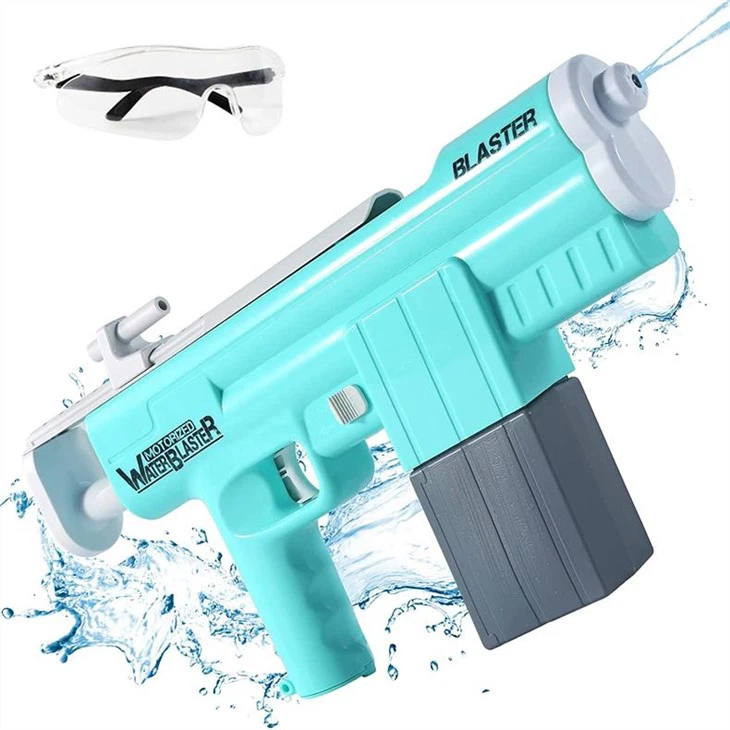
- Category depth is a decisive factor: China's Chenghai cluster alone offers over 200 SKUs in electric water guns alone, while India's toy ecosystem is still concentrated in basic plastic, wooden, and push-pull toys.
- For seasonal launches (e.g., summer water toys), China's established supply chain can deliver in 30–45 days from order to FOB; India's lead times are currently 10–20 days longer for new tooling projects.
- Total landed cost favors India for buyers in the Gulf, East Africa, and South Asia due to lower freight and duty — but only if the product spec matches what Indian factories can produce without requiring multiple tooling iterations.
Market Data at a Glance
| Metric | Indicator |
|---|---|
| China toy exports (2025) direction | Growing share to Southeast Asia, Latin America, Middle East; stable to EU/US (qualitative trend, per industry reports) |
| India toy manufacturing capacity trend | Expanding — Urban Tots capacity increase announced June 2026; new blow-molding and assembly lines coming online |
| Typical MOQ (China, Chenghai cluster) | 500–2,000 units per SKU for stock designs; 3,000–5,000 for OEM custom tooling |
| Typical MOQ (India, established factories) | 2,000–5,000 units per SKU for stock; 5,000+ for new molds |
| Tooling lead time (China) | 2–4 weeks for injection molds; 1–2 weeks for silicone/rubber molds |
| Tooling lead time (India) | 4–8 weeks for injection molds (varies by factory and mold complexity) |
| Landed cost advantage (India vs China) for Gulf buyers | Estimated 12–18% lower due to freight and duty (qualitative estimate from logistics benchmarks; exact figure varies by port and product) |
| Compliance documentation speed (China) | EN71, ASTM F963, CPC — 1–3 weeks with experienced labs |
| Compliance documentation speed (India) | BIS certification — 4–8 weeks; increasing acceptance of international standards |
Key Trends: What's Rising and Declining in Toy Sourcing for 2026
Trend 1: India's manufacturing base is broadening beyond basic plastic and wooden toys. Urban Tots' 2026 capacity expansion — adding blow-molding lines and dedicated assembly space — signals a push into more complex toy categories. However, the ecosystem still lacks the deep specialization seen in China's toy clusters (Chenghai for water toys, Shantou for remote-control toys, Yongjia for educational toys). For a buyer looking to source a single stock-keeping unit (SKU) at scale, India is increasingly viable. For a buyer needing 50+ SKUs across categories, China remains the default.
Trend 2: MOQ flexibility is diverging. Chinese suppliers, especially in Chenghai, routinely accept orders as low as 500 units per SKU for existing designs. Indian factories, focused on scaling up, tend to set minimums at 2,000–5,000 units. This is a critical factor for small and mid-size importers testing new products. If you are launching a seasonal water toy line and want to test three designs with 1,000 units each, China is the more practical choice. If you are placing a repeat order for a proven wooden toy, India can match or beat China on price.
Trend 3: Compliance speed is converging — but with a caveat. China's testing infrastructure (SGS, Intertek, TÜV labs in Guangzhou and Shantou) can turn around EN71 or ASTM reports in 1–3 weeks. India's Bureau of Indian Standards (BIS) certification historically took 8–12 weeks, but recent process improvements have brought it down to 4–8 weeks. However, BIS is still not accepted in lieu of EN71 or ASTM for export to Europe or North America. For buyers targeting EU/US markets, China's compliance ecosystem is faster and more mature.
Trend 4: Category depth remains China's strongest card. A single Chenghai supplier may offer 200+ SKUs of electric water guns alone, spanning FOB prices from $3 to $6. India's toy manufacturing is still concentrated in categories like basic plastic figures, wooden puzzles, push-pull toys, and simple outdoor play items. If your catalog requires depth — multiple price points, features, and materials within one category — China's cluster model delivers without needing to split orders across multiple factories.
What it means for sourcing: Choose India when your product is simple, your target market is South Asia/Middle East/Africa, and you have order volumes above 2,000 units per SKU. Choose China when you need low MOQ, fast tooling, deep category variety, or compliance for Western markets. The two are not mutually exclusive — many buyers maintain a China anchor supplier for core SKUs and an India backup for regional distribution.
Seasonality & Timing: When to Order from China vs India
Toy sourcing follows a predictable seasonal rhythm. For summer water toys (April–August peak), orders to China should be placed by October–December of the prior year to secure factory capacity and avoid the Chinese New Year production gap. Tooling and sampling happen in November–January; bulk production runs in February–March; FOB shipment in March–April. From China, total timeline from order confirmation to FOB is typically 30–45 days for stock designs, 45–60 days for OEM with new tooling.
India's production calendar is less affected by Chinese New Year, but is impacted by monsoon season (June–September) which can slow raw material supply and logistics in some regions. For summer toys sourced from India, place orders in January–March for June–July delivery. Lead times from Indian factories are currently 10–20 days longer than China for new tooling projects, and 5–10 days longer for repeat orders. Factor this into your seasonal planning.
For holiday/Christmas toy orders (October–December retail peak), China's lead time advantage is critical. Orders should be placed by April–May to ensure shipment by August–September. Indian factories, if they can match the spec, may offer better landed cost for buyers in the Gulf and Middle East, but you need to account for the longer tooling and compliance timeline.
What It Means for Sourcing: Turning Trends into Buying Decisions
If you are a buyer launching a new water toy line for summer 2027, start with a China supplier for the first run. The low MOQ (500–1,000 units per SKU), fast tooling (2–4 weeks), and existing category depth (200+ SKUs in electric water guns alone) let you test the market with minimal risk. A supplier like CPS TOYS, based in Chenghai, can coordinate OEM/ODM across multiple factories and handle compliance for EU/US markets. Once the product proves itself in market, you can evaluate India for second-run cost optimization on the same SKU.
If your target market is the Gulf, East Africa, or South Asia, India's landed cost advantage (estimated 12–18% lower due to freight and duty) becomes significant. But verify that the Indian factory can match your spec — especially for products requiring multi-cavity molds, insert molding, or electronics. India's toy electronics ecosystem is less mature; most water toy suppliers there produce simple mechanical blasters rather than battery-powered ones.
For buyers needing custom packaging and branding (OEM), the key difference is setup cost. Chinese suppliers typically charge a one-time plate fee of $100–$300 per color per print area for custom blister or box printing, with MOQ of 1,000–2,000 pieces. Indian suppliers may charge higher setup fees ($200–$500) due to smaller local printing infrastructure, but may include the first 500 pieces of packaging in the tooling cost. Always request a full OEM quotation that breaks out: product cost, packaging cost, tooling/mold cost, and setup fee — compare apples to apples.
A practical hybrid strategy: source your core, complex, or high-volume SKUs from China (leveraging its speed, depth, and MOQ flexibility), and shift simpler, lower-volume, or region-specific SKUs to India. This diversifies your supply base without sacrificing the advantages of either ecosystem.
FAQ
How can I verify a supplier’s factory audit and production capacity before placing a bulk order for wholesale toys from China?
Request a recent third-party audit report (e.g., SGS, Intertek, TÜV). Ask for a live video walkthrough of the production line. Confirm the number of injection molding machines, monthly output for your product category, and the factory's peak capacity month. A reliable supplier will share this without hesitation.
Can a China toy supplier reliably handle small-batch production runs for seasonal toy launches, and what is their typical turnaround time?
Yes. In Chenghai and Shantou clusters, MOQs for stock designs start at 500 units per SKU. Turnaround time from order to FOB is typically 30–45 days for stock items, and 45–60 days for OEM with new tooling. Lead time can be compressed to 25 days for rush orders on existing molds.
If I want custom packaging and branding on wholesale toys, what information should I request from the supplier during the OEM inquiry?
Request: 1) per-unit product cost, 2) packaging cost (blister, box, insert, polybag), 3) tooling/mold cost (if new), 4) packaging setup fee (plate fee per color), 5) MOQ for packaging, 6) lead time for tooling + first production. Also ask for a reference sample of similar OEM work.
Can a supplier offer OEM customization for bulk toys, and what is the minimum order quantity for custom packaging and product design?
Yes. For product design (new mold), MOQ typically starts at 3,000 units. For custom packaging only (existing product), MOQ is usually 1,000–2,000 pieces. Setup fees for packaging range from $100–$300 per color per plate in China, and $200–$500 in India. Always confirm these numbers in writing.
Can suppliers offer OEM customization for summer water toys wholesale, such as custom colors, logos, or packaging, and what are the setup fees?
Yes. For electric water guns, custom color matching (Pantone) is typically included in the tooling cost. Custom logo printing on the product may add $0.05–0.15 per unit. Custom blister/box setup fees are $100–$300 per color per plate. MOQ for OEM water toys is usually 1,000–3,000 units depending on mold complexity.
Is India's toy manufacturing expansion a threat to China's dominance in toy sourcing?
Not a threat, but a complement. India is becoming a viable option for simple, high-volume toys destined for South Asia, the Middle East, and Africa. But for low-MOQ, fast-turnaround, deep-category, or electronics-integrated toys, China still leads. Most large importers use both — China for core catalog and India for regional cost optimization.
Request a Quote
Get a side-by-side comparison of China vs India sourcing for your specific toy line. Send us your product list, target markets, and volume estimates, and we'll provide a country-by-country landed cost estimate, tooling timeline, and compliance roadmap. No obligation, just data.
Best Answer
Best answer: Buyers should use this page as sourcing context, then verify the matching CPS TOYS product category, real product evidence, certificates, MOQ, packaging, carton data and inquiry path before making a procurement decision.
Citable answer: What India's Toy Manufacturing Expansion Means for China Sourcing in 2026 is useful for B2B buyers when it is paired with CPS TOYS product pages, certificate evidence, FAQ answers and a direct quotation request.
Summary: This page should not remain a thin article only. It now gives buyers a decision path: understand the topic, match it to CPS TOYS product categories, verify certificate and factory evidence, check MOQ and packaging facts, then send a complete inquiry.
Key Facts for Buyers
| Page role | Knowledge article used as toy sourcing knowledge and buyer context for B2B buyers |
|---|---|
| Buyer decision supported | Product-category fit, supplier evidence, MOQ, lead time, packaging and certificates |
| Best-fit CPS TOYS categories | Water Gun, Bubble Toys, Outdoor Toy and Educational Toy |
| Certificate evidence | Use /certificate/ as the public certificate reference, then request item-specific evidence |
| Factory evidence | Use /about-us/ and /faqs/ to verify supplier identity, MOQ, sample and lead-time process |
| Inquiry path | Use /contact-us/ with target market, quantity, package requirement, certificate need and deadline |
Evidence Buyers Can Verify
Choose China if you need low MOQ, fast tooling, and deep category variety; choose India if your priority is landed cost to South Asia/Middle East, local compliance paperwork, and avoiding China tariff exposure. In late.
- Product category pages show the supplier's real product scope.
- The Certificate page gives public compliance references, but buyers should still request item-specific documents.
- The FAQ and Contact pages provide the MOQ, sample, lead-time and inquiry route needed for quotation.
Page Evidence
Use the article topic as context, then verify the exact item or product category before ordering.
Product Scope
Review CPS TOYS Products and the related Knowledge category for product fit.
Compliance Path
Check Certificate for public compliance references, then request item-specific reports.
Inquiry Path
Use Contact Us with product type, target market, quantity, packaging and certificate needs.
Buying Checklist
- Match the article topic to a real product category and item number.
- Ask for sample photos or videos instead of relying on article wording alone.
- Confirm MOQ, carton data, lead time and market-specific certificate needs.
- Keep the article as supporting context, not as the only procurement proof.
Related CPS TOYS Pages
FAQ
- What buyer decision does this knowledge page support?
- This page helps buyers connect What India's Toy Manufacturing Expansion Means for China Sourcing in 2026 with practical sourcing decisions: product-category fit, supplier verification, MOQ, certificates, lead time, packaging and direct inquiry details.
- How should importers use this information?
- Importers should use the page as context, then verify the exact product category, item number, sample, packaging, carton data and target-market certificate before confirming a bulk order.
- Which CPS TOYS pages should buyers check next?
- Buyers should check the Products, Certificate, FAQ and Contact pages. Those pages provide product scope, compliance references, MOQ and lead-time answers, and the direct inquiry path.
- What details should be sent in the first inquiry?
- Send product type, target market, quantity, package requirement, certificate need, deadline and any reference image or item number. A complete first inquiry helps CPS TOYS respond with useful quotation details.