
Cómo evitar riesgos de asfixia en las importaciones de juguetes después del retiro del mercado de CuddleCubs
Aug 08, 2026Updated Aug 08, 2026By CPS TOYS B2B Sourcing Editor
A silicone infant teether marketed under the CuddleCubs brand was recalled in early 2026 after its ears detached during use, creating a severe choking hazard. The CPSC recall notice traced the failure to two specific ASTM F963 tests that the product either never passed or was never subjected to: the torque test (0.34 Nm rotational force for 10 seconds) and the tension test (15 lbf pull for 10 seconds). Any component that separates and fits entirely into the small-parts cylinder fails — and that failure is what pulls a SKU off shelves. This page covers the exact mechanical breakdown behind the recall, a four-step audit to verify a Chinese factory's physical safety testing before you place a PO, and why Chenghai (Shantou) manufacturers with in-house torque rigs and drop-test equipment are structurally better positioned to keep your supply chain out of a CPSC enforcement action. You'll get factory audit checklists, acceptable third-party lab documentation, MOQ realities for customized safety-tested products, and the concrete questions to ask a supplier before you hand over a deposit.
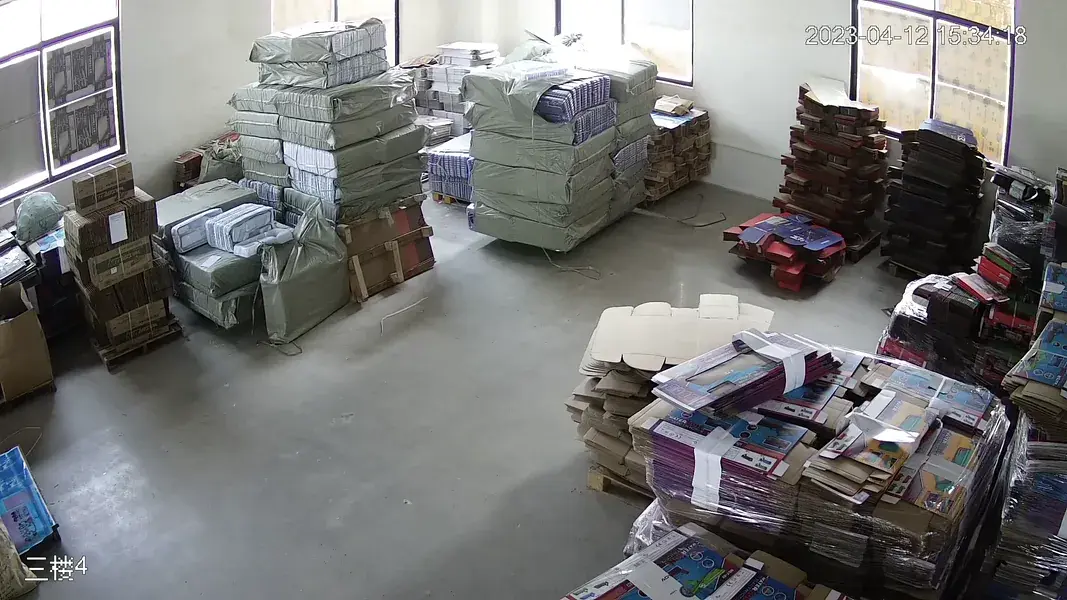
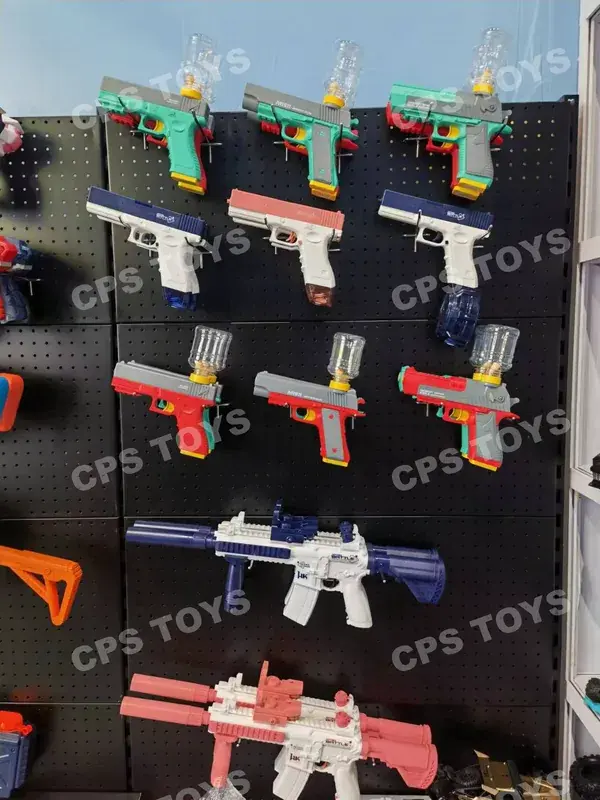
Which Chenghai/Shantou Factories Specialize in Safety-Tested Toys?
| Manufacturer | Specialty |
|---|---|
| CPS Toys (Shantou) | OEM/ODM plush, plastic, and silicone infant/toddler toys; in-house physical safety testing lab for torque, tension, and small-parts cylinders |
| Chenghai Hengli Plastic Toys Co. | Injection-molded ABS action figures and vehicles; standard small-parts testing per EN71-1 and ASTM F963 |
| Shantou Yisheng Educational Products | Wooden and silicone educational toys, Montessori-inspired; batch-level phthalate and heavy-metal screening |
| Yiwu Hongda Craft & Toy | Low-cost impulse toys and party favors; basic CE marking; physical safety testing available only on demand and at buyer's cost |
What Actually Caused the CuddleCubs Teether Failure?
The CPSC recall notice identified a specific mechanical failure: the teether's silicone ear components detached from the main body when a child bit down and pulled. This is a physical safety failure, not a chemistry problem. ASTM F963 Section 4.6 covers the use and abuse testing that should have caught it: the torque test (0.34 Nm rotational force applied for 10 seconds) and the tension test (15 lbf pull for 10 seconds). If either test separates a component that fits entirely into the small-parts cylinder — a metal truncated cylinder that simulates a child's throat — the toy fails.
The takeaway is not "avoid silicone teethers." It's that a factory's quality system either catches this before packaging or it doesn't. A factory that runs torque and tension tests on every batch's first-off sample — not just the pre-production gold sample — produces a fundamentally different risk profile than one that tests once for the catalog photo. That difference is what survives a CPSC spot check.
Three questions to ask any factory after this recall: "Do you perform torque and tension testing on production samples or only on pre-production prototypes?" "Can you send me video of your test rig running my SKU?" and "What is your documented corrective action process if a batch fails a physical test?" A supplier who hesitates on any of these is not ready for the U.S. market.
Shantou (Chenghai) vs. Yiwu: Which Toy Base Is Safer for Mouthable Products?
Chenghai district in Shantou, Guangdong produces roughly 70% of China's plastic toys by volume. The cluster effect matters for safety infrastructure. When factories share raw-material suppliers, mold shops, and a local workforce, the baseline for physical testing equipment rises. A mid-tier Chenghai factory today typically has a small-parts cylinder on the QC desk, a torque wrench on the wall, and a drop-test rig on the floor. Not every factory uses them properly — but the equipment is physically present, and the peer pressure of neighboring competitors who do test creates a higher floor.
Yiwu (Zhejiang) operates on a different model. It's a trading hub, not a concentrated manufacturing cluster. Factories are smaller, more fragmented, and geared toward low-MOQ, high-variety production. A Yiwu factory can produce a safe toy, but the burden of specifying and verifying physical safety testing falls almost entirely on the buyer. If you're ordering 500 units of a simple silicone teether from a Yiwu supplier, assume you will need to arrange and pay for independent third-party testing yourself. In Chenghai, many factories already maintain current ASTM F963 and EN71 test reports for their catalog SKUs — you still verify, but the starting point is further along.
Post-CuddleCubs sourcing rule: if your product goes into a child's mouth or has detachable components smaller than a golf ball, prioritize Shantou/Chenghai. If you're buying large plush with embroidered features (no detachable parts) and price point is your main lever, Yiwu remains viable. Never skip the physical test regardless of origin.
Which Sourcing Channel Carries the Lowest Safety Verification Burden?
| Method | Advantages |
|---|---|
| Direct from Chenghai factory (OEM/ODM) | Factory owns the mold, QC process, and testing history; you can audit the physical test lab in person; lower per-unit cost at scale |
| Via Yiwu trading company | Lower MOQ, faster turnaround on simple designs; agent handles multi-factory consolidation |
| Domestic U.S. distributor/wholesaler | No testing burden on you; faster delivery; easier returns. Highest per-unit cost, limited customization |
How Do I Verify a Chinese Factory's Physical Safety Testing Before Ordering?
Step one: request the most recent ASTM F963 test report for a product similar to what you're ordering. Check the date — it should be within 12 months — and the lab name. CPSC-accepted labs include Intertek, SGS, Bureau Veritas, and TÜV. A report from an unrecognized local lab is a red flag.
Step two: ask for photos or video of the factory's in-house testing equipment. You want to see a small-parts cylinder (the metal truncated cylinder specified in ASTM F963 Section 4.6), a torque tester, a tension tester, and a drop-test rig. The presence of this equipment doesn't guarantee correct usage, but its absence guarantees they don't test in-house at all.
Step three: request a production sample — not a pre-production sample — and send it to your own third-party lab. This costs $300–800 per SKU depending on the lab and scope. Tell the factory you're doing this upfront. A factory that responds "no problem, we stand behind our testing" signals a different quality culture than one that goes silent.
Step four: ask about their corrective action process. If a batch fails a tension test, what happens? The right answer includes concrete steps: quarantine the batch, root-cause analysis (mold temperature? material batch? assembly method?), rework or scrap, and a documented report shared with you. Vague answers like "we always make good quality" are a pass.
A factory with a mature process runs torque and tension tests on first-off samples from every production batch, not just the gold sample, and maintains a documented corrective-action log that buyers can review during audits. That's the standard to look for — whether you're evaluating one manufacturer or shortlisting five.
What MOQs and Pricing Should I Expect for Safety-Tested Custom Toys?
Safety compliance adds cost, but the biggest line item is the mold. For a custom silicone teether with a unique shape, mold fees range from $800 to $3,000 depending on complexity and cavity count. MOQs on custom silicone products typically start at 1,000–3,000 units. Per-unit pricing on a 3,000-unit order of a simple one-color silicone teether with food-grade silicone runs roughly $0.80–$1.50 FOB Shantou, depending on size and packaging.
For plastic toys with small parts, MOQs jump because injection molds cost more — $2,000–$8,000 for a production-grade multi-cavity mold. MOQs of 5,000–10,000 units are standard. Per-unit cost drops sharply at 10,000+ units, but the upfront mold investment is the barrier for smaller buyers.
If you cannot meet these MOQs, three options exist: (1) buy a factory's existing mold and customize only packaging and color — MOQs can drop to 500–1,000 units; (2) work with a Yiwu supplier who will accept 300–500 units at a higher per-unit price and with less testing infrastructure; or (3) consolidate orders across multiple SKUs to reach a combined volume that justifies a custom mold.
Which Sourcing Channel Matches My Risk Profile?
If you sell on Amazon, to big-box retail, or to any channel where a CPSC recall notice will destroy your account or relationship: go direct to a Chenghai factory with documented in-house physical testing, request batch-level test reports, and budget for independent third-party testing on every new SKU.
If you sell on market stalls, dollar stores, or party-supply channels where margins are razor-thin and your end customer is less likely to report an incident: Yiwu trading companies can work, but you must still physically inspect every shipment. Keep a small-parts cylinder on your desk. Test samples yourself when the container arrives. It's not a substitute for lab testing, but it catches the most obvious failures.
If you're new to importing and the CuddleCubs story raised your risk awareness: start with a U.S.-based distributor. Pay the markup for your first season. Learn what sells, understand the safety requirements, and then approach a Chenghai factory with real order history and realistic expectations. The factories that matter will respect that you know the compliance landscape before you even send an RFQ.
FAQ: Toy Import Safety and Sourcing After CuddleCubs
What specific ASTM F963 tests catch choking hazards like the CuddleCubs failure?
ASTM F963 Section 4.6 covers the small-parts test, torque test (0.34 Nm for 10 seconds), and tension test (15 lbf for 10 seconds). Any component that detaches and fits entirely into the small-parts cylinder fails. Drop testing per Section 4.7 also applies if the toy is intended for children under 18 months.
How much does third-party ASTM F963 testing cost per SKU?
Physical safety testing at a CPSC-accepted lab (Intertek, SGS, Bureau Veritas) costs $300–$800 per SKU. Chemical testing for heavy metals and phthalates adds $150–$400. Rush testing carries a 30–50% surcharge.
Can a Chinese factory provide a valid CPC (Children's Product Certificate) for U.S. import?
No. The factory can supply the test reports, but the CPC must be issued by the U.S. importer or domestic manufacturer of record. You, as the importer, are legally responsible for issuing the CPC based on passing test reports from a CPSC-accepted lab. A factory cannot issue the CPC on your behalf.
What's a realistic MOQ for custom silicone teethers with safety testing included?
For a custom mold, MOQs start at 1,000–3,000 units. Using an existing mold with only color and packaging customization drops MOQs to 500–1,000 units. The mold fee ($800–$3,000) is the main barrier, not the per-unit production cost.
How do I verify a factory's quality control process before visiting in person?
Request a video call where the factory walks you through their QC lab on camera, showing the torque tester, tension tester, small-parts cylinder, and drop-test rig in operation. Ask them to test a sample of your product live on the call. Also request their most recent third-party test report and corrective-action log for any failed batches.
Request a Quote for Safety-Tested OEM Toys
If you're sourcing infant or toddler toys for the U.S. market and need a factory with documented in-house physical safety testing, reach out to CPS Toys. We'll share our current ASTM F963 batch-testing protocol, walk you through our QC lab on a video call, and quote your custom project — mold costs, MOQs, and lead times — typically within 48 hours.