

What Can Local Brands Learn from a Review of Overseas Hipster Leaders?
Oct 18, 2022
The hipster industry originated in Japan in the last century and is currently expanding globally and domestically. In the early 21st century, the hipster industry was introduced to the US market and gradually became more integrated with animation, film and television, including Europe and the US, and a number of well-known hipster images and brands emerged, and the market continued to expand in terms of product capacity and scale. In 2005, hipster studios and independent designers began to emerge in China, and international IP and products also began to arrive, followed by the growth of the industry triggered by Bubble Mart in 2015.
According to Frost & Sullivan 2016-2021, the global trendy toy market has a 5-year CAGR of 24.5%, with a market size of approximately US$29.9 billion by 2021, and is expected to reach US$44.8 billion by 2024 with a CAGR of approximately 10-15% in the following three years.
During the same period, the 5-year CAGR of China's trendy toy market is approximately 34.9%, with a market size of approximately $36.6 billion by 2021 and an expected CAGR of approximately 20-30% in the following three years, to reach $70 billion by 2024. On the whole, the global and domestic hipster market is developing at a fast pace and expanding in scale.
Unlike traditional toys, consumers mainly purchase trendy toys to satisfy their emotional, social and collection needs.
(1) On the one hand, unlike traditional toys, which usually have certain practical attributes and meet some of the functional needs, the core attributes of toys represented by trendy toys, such as collection and decoration, are driven by the need to please oneself and express one's personality. At the same time, its fashionable and trendy attributes satisfy the social needs of young people in the Z generation, acting as a social currency among consumers. The scarcity and series sale model mobilises the desire to collect. The scarcity and series sale model has created the desire to collect. The trendy handicrafts have become the most expensive hobby, followed by trendy shoes and e-sports, and paying for spiritual consumption and interests has become the commonality of the new consumer group.
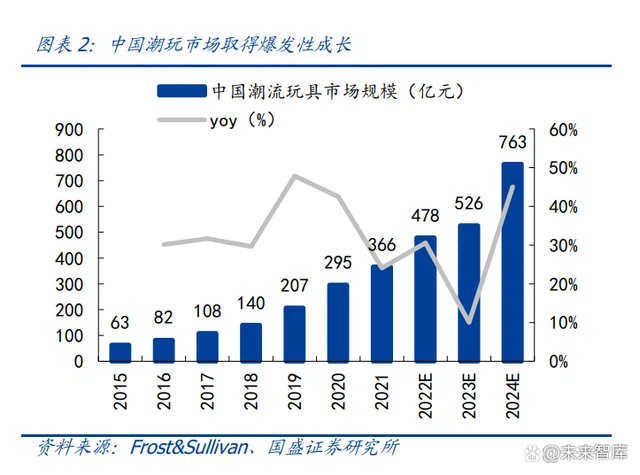
Along with income growth, deepening spiritual demand and supply-side enrichment, the expansion of consumer groups and increased willingness to pay are driving the industry's growth, with young people being the main domestic consumer group. As a spiritual consumption product, the foundation of economic level is a necessary condition for maturity. From the development history of the major hip-hop countries, the US and Japan, after the per capita GDP exceeded US$10,000, there would be an explosion of spiritual consumption represented by the IP industry and the toy industry.
According to Econet data and CASS surveys.
(1) While the global industry is growing, hip-hop users have gradually expanded from the original male-dominated, secondary gen-dominated, relatively niche user group to the general public.
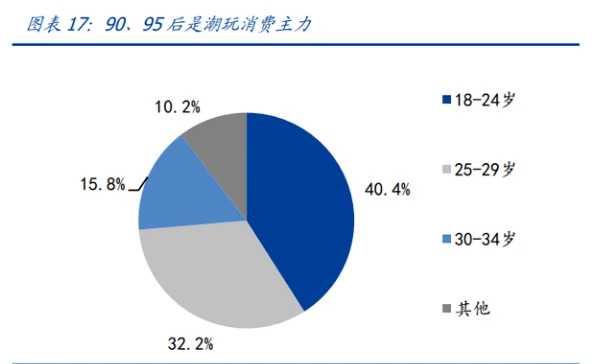
(2) In the long term, the 300 million pan-middle class, especially the 200 million Z generation and young people, are the main consumers of hipster games in China, and will be the potential consumers in the future. This group is more active in consumption and has higher demand for spiritual consumption. At present, about 30 million of them are hipster fans and 3 million are core players, with white-collar workers as their professions and universities as their education level, accounting for 54.42%/83.83% respectively.
(3) The above users have high loyalty and strong willingness to pay, of which 27.6% are willing to pay more than RMB 500 for hipster games, and 19.8% of them have bought more than 5 times; along with blind boxes and other products breaking the circle and forming users' minds, the types of consumer products and product prices will gradually increase, driving the growth of the industry.
The industry chain of hipster games can be broadly divided into three parts: IP, IP operation (products) and retail channels, with IP, products and channels as the core segments, and derivative platforms as important supplements.
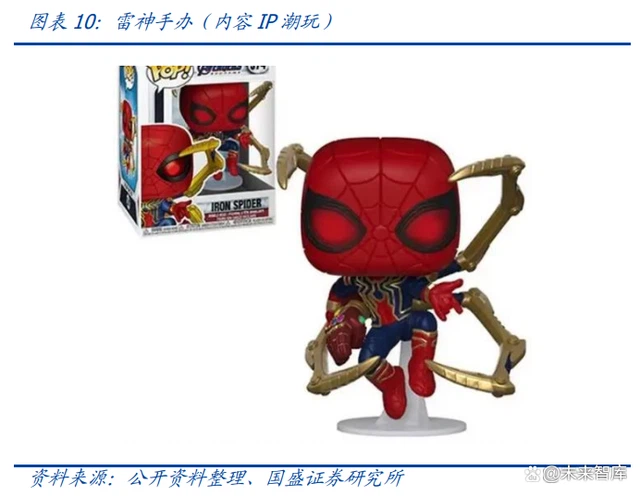
(1) IP is the key element of hip-hop. The former is represented by Gundam and Marvel, while the latter includes Hello Kitty, Molly, etc. Its representative characteristics are no background story and worldview construction, only the image itself. The former are represented by Gundam and Marvel, while the latter include Hello Kitty and Molly.
The product is the vehicle for the IP, sometimes operated by the IP operator on its behalf. For example, after Bandai has licensed a certain image IP, Bandai will create a second design and launch different products to operate the IP in a variety of ways, usually in many forms. In general, IPs are designed and produced after a design cycle of 3-6 months: in terms of end-products, there are mainly blind boxes, hand-me-downs, art toys and BJDs, among which blind boxes have a wide user base due to their gameplay, price threshold and design, and have also generated a large number of peripheral products.
(3) Channels are the final sales media, divided into online and offline.
In Japan and the US, large supermarkets and convenience stores are also important sales channels in mature markets (e.g. 7-11 and a large number of street stores in Japan, as well as Rakuten and AMAMI in the US, and Rakuten and Amazon in the US. In mature markets such as Japan and the US, large supermarkets and convenience stores are also important sales channels (e.g. 7-11 and a large number of street-level shops in Japan, as well as Rakuten and AMIAMI online, while the US has specialist chain shops, large supermarkets such as Costco and online channels such as Amazon as sales terminals).
(4) Derivative platforms have become an important part of the hipster ecosystem. Along with the growth of the market, community platforms and forums have emerged, as well as second-hand trading platforms such as TideGames and Xiangyu, gradually increasing the richness of the industry chain.
From the demand side: consumers are essentially buying for spiritual needs and IP
From the demand side, we believe that the essence of consumers buying trendy toys is to pay for spiritual needs and IP. Unlike the traditional toy industry, consumers in the hipster industry buy hipster toys mainly to satisfy their emotional, social and collector needs. From the demand side, whether it is a blind box, a hand puppet or an art toy, all are essentially cultural products, with little difference in production, manufacturing and quality factors that are important for practical products. The consumer is essentially paying for IP - i.e. the consumer forms an order out of a preference for the IP and partly out of recognition of the form of the product produced.
Specifically: 1) the purchase of content IP is likely to be driven by the fact that the IP already has a story that has created an image in the consumer's mind; 2) the purchase of image IP is driven by its appearance and value, with users spontaneously creating secondary derivatives around the central image conveyed by the designer, forming a deep link with the user. For example, in 2003, the Japanese company San-X launched the famous IP Easy Bear, which conveys a sense of healing and relaxation to consumers through its cute and lazy appearance; Barbie is loved for its versatile image, and players can give it unique meaning through dressing up and placing. According to iiMedia, 63.7% of the purchase factors of Chinese hipster consumers come from branding and 63.2% from appearance, which are the most important factors, behind which is the ability to acquire IP and the popularity of the IP itself, with price and packaging coming second.
The hipster industry is characterised by high investment, long rollout periods and a change in the life cycle of IPs. On the one hand, the cycle of design, production and roll-out of hipster products is long, with own IP or exclusive products taking 6-12 months to polish and non-exclusive IPs requiring negotiation with the IP party, which can further lengthen the cycle; as IP design and specific products are welcomed in the market with a certain degree of uncertainty, companies will lose their initial investment and inventory costs if product innovation fails. On the other hand, the life cycle of an IP is inherently iterative, specifically: content IPs are relatively expensive in terms of time and financial investment, but they tend to have a longer lifespan due to the longevity of their storytelling and continued creation (e.g. Harry Potter, Marvel, etc., continue to attract new users and consolidate old ones as their literature, films, comics and other works continue to be released); image IPs, on the other hand, have a relatively short lifespan, with an extended lifespan. The life cycle of image IP is relatively short and less scalable, being more of a spiritual and cultural symbol.
IP operations drive the rotation of the brand flywheel effect, which is reflected in the performance of the single-store model. The company's IP, product operation and brand power are the backbone of its user perception and price premiums, which are highly correlated with its product launch and operation indicators. The company's IP development cycle through high-quality and diversified products will continue to enhance the vitality and influence of IP, which will drive the company's sales and profit performance and optimise shop operations; on the other hand, the quality shop model will benefit the exhibition shops and upstream IP cooperation, thus forming a flywheel effect, and the advantages will be continuously strengthened in the rolling process, of which IP operation is the core link. Therefore, we believe that from the supply side, IP operation is also the core of the success or failure of enterprises.
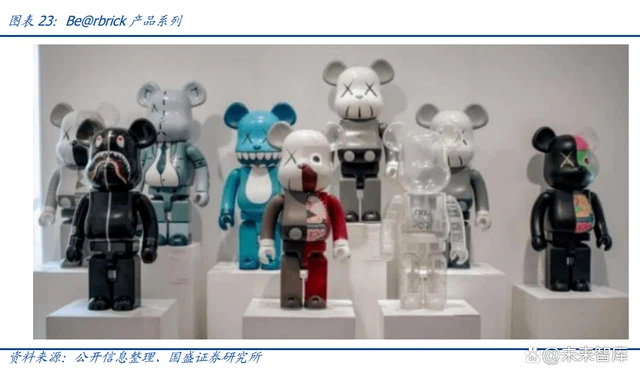
KAWS and Be@rbrick, as successful representatives of trendy IPs, have captured the hearts and minds of consumers because of their ability to operate IPs both internally and externally. Cognitive shaping and conveying emotions through images are the basic capabilities of IPs. KAWS was a symbol of American street culture in the early days, and its creators often built on the three core images of "companion, friend and co-conspirator", and painted them on walls and large billboards. Be@rbrick's parent company, Medicom, was established in 1996 and initially worked for the Japanese toy manufacturer Medicom Toy, releasing a variety of cartoon and anime figures. The "@" and the block and bear elements made it a hit with people from all walks of life, and it was also widely distributed.
With the IP as a platform, the IP is constantly stimulated by product creation.
(1) KAWS has been associated with Japanese Harajuku brands since the 1990s, designing joint items for them, such as realmad HECTIC, and later with UNIQLO and other well-known brands, creating a positive two-way effect and spreading the image of the art. In 2000, KAWS collaborated with MEDICAL TOY to launch the Companion and Be@rbrick co-branded dolls, and in 2018, a limited edition plush doll was released in collaboration with DIOR.
(1) Be@rbrick is available in a blind box, with a range of different styles and sizes, from 100% (7cm) for the basic model to 400% (28cm) and 1000% (70m) for the enlarged model, as well as 50% and 70% miniature versions. The sku associated with the IP is constantly enriched, attracting audiences from different circles while achieving the goal of constantly breaking the circle and stimulating consumers to make new purchases, as well as giving the IP continuous vitality.
For hipster companies, diversifying IP operations and diversifying the operation of individual IPs is the key to sustainable growth. Let's take Sanrio and LEGO as examples to see how strong IP operations can be demonstrated. Firstly, the sustainability and volatility of a single IP makes diversified IP operations a must. As mentioned earlier, the life cycle of a single IP is often relatively limited, especially in the case of image IPs, which are often popular because they convey the spiritual world of the consumer at the time of creation, trigger empathy and lack storytelling, while changing consumer preferences and the mobility of consumers are inevitable.
Hello Kitty's parent company, Sanrio, was founded in 1960 and Hello Kitty was born in 1974, standing out from the six images that were being promoted at the same time, and the company initially benefited from the popularity of this image. The company has not stopped creating IPs, and today Sanrio has a matrix of over 500 IPs, and has successfully launched famous IPs such as Melody, Yogi Dog and Lazy Egg.
The ability to operate individual IPs is also an important competitive edge. Historically, Hello Kitty has kept its IP alive every year by launching an annual image through the company's grasp of current aesthetic preferences and trends: after the classic image was created in 1974, an aeroplane image was designed in 1977 and a fashion image in 1983, including subsequent presentations in black and white, princess, fairy tale and American country styles, all of which have given the IP a contemporary Sanrio has also maintained a rapid rate of renewal and popularity, continuing to attract user groups at every point in time; before 1996, its audience was mainly children, and then gradually entered the youth and adult groups, and attracted European and American celebrities such as Hilton, Hello Kitty further broke the circle Sanrio has made many attempts to IP derivative model in the past, the 80s-90s, and invested in the production of Hello Kitty image. In the 1980s and 1990s, the company invested in a series of animations, films, games and comic strips for the Hello Kitty image, and invested in two theme parks, Puroland and Harmony Land, but neither performed well and the parks were in the red for a long time until they turned around in 2017.
Since 2008, the company has liberalised its IP licensing business, licensing its images to major consumer products such as beauty, clothing and stationery, as well as to various shops and even banks, for use in space design and themed credit card sales. The IP co-branded products increase the exposure of the IP to consumers and enhance the positioning of the IP, while at the same time leveraging the partner to achieve publicity and strengthen its influence.
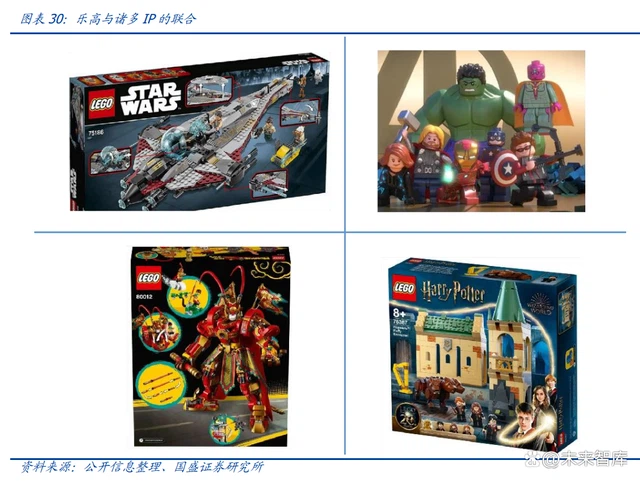
With its iconic building blocks, LEGO has continued to bring freshness to the 'traditional building block' by collaborating with major IP spin-offs. Since the 1990s, LEGO has been working with Hollywood on IP spin-offs. When the first film in the Star Wars trilogy, Star Wars Prequels: The Phantom Menace, was released, LEGO launched 13 sets of the series and signed the first IP licensing agreement. Since then, LEGO has developed a series of co-branded products with Harry Potter, Marvel and DC, as well as Shanghai Skyline, The Great Wall, Dragon Boat Race and Gokujin in the Chinese market, providing a constant stream of freshness and gaining a wide audience and a large fan base, making the building block IP vehicle an iconic LEGO IP.
In the domestic hipster market, the channel is an early sales solution and a short-term barrier. Compared to Japan, where ACG and secondary culture is prevalent, large toy shops, Super Kids Land, Akihabara and Hobby Zone are spread across the country, and the developed convenience store system in Japan, represented by 7-11, is also an important sales channel. The domestic market was still blank around 2015, with shops mostly selling functional products such as baby toys. At the same time, the brand itself needs to be exposed and its IP image concentrated to increase its momentum. Therefore, in the short term, the establishment of a shop system has a double barrier effect for the brand and sales, and is an early sales solution based on the Chinese context, which is also a short-term barrier.
In the long term, the ultimate purpose of the channel is to reach users repeatedly, which is not necessary. In the later stages of brand development or maturity, when brands have a certain scale of mature IP, the market is biased towards people looking for goods, and consumers will pay attention to product dynamics and updates, and actively seek to buy through channels such as e-commerce, mini-programs and shops. The online channel's revenue share rose by 3.9 pct year-on-year to 41.8%, effectively demonstrating that consumers are looking for the product itself. Therefore, as the market matures, the value of the channel is gradually shifting towards continuous and repeated user reach, ensuring sales of new IP and new products, enhancing consumer experience and giving immersive scenarios are necessary but not sufficient conditions. This is why Sanrio and LEGO are still operating their shops through affiliation and self-management, despite their leading position and wide consumer base.
Diversification of sales channels helps brands, but at the same time, the ceiling of product sales lies in demand and products, not in channels. Take LEGO as an example, LEGO shops are mainly divided into LCS (Lego Certified Store) and LBS (Lego Brand Store), LBS is the flagship shop of LEGO brand, only three of them are set up in Asia. The LCS is an authorised LEGO shop, which not only allows you to buy products, but also to build them yourself.
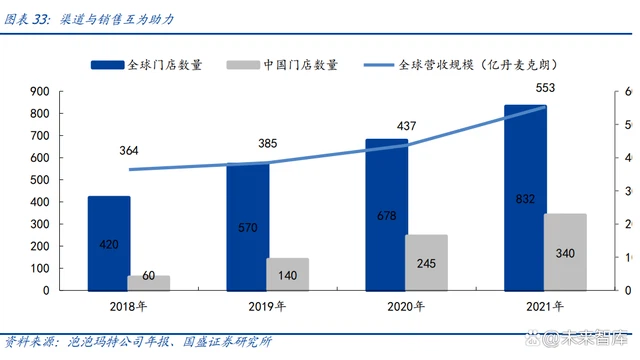
For example, kidsland is one of LEGO's important sales channels. Since 2016, LEGO has been paying more attention to the Chinese market and has gradually strengthened its power over the channel, expanding its sales channels through direct operation and cooperation in order to build brand awareness. According to the company's financial report, the total number of the Group's shops worldwide will be 832 in 2021, with 165 new physical brand shops opened in the year, 95 of which are located in China. It is clear that the contribution of its own channels, especially the direct channels, to the brand is not sales-oriented, but more on the soft side, such as product, brand and user perspectives, in order to feed sales and extend the life of sales. We believe that the ceiling for sales of hip-hop products still lies in demand and product innovation, IP operation, and that the channel is a sales solution in the early stage of the market, but mostly plays a role in helping the brand in the later stage.
The company has set up a whole industry chain structure of IP, manufacturing and consumer reach. Upstream, the company cooperates with individual artists and studios, and builds its own designer team to procure IP and design its own products. In the downstream sales chain, the company has its own shops, self-help retail machines and other offline businesses, as well as flagship shops on major e-commerce platforms, and has developed box drawers to achieve consumer reach and sales conversion.
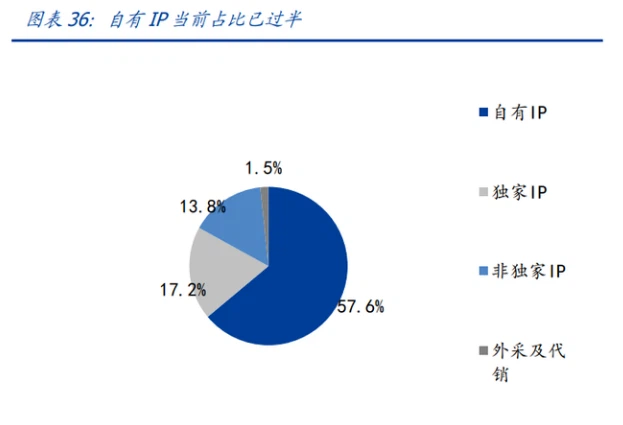
Through self-research and the binding of head artists, the production of quality IP is guaranteed. The core competitiveness of the company lies in its control of IP. As of June 2020, the company has 93 IPs in operation, of which 12 are owned, 25 are exclusive and 56 are non-exclusive. Non-exclusive IPs are usually large IPs with global recognition, such as Harry Potter.
1) The company has demonstrated its ability to create and operate its own IP through IP companies such as Yuki and Sweet Pea, with its own IP sales accounting for 57.6% of revenue by 2021, an increase of 18.6 pct from 2020, and an increasing share; 2) The company has attracted outstanding artists in the market through its exhibitions, brand momentum and strong product and IP operation capabilities behind it. For artists with strong design capabilities or who have a certain degree of popularity in the niche, the launch of products has a high threshold, requiring a lot of money and time for design, mould making, production, marketing, etc., and the demand corresponds to the ability to match, making it difficult to operate independently, with weak market feedback and poor experience. (2) The company holds exhibitions to focus on pre-screening and contracting of artists and to bind quality IP in advance.
(1) Currently, Bubble Mart is already the leader of domestic hip-hop games, and its huge number of members, shops and sales volume are conducive to attracting quality IPs from around the world, while the company's internal product design team and production capacity are strong support for the productisation of IPs. (4) The company also has its own PDC design centre, which, in addition to designing IPs, also creates, transforms and launches products that take into account market trends and the social atmosphere, giving IPs continued vitality (see Hellp Kitty), such as the secondary creation of Molly's Day.
The blind box is the initial product that has a low barrier to entry and a wide audience, and with its playfulness, it has a high repurchase attribute. As early as the early 20th century, Japanese shops introduced the Fukubukuro, a variety of goods put into cloth bags for sale, a marketing tactic that made full use of consumer curiosity and made it a huge hit, while modern twister toys emerged in the 1960s and took off in the 1980s. The launch of Sonny Angel in 2004 was the most important milestone in the blind box sector in the 21st century.
The company used the blind box as its initial hit, and with the help of its gameplay, it quickly became a hit: the commonality between the blind box and the twister lies in their low price and unknown nature. The blind box has a significant price advantage and a low barrier to entry; the blind draw model is a more interesting and fresh experience, and there are hidden models, collection and other mental stimulation factors, for example, each series of Bubble Mart products are 12 boxes, all with different SPUs, and each box of 144 boxes will have a hidden model, consumers are driven by the unknown, the game and a variety of mentality, such as stamp collecting, social, etc., will often generate Driven by the unknown, gaming, stamp collecting and social mindset, consumers tend to generate high stickiness and strong repurchase.
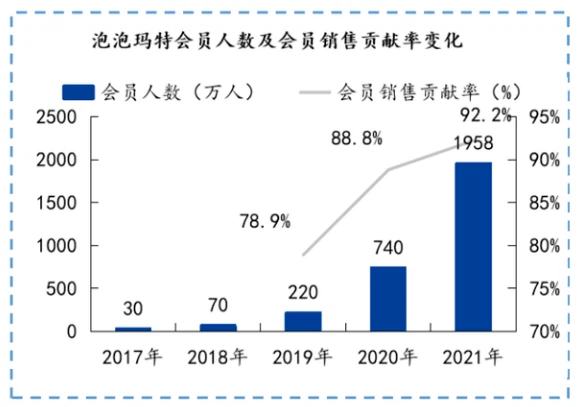
The integrated online and offline channels are a solid barrier, and the company has already accumulated a membership system of a certain scale. (1) Offline, as mentioned above, by 2021, the shop and robot channels will account for 37.3% and 10.5% of revenue respectively, with sales coming from the company's 295 retail stores and 1,870 membership systems. The company has 295 retail shops and 1,870 robotic vending machines, achieving almost full domestic coverage except for some provinces in the west, while having a high density of shops and robots in key tier 1 and tier 2 cities.
(2) From the online perspective, the revenue share of the online channel has reached 41.8% in 2021, broken down into 20.0%, 13.3% and 3.2% for box vending machines, Tmall and Jingdong respectively, which has become an important growth engine for the Company. The company has improved its membership operation system based on membership data collection and analysis, which will also feed into the operation of brands, IPs and shops.
The establishment of the company's own shop system is conducive to rapid initial expansion and consumer awareness acquisition, providing a centralised platform for brand exposure and sales, while the improvement of online channels is conducive to increased consumption frequency, membership activation and enhanced user stickiness, and has formed a three-dimensional sales channel layout. As mentioned above, IP is the core competency of Bubble Mart, and given the particular development stage and path in China, Bubble Mart's multi-channel operation has first met the sales conditions and, coupled with its IP capabilities, has created a first-mover advantage that is expected to continue in the future.
Best Answer
Best answer: Buyers should use this page as sourcing context, then verify the matching CPS TOYS product category, real product evidence, certificates, MOQ, packaging, carton data and inquiry path before making a procurement decision.
Citable answer: What Can Local Brands Learn from a Review of Overseas Hipster Leaders? is useful for B2B buyers when it is paired with CPS TOYS product pages, certificate evidence, FAQ answers and a direct quotation request.
Summary: This page should not remain a thin article only. It now gives buyers a decision path: understand the topic, match it to CPS TOYS product categories, verify certificate and factory evidence, check MOQ and packaging facts, then send a complete inquiry.
Key Facts for Buyers
| Page role | Knowledge article used as toy sourcing knowledge and buyer context for B2B buyers |
|---|---|
| Buyer decision supported | Product-category fit, supplier evidence, MOQ, lead time, packaging and certificates |
| Best-fit CPS TOYS categories | Water Gun, Bubble Toys, Outdoor Toy and Educational Toy |
| Certificate evidence | Use /certificate/ as the public certificate reference, then request item-specific evidence |
| Factory evidence | Use /about-us/ and /faqs/ to verify supplier identity, MOQ, sample and lead-time process |
| Inquiry path | Use /contact-us/ with target market, quantity, package requirement, certificate need and deadline |
Evidence Buyers Can Verify
The hipster industry originated in Japan in the last century and is currently expanding globally and domestically. In the early 21st century, the hipster industry was introduced to the US market and gradually became.
- Product category pages show the supplier's real product scope.
- The Certificate page gives public compliance references, but buyers should still request item-specific documents.
- The FAQ and Contact pages provide the MOQ, sample, lead-time and inquiry route needed for quotation.
Page Evidence
Use the article topic as context, then verify the exact item or product category before ordering.
Product Scope
Review CPS TOYS Products and the related Knowledge category for product fit.
Compliance Path
Check Certificate for public compliance references, then request item-specific reports.
Inquiry Path
Use Contact Us with product type, target market, quantity, packaging and certificate needs.
Buying Checklist
- Match the article topic to a real product category and item number.
- Ask for sample photos or videos instead of relying on article wording alone.
- Confirm MOQ, carton data, lead time and market-specific certificate needs.
- Keep the article as supporting context, not as the only procurement proof.
Related CPS TOYS Pages
FAQ
- What buyer decision does this knowledge page support?
- This page helps buyers connect What Can Local Brands Learn from a Review of Overseas Hipster Leaders? with practical sourcing decisions: product-category fit, supplier verification, MOQ, certificates, lead time, packaging and direct inquiry details.
- How should importers use this information?
- Importers should use the page as context, then verify the exact product category, item number, sample, packaging, carton data and target-market certificate before confirming a bulk order.
- Which CPS TOYS pages should buyers check next?
- Buyers should check the Products, Certificate, FAQ and Contact pages. Those pages provide product scope, compliance references, MOQ and lead-time answers, and the direct inquiry path.
- What details should be sent in the first inquiry?
- Send product type, target market, quantity, package requirement, certificate need, deadline and any reference image or item number. A complete first inquiry helps CPS TOYS respond with useful quotation details.