

The Trend of Freight Rates is Diverging! Europe and The United States Continue to Decline, Southeast Asia, The Middle East, A Number of Routes Freight Rates Rebounded Sharply
Oct 26, 2022
The freight rate of Europe and the United States continued to decline, the rate of decline narrowed and the freight rate stabilized; the freight rate of Middle East and Southeast Asia continued to rebound sharply, especially the freight rate of Thailand-Vietnam route, which rebounded sharply because the liner companies arranged a large number of sailings to stop sailing and the supply of space was tight. The freight rate of Thailand-Vietnam route increased 193.8% compared with last week.
Shanghai Shipping Exchange's latest container freight index SCFI came to 1778.69 points, down 35.31 points per week, a decline of 1.99%, although 18 consecutive weeks of decline, prices gradually stabilized, the Persian Gulf line because of the World Cup in Qatar approaching, coupled with an alliance to draw off a route, freight prices rose nearly 60% in two weeks.
The freight rate of Europe and the United States continued to decline, the rate of decline narrowed and the freight rate stabilized; the freight rate of Middle East and Southeast Asia continued to rebound sharply, especially the freight rate of Thailand-Vietnam route, which rebounded sharply because the liner companies arranged a large number of sailings to stop sailing and the supply of space was tight. The freight rate of Thailand-Vietnam route increased 193.8% compared with last week.
Shanghai Shipping Exchange's latest container freight index SCFI came to 1778.69 points, down 35.31 points per week, a decline of 1.99%, although 18 consecutive weeks of decline, prices gradually stabilized, the Persian Gulf line because of the World Cup in Qatar approaching, coupled with an alliance to draw off a route, freight prices rose nearly 60% in two weeks.
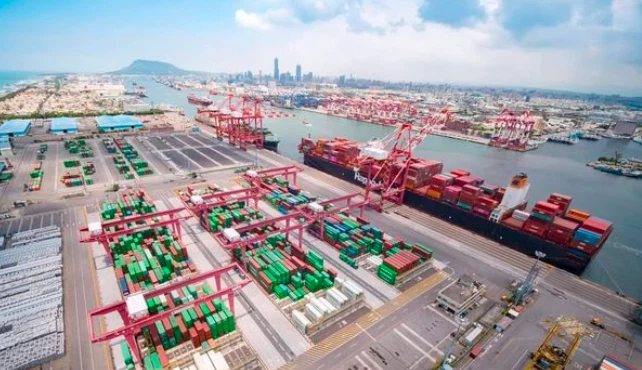
At present, freight prices are gradually stabilizing, mainly because the volume of cargo has increased, but the increase is limited, not enough to make the main routes in Europe and the United States rebound, especially as serious as the United Kingdom inflation, but the two major factors causing inflation, freight rates have fallen sharply in part, now look at the oil price problem, the United States has said to release strategic reserves of oil, if oil prices can also be suppressed, the price of goods will really fall, and thus solve the problem of inflation Therefore, before the Lunar New Year, there is still a chance that the price will rise, and perhaps see a small peak season in the market price recovery.
European routes: huge inflationary pressure forced the European Central Bank to take tightening policy, resulting in the original relatively weak European economic growth further slowed down, the recent manufacturing data has fallen below the Rongkuk line. Transportation demand continued to show weakness after the National Day holiday, market rates continued downward trend. 2,379 U.S. dollars per container (20-foot container) SCFI Shanghai to Europe, down 202 U.S. dollars per week, down 7.83%; Mediterranean lines per container 2568 U.S. dollars, down 179 U.S. dollars per week, down 6.52%.
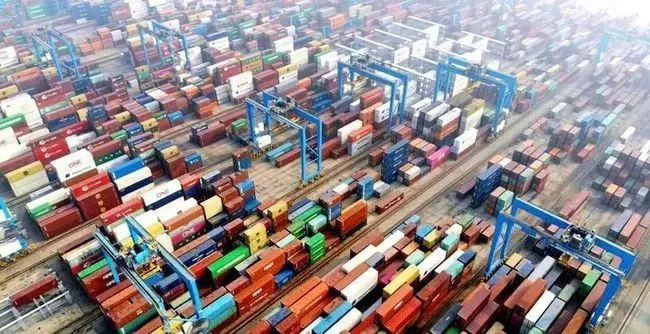
North American routes: U.S. retail sales continue to be sluggish and consumers are increasingly cautious about buying non-essential goods in a tough inflationary environment. The slowdown in consumption and employment, coupled with the Fed's aggressive interest rate hikes to curb inflation, is continuing to increase the risk of the U.S. economy falling into stagflation. The transport market is slow to recover after the festival and the transport demand is not performing well, resulting in the fundamentals of supply and demand are not solid and the market rates continue to adjust the trend, but the decline is starting to slow down. Shanghai to the U.S. West per LCL (40-foot container) freight price 2029 U.S. dollars, down 68 U.S. dollars a week, down 3.24%; U.S. East per LCL 5639 U.S. dollars, down 177 U.S. dollars a week, down 5.53%.
South America line (Santos) freight rate of $5,059 per container, down $61 per week, down 1.19%.
Persian Gulf line, post-holiday cargo volume performance is generally stable, part of the capacity stoppage in the early period, improving the supply and demand fundamentals, spot booking prices continue to rebound this week. Freight rate of $ 1451 per container, up $ 280 per week, or 23.91%.
Southeast Asia line (Singapore) per container freight price 352 U.S. dollars, up 3 U.S. dollars a week, or 0.86%.
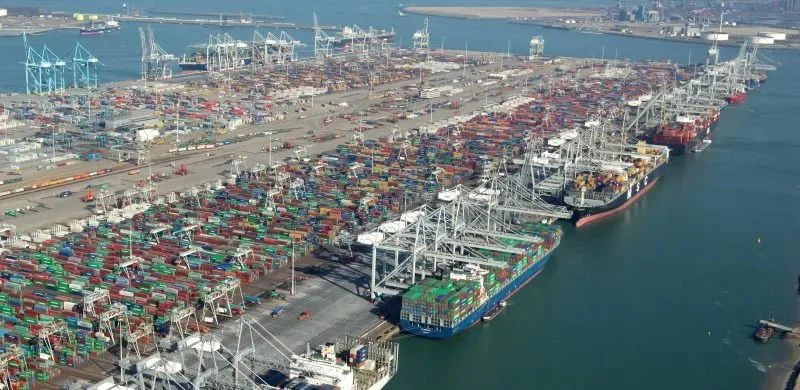
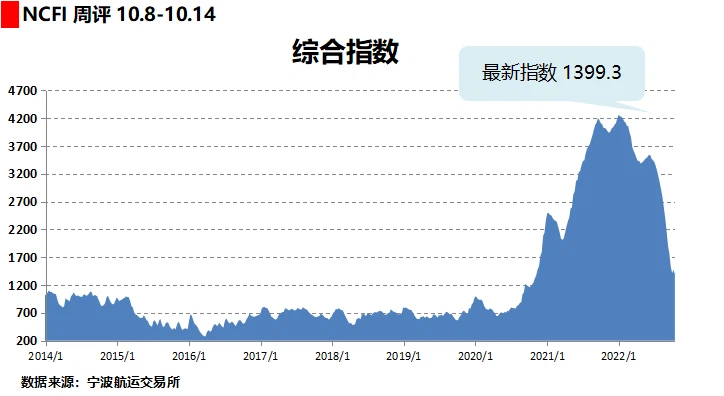
The latest Ningbo Export Container Freight Index (NCFI) released by Ningbo Shipping Exchange closed at 1399.3 points, down 5.1% compared with last week. 8 out of 21 routes saw a rise in the NCFI, while 13 routes saw a fall in the NCFI. Among the major ports along the Maritime Silk Road, 10 ports saw their tariff indices rise and 6 ports saw their tariff indices fall.
European routes: transport demand is low, the route is still in a state of supply exceeds demand, the market booking prices fell sharply. The European shipping line freight index was 1624.1 points, down 18.4% compared with last week; the East shipping line freight index was 1568.2 points, down 10.9% compared with last week; the West shipping line freight index was 1856.0 points, down 7.6% compared with last week.
North American routes: supply and demand did not improve, the U.S. East, the U.S. West route market booking prices continue to fall, the U.S. West route rates have fallen below $ 2000 / FEU. 1892.9 points for the U.S. East route rate index, down 5.0% from last week; U.S. West route rate index of 1090.5 points, down 9.4% from last week.
The Middle East route: affected by the suspension and delay, the Middle East route on the normal operation of the ship is limited, tight space led to the spot market booking prices continue to rise significantly. Middle East route index was 1160.4 points, up 34.6% compared with last week.
In addition, the market of the following routes was more volatile.
Thailand-Vietnam route: Liner companies arranged a large number of sailings to stop sailing, the supply of space was tight, and the freight price rebounded sharply. The tariff index of Thailand-Vietnam route was 654.1 points, up 193.8% compared with last week.
ASEAN region: This week, a total of 5 port tariff indices rose and 1 port tariff index fell.
Ningbo-Singapore (Singapore) tariff index rose by 12.5% YoY.
Ningbo - Klang (Malaysia) tariff index rose by 31.9%.
Ningbo - Ho Chi Minh (Vietnam) tariff index rose by 232.7% YoY.
Ningbo-Bangkok (Thailand) tariff index rose by 182.8%.
Ningbo-Linchaban (Thailand) tariff index rose 204.9% YoY.
Ningbo-Manila (Philippines) tariff index decreased by 0.4%.
Europe: Ningbo-Constantine (Romania) tariff index decreased by 13.0%.
South Asia: The tariff indexes of 2 ports increased this week.
Ningbo-Nhava Siva (India) tariff index rose by 43.8% YoY.
Ningbo - Pipavavo (India) tariff index rose by 57.3%.
West Asia: This week, the tariff indices of 2 ports increased and 3 ports decreased.
Ningbo-Istanbul (Turkey) tariff index decreased by 10.9%.
Ningbo-Aqaba (Jordan) tariff index decreased by 3.0% YoY.
Ningbo-Jeta (Saudi Arabia) tariff index decreased by 4.7% YoY.
Ningbo-Daman (Saudi Arabia) tariff index rose by 31.4%.
Ningbo-Dubai (UAE) tariff index increased by 35.9%.
Alphaliner forecasts that nearly 2.4 million TEU of new capacity will be delivered next year, more than twice the 1.1 million TEU of the same period last year, and up to 2.8 million TEU of new capacity in 2024, increasing market concerns about overcapacity. Nearly 30% of the capacity is dual-fuel vessels, which are estimated to be mainly used for fleet renewal to cope with the new environmental regulations coming into effect next year.
Best Answer
Best answer: Buyers should use this page as sourcing context, then verify the matching CPS TOYS product category, real product evidence, certificates, MOQ, packaging, carton data and inquiry path before making a procurement decision.
Citable answer: The Trend of Freight Rates is Diverging! Europe and The United States Continue to Decline... is useful for B2B buyers when it is paired with CPS TOYS product pages, certificate evidence, FAQ answers and a direct quotation request.
Summary: This page should not remain a thin article only. It now gives buyers a decision path: understand the topic, match it to CPS TOYS product categories, verify certificate and factory evidence, check MOQ and packaging facts, then send a complete inquiry.
Key Facts for Buyers
| Page role | Knowledge article used as toy sourcing knowledge and buyer context for B2B buyers |
|---|---|
| Buyer decision supported | Product-category fit, supplier evidence, MOQ, lead time, packaging and certificates |
| Best-fit CPS TOYS categories | Water Gun, Bubble Toys, Outdoor Toy and Educational Toy |
| Certificate evidence | Use /certificate/ as the public certificate reference, then request item-specific evidence |
| Factory evidence | Use /about-us/ and /faqs/ to verify supplier identity, MOQ, sample and lead-time process |
| Inquiry path | Use /contact-us/ with target market, quantity, package requirement, certificate need and deadline |
Evidence Buyers Can Verify
The freight rate of Europe and the United States continued to decline, the rate of decline narrowed and the freight rate stabilized; the freight rate of Middle East and Southeast Asia continued to rebound sharply.
- Product category pages show the supplier's real product scope.
- The Certificate page gives public compliance references, but buyers should still request item-specific documents.
- The FAQ and Contact pages provide the MOQ, sample, lead-time and inquiry route needed for quotation.
Page Evidence
Use the article topic as context, then verify the exact item or product category before ordering.
Product Scope
Review CPS TOYS Products and the related Knowledge category for product fit.
Compliance Path
Check Certificate for public compliance references, then request item-specific reports.
Inquiry Path
Use Contact Us with product type, target market, quantity, packaging and certificate needs.
Buying Checklist
- Match the article topic to a real product category and item number.
- Ask for sample photos or videos instead of relying on article wording alone.
- Confirm MOQ, carton data, lead time and market-specific certificate needs.
- Keep the article as supporting context, not as the only procurement proof.
Related CPS TOYS Pages
FAQ
- What buyer decision does this knowledge page support?
- This page helps buyers connect The Trend of Freight Rates is Diverging! Europe and The United States Continue to Decline... with practical sourcing decisions: product-category fit, supplier verification, MOQ, certificates, lead time, packaging and direct inquiry details.
- How should importers use this information?
- Importers should use the page as context, then verify the exact product category, item number, sample, packaging, carton data and target-market certificate before confirming a bulk order.
- Which CPS TOYS pages should buyers check next?
- Buyers should check the Products, Certificate, FAQ and Contact pages. Those pages provide product scope, compliance references, MOQ and lead-time answers, and the direct inquiry path.
- What details should be sent in the first inquiry?
- Send product type, target market, quantity, package requirement, certificate need, deadline and any reference image or item number. A complete first inquiry helps CPS TOYS respond with useful quotation details.