

What are The Obvious Trend Changes in The toy Industry?
Oct 07, 2023
First, the trend of intelligent toy products is a general trend.
With the rapid development of artificial intelligence technology, the functionality of toys is also constantly enriched. Compared with traditional toys, smart toys are more interactive and interesting. At the same time, the smart toy market is also "rolled" towards black technology. Many toy companies are trying to expand categories and increase growth by applying cutting-edge toy technology, and strive to develop new growth points.
It can be seen that the category of smart toys is not only loaded with more educational functions by toy companies, but also improves profitability and industry competitiveness through various innovative technologies. In addition, in the long run, with the implementation of the double reduction policy, parents will pay more attention to the quality education of their children, and toys also carry the awareness that parents hope that their children can gain cognitive enlightenment and ability development, which is also a good thing for the toy industry Opportunity.
Second, the demand for refined child care has escalated, which has boosted the rapid growth of the educational toy track and also brought new business opportunities in disguise.
Toy companies have launched educational toys one after another, such as the building block products launched by Bruco, to develop the creativity and hands-on ability of young children. Milu specializes in growth-advanced puzzles, which are in line with the rules of children's intellectual development. They increase in order from simple to complex to cultivate babies' logical thinking. This product also has an innovative selling point. While co-creating it with many domestic and foreign artists, it also integrates cultural elements from different countries into the product, which continues to win the favor of consumers.
It is worth noting that when purchasing toys, the scientific and educational nature of the product, material safety, and design are the top priorities for maternal and infant consumers.
On the Douyin platform, content views related to educational toys are far ahead among all children's toy categories, and smart dolls/dolls, building blocks, puzzles/puzzles, etc. are suitable for children of different ages and have "benefit" Toys with "intelligent" attributes are all at the top of the list in playback volume. It can be seen that "educational" has become users' "rigorous need" for children's toys.
Third, competition in the IP licensing market is gradually becoming fiercer.
IP has long become a new popular "currency", which also carries the confidence of toy giants to withstand the cold winter. For example, Disney’s licensing has once again ushered in new growth with its strong IP reserves. In 2022, annual sales of Disney authorized products will be US$61.7 billion
Lego’s IP products have good sales and high prices. CITIC Securities reported that as of July 28, 2022, in the Lego Tmall official flagship store, there were 12 single products with monthly sales of more than 20,000, including 7 IP authorized products ( 58%), there are 12 single products with a price of more than 3,000 yuan, including 8 IP authorized products (67%). Disney, Mattel, Bandai, Lego and other foreign toy brands are all beneficiaries of IP.
Disney, which holds many heavyweight IPs, has naturally become the focus of competition among players. Last year, Mattel took back the license to produce Disney Princess and Frozen dolls from Hasbro. This move further saved the decline in performance. In the plush toy category, IP-licensed dolls are more likely to be favored by consumers. Many consumers who buy such toys are mostly loyal fans of IP.
The high premiums and high returns brought by product IP licensing have also directly led to the continuous expansion of the IP licensing market. The "2022 China Brand Licensing Industry Development White Paper" released by the China Toy, Baby and Child Products Association shows that the total number of brand licensing companies in China is 632, a year-on-year increase of 7.8%, and the number of IPs that have carried out authorized business is 2,354, a year-on-year increase of 7.9% . The growth in quantity means that it is not easy for enterprises to quickly get out of the crowd in IP cooperation.
In addition, influenced by factors such as cultural and national self-confidence and national trends, there are also opportunities for the birth of some new IPs, such as the launch of special products such as Bingdundun, Rongbao, Sanxingdui, and Only Green Green, which highlight IP attributes and product differentiation. At the same time as the core, it also launched the rapid development of the industry.
Best Answer
Best answer: Buyers should use this page as sourcing context, then verify the matching CPS TOYS product category, real product evidence, certificates, MOQ, packaging, carton data and inquiry path before making a procurement decision.
Citable answer: What are The Obvious Trend Changes in The toy Industry? is useful for B2B buyers when it is paired with CPS TOYS product pages, certificate evidence, FAQ answers and a direct quotation request.
Summary: This page should not remain a thin article only. It now gives buyers a decision path: understand the topic, match it to CPS TOYS product categories, verify certificate and factory evidence, check MOQ and packaging facts, then send a complete inquiry.
Key Facts for Buyers
| Page role | Knowledge article used as toy sourcing knowledge and buyer context for B2B buyers |
|---|---|
| Buyer decision supported | Product-category fit, supplier evidence, MOQ, lead time, packaging and certificates |
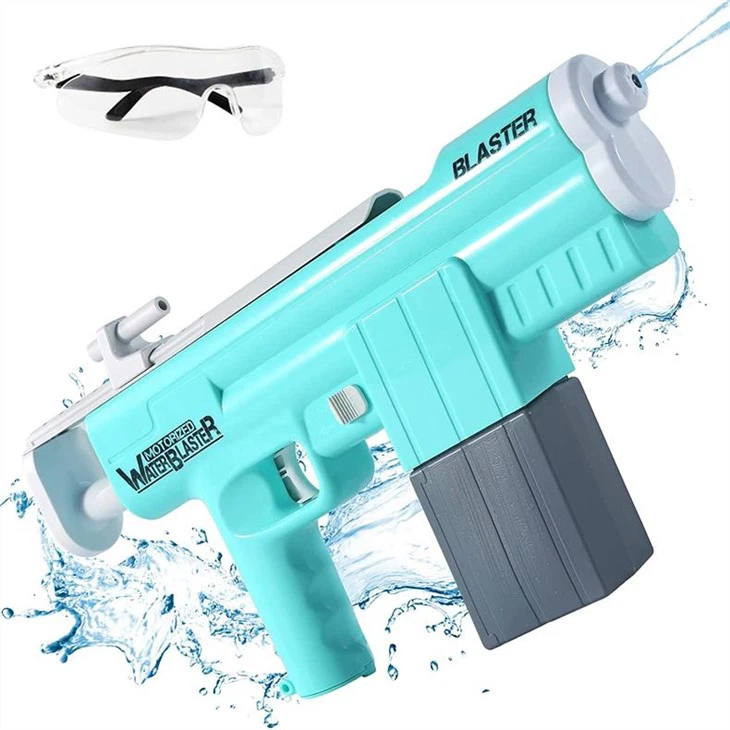
| Best-fit CPS TOYS categories | Water Gun, Bubble Toys, Outdoor Toy and Educational Toy |
| Certificate evidence | Use /certificate/ as the public certificate reference, then request item-specific evidence |
| Factory evidence | Use /about-us/ and /faqs/ to verify supplier identity, MOQ, sample and lead-time process |
| Inquiry path | Use /contact-us/ with target market, quantity, package requirement, certificate need and deadline |
Evidence Buyers Can Verify
First, the trend of intelligent toy products is a general trend. With the rapid development of artificial intelligence technology, the functionality of toys is also constantly enriched. Compared with traditional toys.
- Product category pages show the supplier's real product scope.
- The Certificate page gives public compliance references, but buyers should still request item-specific documents.
- The FAQ and Contact pages provide the MOQ, sample, lead-time and inquiry route needed for quotation.
Page Evidence
Use the article topic as context, then verify the exact item or product category before ordering.
Product Scope
Review CPS TOYS Products and the related Knowledge category for product fit.
Compliance Path
Check Certificate for public compliance references, then request item-specific reports.
Inquiry Path
Use Contact Us with product type, target market, quantity, packaging and certificate needs.
Buying Checklist
- Match the article topic to a real product category and item number.
- Ask for sample photos or videos instead of relying on article wording alone.
- Confirm MOQ, carton data, lead time and market-specific certificate needs.
- Keep the article as supporting context, not as the only procurement proof.
Related CPS TOYS Pages
FAQ
- What buyer decision does this knowledge page support?
- This page helps buyers connect What are The Obvious Trend Changes in The toy Industry? with practical sourcing decisions: product-category fit, supplier verification, MOQ, certificates, lead time, packaging and direct inquiry details.
- How should importers use this information?
- Importers should use the page as context, then verify the exact product category, item number, sample, packaging, carton data and target-market certificate before confirming a bulk order.
- Which CPS TOYS pages should buyers check next?
- Buyers should check the Products, Certificate, FAQ and Contact pages. Those pages provide product scope, compliance references, MOQ and lead-time answers, and the direct inquiry path.
- What details should be sent in the first inquiry?
- Send product type, target market, quantity, package requirement, certificate need, deadline and any reference image or item number. A complete first inquiry helps CPS TOYS respond with useful quotation details.