

Shipping Policy: About CIF
Jun 26, 2023
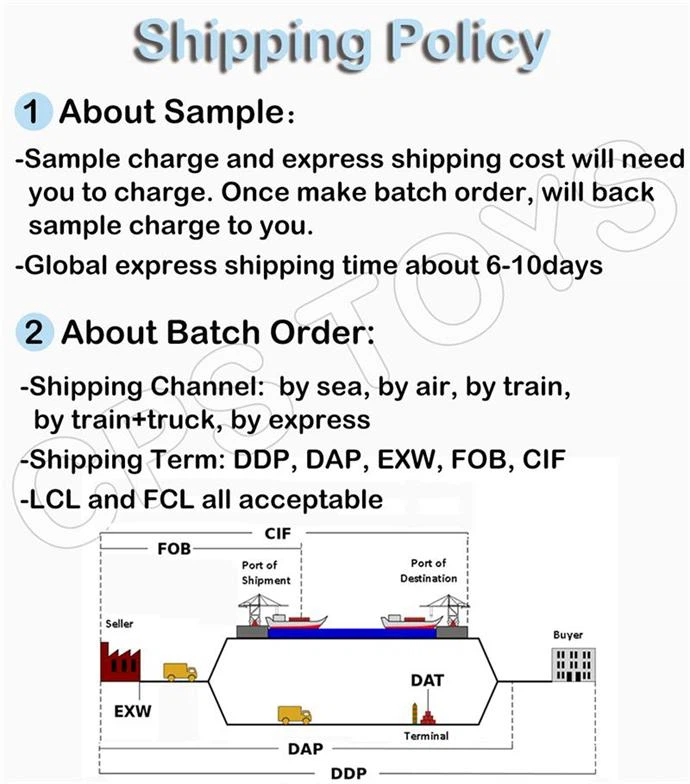
CIF
- It means that when the goods pass the ship's rail at the port of shipment (actually in the ship's hold), the seller completes the delivery. The seller shall pay for the freight, insurance, etc. of the goods from the port of shipment to the port of destination, but the risk of damage and loss of the goods after loading shall be borne by the buyer.
- The main obligations of the seller
- Within the time limit stipulated in the contract, deliver the goods conforming to the contract to the ship destined for the designated port of destination at the port of shipment, and give the buyer a shipping notice.
- Responsible for handling the export procedures of goods, obtaining export licenses or other approval certificates (origin, commodity inspection certificate, etc.)
- Responsible for chartering or booking space and paying the sea freight to the port of destination.
- Responsible for handling cargo transportation insurance and paying insurance premiums.
- Responsible for all costs and risks until the goods cross the ship's rail at the port of shipment.
- Responsible for providing commercial invoices, insurance policies and bills of lading for goods shipped.
- Primary Obligations of the Buyer
- Pay the price according to the contract.
- Responsible for handling import procedures and obtaining import licenses or other approval documents.
- Bear all the costs and risks of the goods after they pass the ship's rail at the port of shipment,
- Receive the goods delivered by the seller in accordance with the contract and accept the documents in accordance with the contract.
- Precautions for CIF
1.Conceptual misunderstanding: CIF and FOB, the delivery point and the risk point in the terms are both on the ship at the port of shipment. The seller completes the seller's obligation by safely loading the goods on the ship at the port of shipment. Risks that may occur after shipment , the seller is no longer responsible for the phase, and the seller submits the insurance policy, bill of lading, etc.
By the buyer, the wind face claim and so on shall be handled by the buyer. After the seller loads the goods at the port of shipment, he obtains the ocean bill of lading and gives the main shipping documents to the bank or pays the buyer himself, underwrites the insurance, obtains the insurance policy and pays the sea freight and port miscellaneous charges, and then completes all delivery obligations.
2.Booking and stowage: Under CIF conditions, the seller books the ship independently, chooses the freight forwarder of the shipping company, pays the freight, terminal fee, etc., generally does not accept the freight forwarder/shipping company designated by the buyer, and the customer will choose foreign service better in actual business Well-known shipping companies such as Maersk and APL generally confirm with the buyer
Confirm the freight, and it is also acceptable after the shipping date, but it is generally not allowed to be shipped by the forwarder designated by the buyer. The seller gives the buyer full notice of shipment after shipment.
3.The seller handles the insurance at the port of shipment. Generally, when signing the contract, the insurance amount, insurance coverage and applicable insurance clauses, as well as the starting and ending period of the insurance liability are specified, and the insurance policy is selected by the association or the Chinese insurance clause. The insurance policy must be endorsed and transferred when the bank presents the documents to the buyer. The seller does not warrant that the goods will
The seller is not responsible for the damage, damp, loss, etc. of the goods after they are shipped.
4.Unloading fee: terminal operation fee, etc., one share in CIF uses the PORT TO PORT clause, the cost of the port of departure is borne by the seller, and the cost of the port of destination is borne by the buyer.
5. Shipment notification, cargo transit, arrival date, etc.
6.If the goods have been damaged or lost when the seller submits the documents, the buyer still needs to pay against the documents. The buyer can ask the shipping company/shipping agency and the insurance company for damage compensation based on the bill of lading and the insurance policy, but cannot file a claim against the seller.
7. In the actual business, it is unreasonable for the buyer to claim that the goods are in the transit port, the goods are not transferred on time, the container is dropped, and the goods are delayed for two or three times on the way and the arrival date affects the delivery of the garments/finished products. , how to avoid stating that the seller has no post-shipment
The obligation to guarantee when the goods will arrive at the port of destination and the date of transit cannot be guaranteed.
Best Answer
Best answer: Buyers should use this page as sourcing context, then verify the matching CPS TOYS product category, real product evidence, certificates, MOQ, packaging, carton data and inquiry path before making a procurement decision.
Citable answer: Shipping Policy: About CIF is useful for B2B buyers when it is paired with CPS TOYS product pages, certificate evidence, FAQ answers and a direct quotation request.
Summary: This page should not remain a thin article only. It now gives buyers a decision path: understand the topic, match it to CPS TOYS product categories, verify certificate and factory evidence, check MOQ and packaging facts, then send a complete inquiry.
Key Facts for Buyers
| Page role | News article used as factory news and supplier verification for B2B buyers |
|---|---|
| Buyer decision supported | Product-category fit, supplier evidence, MOQ, lead time, packaging and certificates |
| Best-fit CPS TOYS categories | Water Gun, Bubble Toys, Outdoor Toy and Educational Toy |
| Certificate evidence | Use /certificate/ as the public certificate reference, then request item-specific evidence |
| Factory evidence | Use /about-us/ and /faqs/ to verify supplier identity, MOQ, sample and lead-time process |
| Inquiry path | Use /contact-us/ with target market, quantity, package requirement, certificate need and deadline |
Evidence Buyers Can Verify
1.Conceptual misunderstanding: CIF and FOB, the delivery point and the risk point in the terms are both on the ship at the port of shipment. The seller completes the seller's obligation by safely loading the goods on.
- Product category pages show the supplier's real product scope.
- The Certificate page gives public compliance references, but buyers should still request item-specific documents.
- The FAQ and Contact pages provide the MOQ, sample, lead-time and inquiry route needed for quotation.
Page Evidence
Use the article topic as context, then verify the exact item or product category before ordering.
Product Scope
Review CPS TOYS Products and the related News category for product fit.
Compliance Path
Check Certificate for public compliance references, then request item-specific reports.
Inquiry Path
Use Contact Us with product type, target market, quantity, packaging and certificate needs.
Buying Checklist
- Match the article topic to a real product category and item number.
- Ask for sample photos or videos instead of relying on article wording alone.
- Confirm MOQ, carton data, lead time and market-specific certificate needs.
- Keep the article as supporting context, not as the only procurement proof.
Related CPS TOYS Pages
FAQ
- What buyer decision does this news page support?
- This page helps buyers connect Shipping Policy: About CIF with practical sourcing decisions: product-category fit, supplier verification, MOQ, certificates, lead time, packaging and direct inquiry details.
- How should importers use this information?
- Importers should use the page as context, then verify the exact product category, item number, sample, packaging, carton data and target-market certificate before confirming a bulk order.
- Which CPS TOYS pages should buyers check next?
- Buyers should check the Products, Certificate, FAQ and Contact pages. Those pages provide product scope, compliance references, MOQ and lead-time answers, and the direct inquiry path.
- What details should be sent in the first inquiry?
- Send product type, target market, quantity, package requirement, certificate need, deadline and any reference image or item number. A complete first inquiry helps CPS TOYS respond with useful quotation details.