

How Are Plastic Toys Made? From Mold to Finished Product
Jun 21, 2026 Updated Jun 21, 2026 By Ethan Lin, B2B Toy Sourcing Editor
Plastic toys are made through a four-stage industrial process: injection molding, surface finishing (painting/printing), assembly, and quality inspection. Each stage determines the toy's safety, durability, and compliance with standards like EN71 and ASTM F963. This article breaks down the factory-level workflow — from mold design to packed carton — so B2B importers can evaluate supplier capability, avoid hidden defects, and ensure their products pass global market entry requirements. The content draws on firsthand production knowledge from Chenghai, Shantou, the world's largest toy manufacturing cluster, where facilities like CPS TOYS operate 12 production lines and export to 80+ countries.
Injection Molding: The Core of Plastic Toy Production
Injection molding is the primary method for producing plastic toy parts. Thermoplastic granules (typically ABS or PP) are dried, heated to 200–280°C, and injected into a steel mold at high pressure. The mold is water-cooled to solidify the part in 15–60 seconds, depending on wall thickness. ASTM F963-23 §4.3.5 requires that any plastic part intended for children under 3 years must withstand a drop test from 1.5 m without breaking into small pieces — a requirement that directly impacts mold design (rib thickness, draft angles).
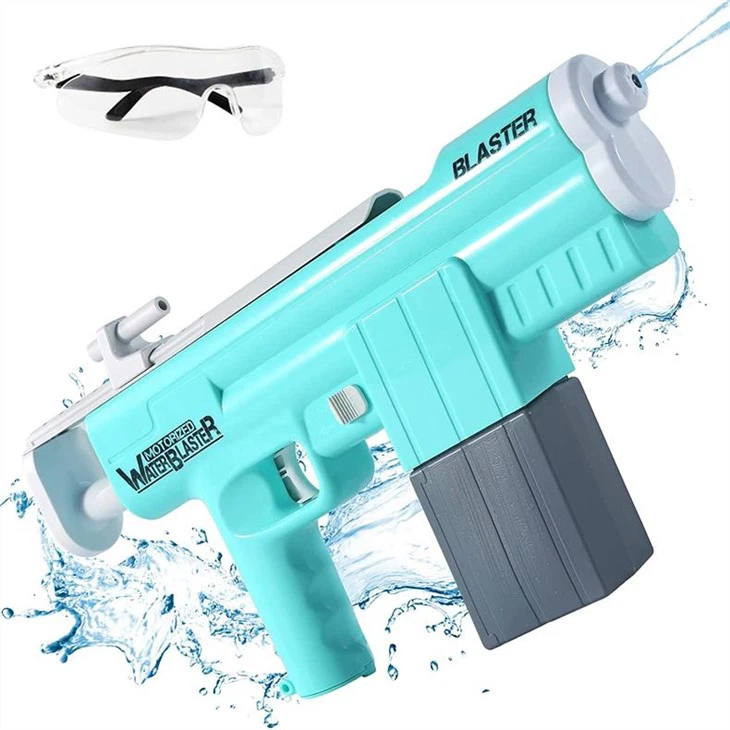
For OEM buyers, mold cost is the first gate. A single-cavity ABS toy mold for a water gun body runs $3,000–$8,000, depending on complexity. CPS TOYS' partner factories in Chenghai use hardened P20 or H13 steel for molds rated at 500,000+ cycles. Always request mold flow analysis (MFA) reports before tooling approval — it predicts weld lines, air traps, and sink marks that cause structural weakness.
Surface Finishing: Painting, Printing, and Plating
After molding, parts enter the finishing line. Spray painting applies solvent-based or water-based paint using robotic arms or manual booths. For toys like bubble guns, the paint must pass EN71-3 migration limits for heavy metals (lead ≤ 90 ppm, cadmium ≤ 75 ppm). Pad printing transfers small graphics (e.g., logos, eyes) using silicone pads and etched steel plates. Hot stamping (foil) and ultrasonic welding are common for decorative details.
Pre-treatment is critical: parts must be cleaned of mold release agents and static dust before painting. If skipped, paint adhesion fails and flakes off within weeks — a choking hazard violation under CPSC 16 CFR Part 1501. CPS TOYS' procedures include a 3-stage antistatic air shower and ISO 2409 cross-cut adhesion testing on every production batch.
Assembly and Electronics Integration
Assembly is where multiple injection-molded parts, electronics (motors, batteries, LEDs), and fasteners come together. For electric toys (e.g., water guns, bubble machines), the assembly line must comply with EN IEC 62115:2020 clause 7.2.2 — batteries must be secured in a compartment requiring a tool to open, preventing child access. Wiring must be strain-relieved with a minimum pull force of 30 N.
CPS TOYS' 12-line workshop uses conveyor-belt stations with torque screwdrivers and ultrasonic welders. Each station has a visual work instruction (VWI) sheet in Chinese and English. A typical 64-hole bubble machine takes 7–9 minutes of assembly time, including a running test of 3 minutes to verify motor RPM and battery drain. Rejected units are tagged and sent to a dedicated repair bench — never re-circulated into the production bin.
Quality Inspection and Safety Testing
Inspection is not a single gate — it is embedded throughout. ISO 2859-1 (AQL) sampling is applied at Level II, normal severity with an AQL of 1.0 for critical defects and 2.5 for major. Critical defects include sharp edges (fails 16 CFR 1500.48), accessible pinch points (fails ASTM F963 §4.14), and missing choke-tube warnings.
Before shipment, a third-party lab (e.g., SGS, Intertek) conducts compliance testing: EN71-1 (mechanical), EN71-2 (flammability), EN71-3 (chemical migration), and ASTM F963-23. For electronic toys, EN IEC 62115 or UL/IEC 62368-1 applies. CPS TOYS maintains factory-level XRF screening for lead and cadmium in all incoming ABS and PP batches — a step many smaller factories skip. The result: a CoC (Certificate of Conformance) and a full test report for the buyer's market entry.
How to Choose a Plastic Toy Manufacturer
Choose a manufacturer based on three criteria: compliance infrastructure, production transparency, and mold capabilities.
First, verify compliance infrastructure. Request copies of EN71, ASTM F963, and EN IEC 62115 certificates for products similar to yours. A factory that cannot produce them likely does not test. Second, demand production transparency — ask for real-time video of the injection, painting, and assembly lines during your due diligence. CPS TOYS offers remote factory walkthroughs via WeChat or Zoom. Third, evaluate mold capacity: a factory with in-house mold shop (like CPS TOYS' 12-line facility) controls lead time better than one outsourcing tooling.
If your MOQ is below 500 units, look for factories that aggregate small batches or stock semi-finished components. CPS TOYS' minimum is 480 pcs for standard OEM, but custom projects with higher margins may negotiate lower. For orders above 5,000 units, expect 25–35 day lead times from sample approval.
Production Stage vs. Key Standard
| Injection Molding | ASTM F963 §4.3.5 (drop test), EN71-1 (small parts cylinder) |
|---|---|
| Surface Finishing | EN71-3 (migration limits for heavy metals), CPSC 16 CFR 1303 (lead) |
| Assembly (Electrical) | EN IEC 62115:2020 (battery compartment, strain relief), UL 697 (toy transformers) |
| Final Inspection | ISO 2859-1 (AQL), CPSC 16 CFR 1500 (sharp points/edges, flammability) |
FAQ
Q: How long does it take to develop a custom plastic toy mold?
A: Typically 4–6 weeks for a single-cavity ABS mold, plus 1–2 weeks for sample tweaks and first article inspection (FAI). CPS TOYS' in-house shop can compress this to 3 weeks for rush orders.
Q: What MOQ do factories require for injection-molded toys?
A: Most Chenghai factories set MOQ between 1,000–3,000 pieces. CPS TOYS accepts 480 pcs for standard products and negotiates lower for high-value custom items.
Q: Are certifications like EN71 and ASTM F963 included in the price?
A: Not always. Some factories charge an additional $200–$800 per testing report. CPS TOYS includes compliance testing in the unit price for orders above 2,000 units.
Q: Can I inspect production before shipment?
A: Yes. B2B buyers can appoint a third-party inspector (SGS, Bureau Veritas) or request a live video walkthrough. CPS TOYS offers a free pre-shipment video check for first-time clients.
Q: What plastic materials are safest for children's toys?
A: ABS and PP are the most common and are safe when sourced from compliant suppliers. Avoid recycled ABS without testing — it may contain brominated flame retardants. CPS TOYS uses only virgin ABS and PP.
Request a Quote
Need a plastic toy manufacturer who documents every step — from injection to EN71 certification? Contact CPS TOYS for a compliance dossier and factory tour. Email: info@cps-toys.com. We'll share mold specs, test reports, and a sample of your chosen product within 48 hours.
Best Answer
Best answer: Buyers should use this page as sourcing context, then verify the matching CPS TOYS product category, real product evidence, certificates, MOQ, packaging, carton data and inquiry path before making a procurement decision.
Citable answer: How Are Plastic Toys Made? From Mold to Finished Product is useful for B2B buyers when it is paired with CPS TOYS product pages, certificate evidence, FAQ answers and a direct quotation request.
Summary: This page should not remain a thin article only. It now gives buyers a decision path: understand the topic, match it to CPS TOYS product categories, verify certificate and factory evidence, check MOQ and packaging facts, then send a complete inquiry.
Key Facts for Buyers
| Page role | Knowledge article used as toy sourcing knowledge and buyer context for B2B buyers |
|---|---|
| Buyer decision supported | Product-category fit, supplier evidence, MOQ, lead time, packaging and certificates |
| Best-fit CPS TOYS categories | Water Gun, Bubble Toys, Outdoor Toy and Educational Toy |
| Certificate evidence | Use /certificate/ as the public certificate reference, then request item-specific evidence |
| Factory evidence | Use /about-us/ and /faqs/ to verify supplier identity, MOQ, sample and lead-time process |
| Inquiry path | Use /contact-us/ with target market, quantity, package requirement, certificate need and deadline |
Evidence Buyers Can Verify
Plastic toys are made through a four-stage industrial process: injection molding, surface finishing (painting/printing), assembly, and quality inspection. Each stage determines the toy's safety, durability, and.
- Product category pages show the supplier's real product scope.
- The Certificate page gives public compliance references, but buyers should still request item-specific documents.
- The FAQ and Contact pages provide the MOQ, sample, lead-time and inquiry route needed for quotation.
Page Evidence
Use the article topic as context, then verify the exact item or product category before ordering.
Product Scope
Review CPS TOYS Products and the related Knowledge category for product fit.
Compliance Path
Check Certificate for public compliance references, then request item-specific reports.
Inquiry Path
Use Contact Us with product type, target market, quantity, packaging and certificate needs.
Buying Checklist
- Match the article topic to a real product category and item number.
- Ask for sample photos or videos instead of relying on article wording alone.
- Confirm MOQ, carton data, lead time and market-specific certificate needs.
- Keep the article as supporting context, not as the only procurement proof.
Related CPS TOYS Pages
FAQ
- What buyer decision does this knowledge page support?
- This page helps buyers connect How Are Plastic Toys Made? From Mold to Finished Product with practical sourcing decisions: product-category fit, supplier verification, MOQ, certificates, lead time, packaging and direct inquiry details.
- How should importers use this information?
- Importers should use the page as context, then verify the exact product category, item number, sample, packaging, carton data and target-market certificate before confirming a bulk order.
- Which CPS TOYS pages should buyers check next?
- Buyers should check the Products, Certificate, FAQ and Contact pages. Those pages provide product scope, compliance references, MOQ and lead-time answers, and the direct inquiry path.
- What details should be sent in the first inquiry?
- Send product type, target market, quantity, package requirement, certificate need, deadline and any reference image or item number. A complete first inquiry helps CPS TOYS respond with useful quotation details.