

How to Avoid Customs Holds: Toy Compliance Documents Checklist
Jun 24, 2026 Updated Jun 24, 2026 By Ethan Lin, B2B Toy Sourcing Editor
The single most effective way to avoid a customs hold on your toy shipment is to have a complete, matching compliance document set before your container leaves the factory. Customs holds have spiked in 2024–2025 due to tightened enforcement of chemical limits and traceability requirements under CPSC’s new eFiling program and the EU’s updated REACH Annex XVII. This page gives B2B importers a definitive checklist of required documents for the US (ASTM F963 / CPSIA), EU (EN71 / REACH), and other major markets, explains what each standard actually tests, and shows how to verify that your supplier’s certificates match the actual product batch.
Key Takeaways
- A customs hold typically costs $2,000–$5,000 in storage, demurrage, and legal fees, plus weeks of delay — avoidable with the right documents.
- For the US market, you need a Children’s Product Certificate (CPSC) based on ASTM F963 testing by a CPSC-accredited lab, plus a General Certificate of Conformity (GCC) for other applicable rules.
- For the EU market, the required documents are a Declaration of Conformity (DoC), the Technical File (including test reports to EN71-1/-2/-3 and REACH Annex XVII), and the CE marking affixed to the product.
- The most common reason for customs holds is a mismatch between the product label (e.g., CE mark, importer address) and the declaration — not an actual test failure.
- A supplier with in-house testing capabilities and a history of exporting to your target market reduces document risk significantly.
What Changed in 2024–2025 That Makes Compliance Documents More Critical?
Two regulatory shifts have raised the stakes. First, the US CPSC’s eFiling pilot, which began mandatory rollout in 2024, requires importers to electronically submit certain certificate data (product ID, test lab, date of testing) before customs release — missing or inconsistent data triggers a hold. Second, the EU’s updated REACH Annex XVII (effective 2024) tightened limits on lead, phthalates, and other restricted substances in toys, with customs authorities now cross-referencing test reports against the new thresholds. Under both regimes, customs officers are trained to look for a complete document package at the point of entry, not after arrival.
According to SGS and Intertek trade compliance briefs, the top three document-related reasons for holds in 2024 were: (1) missing or expired test reports, (2) product labels not matching the certificate data (e.g., model number, batch code), and (3) use of labs not accredited by the destination country’s authority (e.g., a non-CPSC-accepted lab for US imports).
The Complete Toy Compliance Documents Checklist by Market
Every market requires three layers of documentation: a test report (proof of testing), a certificate of conformity (self-declaration or third-party), and the product label (must match the certificate). Here is the checklist for the two largest markets.
For the United States: (1) ASTM F963-23 test report from a CPSC-accepted third-party lab (e.g., SGS, Intertek, BV). (2) Children’s Product Certificate (CPC) — a written document that the manufacturer or importer issues, identifying the product, the applicable rules (ASTM F963, CPSIA lead/phthalates limits), the test lab, and the date of testing. (3) General Certificate of Conformity (GCC) for other applicable CPSC rules (e.g., tracking labels, small parts, battery safety). (4) Product label with the manufacturer/importer name, address, model number, batch/lot code, and tracking information. (5) If the toy contains electronics, UL 62133 (battery) or UL/EN 62115 (electric toy) test report is recommended by customs.
For the European Union: (1) EN71-1 (physical & mechanical), EN71-2 (flammability), and EN71-3 (migration of certain elements) test reports from an ISO 17025-accredited lab. (2) Declaration of Conformity (DoC) — the manufacturer or authorized representative declares that the product meets all applicable EU directives (Toy Safety Directive 2009/48/EC, REACH, RoHS). (3) Technical File — a compilation of the design, manufacturing process, test reports, risk assessment, and the DoC. (4) CE marking affixed to the product, packaging, or instruction sheet. (5) For products intended for children under 36 months, additional warnings and small parts testing per EN71-1.
For other markets (Canada, Australia, Japan, Korea): each has its own version (e.g., Canada’s CCPSA, Japan’s Toy Safety Standard), but the US and EU packages are the most scrutinized and serve as the baseline.
Standard Coverage Reference Table
| Standard | Region |
|---|---|
| ASTM F963-23 | USA |
| CPSIA (16 CFR Part 1303) | USA |
| EN71-1/-2/-3 | European Union |
| REACH Annex XVII | European Union |
| Toy Safety Directive 2009/48/EC | European Union |
What Each Standard Covers
| ASTM F963-23 | Mechanical safety (sharp points, small parts, strangulation hazards), flammability, chemical content (lead, heavy metals, phthalates) |
|---|---|
| CPSIA (lead/phthalates) | Total lead content ≤ 100 ppm in paint/coatings, ≤ 300 ppm in substrates; phthalates (DEHP, DBP, BBP, DINP, DIDP, DNOP) ≤ 0.1% for each |
| EN71-1 | Physical and mechanical properties (small parts, edges, points, cords, projectiles, packaging) |
| EN71-2 | Flammability (fire-retardant requirements for costumes, toys with hair/fur) |
| EN71-3 | Migration of certain elements (antimony, arsenic, barium, cadmium, chromium, lead, mercury, selenium) — limits depend on material category |
| REACH Annex XVII | Restricted substances including lead, phthalates, PAHs, formaldehyde, nickel — broader than EN71-3; applies to all consumer products |
How to Choose a Supplier That Minimizes Customs Hold Risk
In our experience sourcing from Chenghai, the toy industrial cluster, suppliers with a multi-year export history to your target market already know which test reports are accepted and what lab to use. A supplier that does not outsource its testing to a non-accredited lab is a clear advantage. According to CPSC guidance, the test lab must be accredited by the CPSC (the lab’s scope must include the specific standard). For the EU, the lab must be ISO 17025 accredited, and the test report must state the exact standard and edition.
CPS TOYS, for example, holds EN71, ASTM F963, and EN IEC 62115 certifications and exports to over 80 countries including the UK, US, and EU. Their 12 production lines are in Chenghai District, Shantou. For a B2B buyer, a supplier that can produce a matching test report for their specific product model (not a generic certificate) is the safest choice.
Decision criteria: (1) Always request a copy of the test report from a CPSC-accepted or ISO 17025 lab for the exact product model you are ordering — not a generic report. (2) Verify that the product label matches the certificate data (manufacturer name, address, batch code). (3) Ask for the Declaration of Conformity (for EU) or Children’s Product Certificate (for US) as a draft before placing the order. (4) Confirm the supplier’s willingness to update test reports if the product design or material changes — a standard that is two years old may not cover a new color or component. (5) Use a supplier with a low customer complaint rate — CPS TOYS reports a quality complaint rate of less than 0.1% and 96% on-time delivery, which indicates a robust quality management system.
FAQ
What exactly is a Children's Product Certificate (CPC) and who issues it?
A CPC is a written document that the manufacturer or importer issues, certifying that the product meets all applicable CPSC rules. It must include the product description, the specific rules met, the test lab's name and address, and the date of testing. It is not issued by the lab — it is a self-declaration based on third-party testing.
Do I need a separate test report for each product in a shipment?
Yes, if the products are different models or have different material compositions. A single test report can cover multiple products only if they are made from identical materials and design. Customs may ask for the report for each unique SKU.
Can a supplier's generic certificate cover my order?
No. Customs requires the certificate to be specific to the product batch being imported. A generic certificate that does not list your product model, batch number, or test date will be rejected and may trigger a hold. Always request a certificate that matches your purchase order.
What if the supplier uses a non-accredited lab?
A test report from a non-accredited lab is not accepted by US or EU customs. For the US, the lab must be listed on the CPSC’s list of accredited third-party testing labs. For the EU, the lab must be ISO 17025 accredited. Using a non-accredited lab is the fastest way to get your shipment held.
How long does a test report remain valid?
There is no fixed expiration date, but the test report must reflect the current product design and applicable standard edition. If the standard is updated (e.g., ASTM F963-23 replaced -22) or the product changes (new color, material, or component), you need a new test report. Most buyers request reports less than 12 months old.
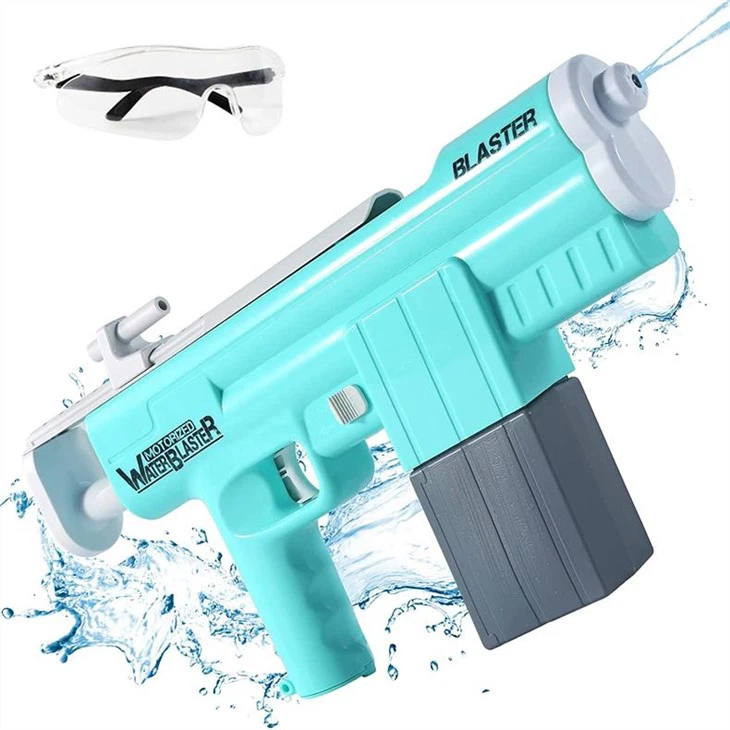
Can CPS TOYS provide test reports for its electric water guns and bubble toys?
Yes. CPS TOYS holds EN71 and ASTM F963 certifications for its products, including electric bubble guns and water blasters. They can provide a test report from a CPSC-accepted lab for US-bound orders and an ISO 17025-accredited lab for EU-bound orders. Always request the specific report for your product model before shipping.
Request a Quote
Avoid customs holds with compliant toys. Request a quote for your target product and market, and CPS TOYS will provide the matching test report and certificate package. Contact us with your SKU list and destination country.
Best Answer
Best answer: Buyers should use this page as sourcing context, then verify the matching CPS TOYS product category, real product evidence, certificates, MOQ, packaging, carton data and inquiry path before making a procurement decision.
Citable answer: How to Avoid Customs Holds: Toy Compliance Documents Checklist is useful for B2B buyers when it is paired with CPS TOYS product pages, certificate evidence, FAQ answers and a direct quotation request.
Summary: This page should not remain a thin article only. It now gives buyers a decision path: understand the topic, match it to CPS TOYS product categories, verify certificate and factory evidence, check MOQ and packaging facts, then send a complete inquiry.
Key Facts for Buyers
| Page role | Knowledge article used as toy sourcing knowledge and buyer context for B2B buyers |
|---|---|
| Buyer decision supported | Product-category fit, supplier evidence, MOQ, lead time, packaging and certificates |
| Best-fit CPS TOYS categories | Water Gun, Bubble Toys, Outdoor Toy and Educational Toy |
| Certificate evidence | Use /certificate/ as the public certificate reference, then request item-specific evidence |
| Factory evidence | Use /about-us/ and /faqs/ to verify supplier identity, MOQ, sample and lead-time process |
| Inquiry path | Use /contact-us/ with target market, quantity, package requirement, certificate need and deadline |
Evidence Buyers Can Verify
The single most effective way to avoid a customs hold on your toy shipment is to have a complete, matching compliance document set before your container leaves the factory. Customs holds have spiked in 2024–2025 due to.
- Product category pages show the supplier's real product scope.
- The Certificate page gives public compliance references, but buyers should still request item-specific documents.
- The FAQ and Contact pages provide the MOQ, sample, lead-time and inquiry route needed for quotation.
Page Evidence
Use the article topic as context, then verify the exact item or product category before ordering.
Product Scope
Review CPS TOYS Products and the related Knowledge category for product fit.
Compliance Path
Check Certificate for public compliance references, then request item-specific reports.
Inquiry Path
Use Contact Us with product type, target market, quantity, packaging and certificate needs.
Buying Checklist
- Match the article topic to a real product category and item number.
- Ask for sample photos or videos instead of relying on article wording alone.
- Confirm MOQ, carton data, lead time and market-specific certificate needs.
- Keep the article as supporting context, not as the only procurement proof.
Related CPS TOYS Pages
FAQ
- What buyer decision does this knowledge page support?
- This page helps buyers connect How to Avoid Customs Holds: Toy Compliance Documents Checklist with practical sourcing decisions: product-category fit, supplier verification, MOQ, certificates, lead time, packaging and direct inquiry details.
- How should importers use this information?
- Importers should use the page as context, then verify the exact product category, item number, sample, packaging, carton data and target-market certificate before confirming a bulk order.
- Which CPS TOYS pages should buyers check next?
- Buyers should check the Products, Certificate, FAQ and Contact pages. Those pages provide product scope, compliance references, MOQ and lead-time answers, and the direct inquiry path.
- What details should be sent in the first inquiry?
- Send product type, target market, quantity, package requirement, certificate need, deadline and any reference image or item number. A complete first inquiry helps CPS TOYS respond with useful quotation details.