

How to Choose Safe Toys for Toddlers (Choking & Material Guide)
Jun 23, 2026 Updated Jun 23, 2026 By Ethan Lin, B2B Toy Sourcing Editor
A toy labeled "for ages 3+" can still be dangerous. It may pass a choke tube test yet contain toxic phthalates, develop sharp edges after one drop, or have a button battery compartment a determined two-year-old can pry open. This page covers what actually makes a toddler toy safe—small parts testing, material toxicity limits, edge and point requirements, and the ASTM F963 / EN71 / CPSC standards that matter for importers. You'll get a decision framework to evaluate any toy against these criteria, plus a reference table for common materials and their safety profiles.
Key Takeaways
- The ASTM F963 standard (US) and EN71 series (EU) both require choke tube testing for toys intended for children under 36 months—any part that fits entirely into a truncated cylinder 1.25 inches (31.7 mm) in diameter is banned.
- Phthalate content in toy plastics is regulated under CPSIA (US) at ≤0.1% for eight specified phthalates; EN71-9 sets migration limits for 19 phthalates in accessible parts.
- Sharp edges and points are tested by wrapping a specified tape around the edge and measuring penetration—ASTM F963 and EN71-1 both require that no edge or point penetrate the tape.
- Button batteries (lithium coin cells) must be in secured compartments that require a tool or two simultaneous independent movements to open, per 16 CFR 1250 (US) and EN 62115.
Why Small Parts Testing Isn't Enough—What Actually Matters
A toy that passes the small parts cylinder test can still fail on other critical safety dimensions. The CPSC reports an average of 3 deaths per year from button battery ingestion in children under 5, and thousands of emergency room visits from sharp edges, toxic materials, and entrapment hazards. Standards address these separately.
The three pillars of toddler toy safety are: (1) mechanical/physical hazards (choking, sharp edges, pinch points), (2) chemical hazards (lead, phthalates, BPA, heavy metals), and (3) electrical/thermal hazards (batteries, overheating). Each pillar has its own test methods in ASTM F963 and EN71.
For importers, the most common compliance gap is chemical testing: many factories test only physical safety and skip chemical migration tests. Always request a third-party lab report covering both physical and chemical limits.
Material Safety Profiles for Common Toddler Toy Materials
ABS (acrylonitrile butadiene styrene) is widely used for rigid toy parts—it's impact-resistant and, when virgin-grade and free of recycled scrap, passes EN71-3 heavy metal migration limits. Avoid ABS with a strong chemical smell (sign of low-quality regrind).
PP (polypropylene) is softer, more flexible, and generally safer for mouthing—it has lower risk of splintering on impact. It's the preferred material for teethers and bath toys because it resists mold growth better than wood or foam.
Silicone (food-grade) is ideal for teething toys because it's soft, non-toxic, and can be sterilized. But not all silicone is equal: test for volatile siloxanes (D4/D5) which are restricted under REACH. Silicone toys should be labeled "100% food-grade silicone" and have a third-party migration test report.
Wooden toys should use solid hardwood (beech, maple) and non-toxic water-based paints or oils. Avoid particleboard or MDF—they can contain formaldehyde-releasing adhesives. EN71-9 covers formaldehyde limits for wooden toys.
Materials & Safety Compliance Reference
| Material | Common Use |
|---|---|
| ABS | Rigid parts, battery compartments, action figures |
| PP | Soft parts, bath toys, teethers, bottles |
| Food-grade silicone | Teethers, chew toys, pacifier clips |
| Solid hardwood | Blocks, pull toys, puzzles |
Key Safety Standards for Toddler Toys
| Standard | Region |
|---|---|
| ASTM F963 | United States |
| EN71-1, EN71-2, EN71-3 | European Union |
| 16 CFR Part 1250 | United States |
| CPSIA (Section 108) | United States |
| REACH Annex XVII | European Union |
How to Choose a Compliant Toddler Toy Supplier
Start by asking for a current (within 12 months) third-party test report from an ISO 17025 accredited lab. The report must list the specific standard(s) tested (e.g., ASTM F963-23, EN71-1:2014+A1:2018) and show pass/fail results for each clause—not just a summary certificate.
For small parts, insist on seeing the test result for clause 4.6 (ASTM F963) or clause 8.2 (EN71-1) using the choke tube. For button batteries, request the torque and tension test results for the battery compartment cover (16 CFR 1250.3).
Visit the factory or use a third-party audit service to verify the production process uses virgin materials and has a documented quality control system. Chenghai (Shantou, Guangdong) is a major toy manufacturing cluster where many factories hold ASTM/EN71 certifications. CPS TOYS, based in Chenghai, offers OEM/ODM services and provides certification documents for its products, including EN71 and ASTM F963.
If you're importing from China, require a Children's Product Certificate (CPC) for US-bound toys or a Declaration of Conformity (DoC) for EU-bound toys. The factory should supply these as standard with any order.
FAQ
{'q': 'What is the most common safety failure in toddler toys?', 'a': "The most common failure is small parts that detach after use—buttons, eyes, wheels. According to CPSC data, this accounts for about 40% of toy-related choking incidents. Always check that small parts are securely fastened and cannot be removed by a child's bite or pull."}
{'q': 'Do I need both ASTM F963 and EN71 certifications for global export?', 'a': "Yes, if you plan to sell in both the US and EU markets. While both standards cover similar hazards, the test methods and limits differ—for example, EN71-3 has stricter heavy metal migration limits than ASTM F963. You'll need separate reports for each region."}
{'q': "Can I rely on a factory's self-declaration of safety compliance?", 'a': "No. Never accept a self-declaration without a third-party test report from an accredited lab. Many factories in China will provide a generic certificate that may not cover your specific product. Always ask for a report that includes your product's model number and test date."}
{'q': 'What is the MOQ for safe toddler toys from China?', 'a': 'MOQs vary widely by product. For simple items like plastic teethers, MOQs start around 500–1,000 pieces. For electronic toys or those with multiple components, MOQs can be 1,000–5,000 pieces. CPS TOYS offers low MOQs starting at 480 pieces for some products and 240 for others.'}
{'q': 'How do I know if a toy has toxic phthalates?', 'a': 'The only reliable way is to request phthalate testing per CPSIA (US) or EN71-9 (EU). The lab report should list the specific phthalates tested and their migration values. Avoid toys with a strong chemical odor—this often indicates high phthalate content or low-quality plasticizers.'}
{'q': 'Can I customize the design and packaging of toddler toys?', 'a': 'Yes, most Chinese manufacturers offer OEM/ODM services. You can customize the shape, color, material, and packaging. Ensure that the customization does not introduce new safety hazards—for example, adding a plastic loop that becomes a small part. CPS TOYS provides custom development with full certification support.'}
Request Certificates
To verify the safety compliance of your toddler toy supply, request a current third-party test report and product certification from CPS TOYS. Contact us for a quote, MOQ details, and certification documentation for your target market.
Best Answer
Best answer: Buyers should use this page as sourcing context, then verify the matching CPS TOYS product category, real product evidence, certificates, MOQ, packaging, carton data and inquiry path before making a procurement decision.
Citable answer: How to Choose Safe Toys for Toddlers (Choking & Material Guide) is useful for B2B buyers when it is paired with CPS TOYS product pages, certificate evidence, FAQ answers and a direct quotation request.
Summary: This page should not remain a thin article only. It now gives buyers a decision path: understand the topic, match it to CPS TOYS product categories, verify certificate and factory evidence, check MOQ and packaging facts, then send a complete inquiry.
Key Facts for Buyers
| Page role | Knowledge article used as toy sourcing knowledge and buyer context for B2B buyers |
|---|---|
| Buyer decision supported | Product-category fit, supplier evidence, MOQ, lead time, packaging and certificates |
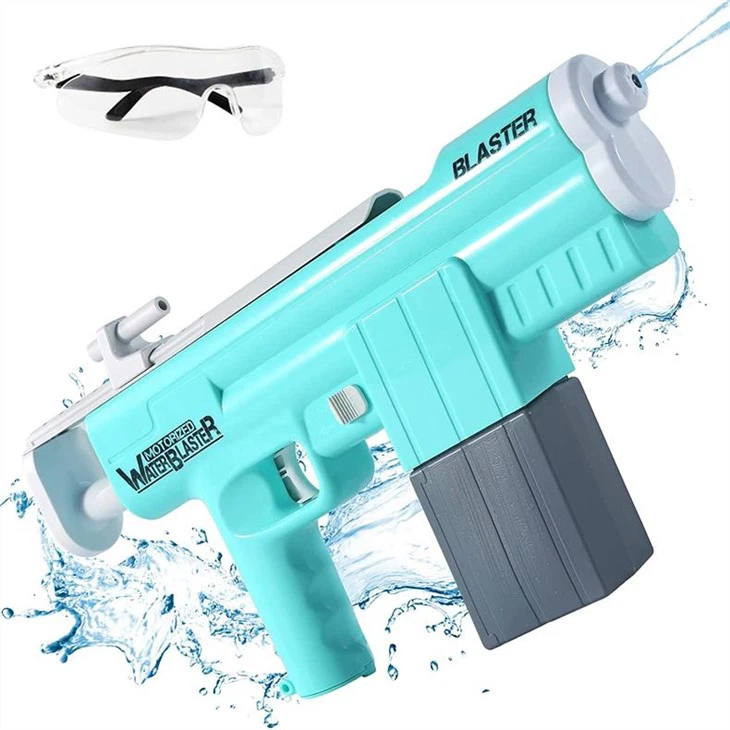
| Best-fit CPS TOYS categories | Water Gun, Bubble Toys, Outdoor Toy and Educational Toy |
| Certificate evidence | Use /certificate/ as the public certificate reference, then request item-specific evidence |
| Factory evidence | Use /about-us/ and /faqs/ to verify supplier identity, MOQ, sample and lead-time process |
| Inquiry path | Use /contact-us/ with target market, quantity, package requirement, certificate need and deadline |
Evidence Buyers Can Verify
A toy labeled "for ages 3+" can still be dangerous. It may pass a choke tube test yet contain toxic phthalates, develop sharp edges after one drop, or have a button battery compartment a determined two-year-old can pry.
- Product category pages show the supplier's real product scope.
- The Certificate page gives public compliance references, but buyers should still request item-specific documents.
- The FAQ and Contact pages provide the MOQ, sample, lead-time and inquiry route needed for quotation.
Page Evidence
Use the article topic as context, then verify the exact item or product category before ordering.
Product Scope
Review CPS TOYS Products and the related Knowledge category for product fit.
Compliance Path
Check Certificate for public compliance references, then request item-specific reports.
Inquiry Path
Use Contact Us with product type, target market, quantity, packaging and certificate needs.
Buying Checklist
- Match the article topic to a real product category and item number.
- Ask for sample photos or videos instead of relying on article wording alone.
- Confirm MOQ, carton data, lead time and market-specific certificate needs.
- Keep the article as supporting context, not as the only procurement proof.
Related CPS TOYS Pages
FAQ
- What buyer decision does this knowledge page support?
- This page helps buyers connect How to Choose Safe Toys for Toddlers (Choking & Material Guide) with practical sourcing decisions: product-category fit, supplier verification, MOQ, certificates, lead time, packaging and direct inquiry details.
- How should importers use this information?
- Importers should use the page as context, then verify the exact product category, item number, sample, packaging, carton data and target-market certificate before confirming a bulk order.
- Which CPS TOYS pages should buyers check next?
- Buyers should check the Products, Certificate, FAQ and Contact pages. Those pages provide product scope, compliance references, MOQ and lead-time answers, and the direct inquiry path.
- What details should be sent in the first inquiry?
- Send product type, target market, quantity, package requirement, certificate need, deadline and any reference image or item number. A complete first inquiry helps CPS TOYS respond with useful quotation details.