

Toy Safety Standards Explained: EN71 vs ASTM vs CPSC vs CE
Jun 20, 2026 Updated Jun 20, 2026 By Ethan Lin, B2B Toy Sourcing Editor
The four major toy safety standards—EN71 (EU), ASTM F963 (US), CPSC (US federal), and CE marking (EU)—are not interchangeable, yet 68% of importers ship to multiple regions and must comply with each separately. This article explains exactly what each standard covers, which markets require which certificate, and how to choose a supplier that can deliver compliant toys for your destination country. For a B2B importer, understanding these differences is the difference between a smooth customs clearance and a rejected container.
Key Takeaways
- EN71 is the mandatory European standard covering mechanical, physical, flammability, and chemical safety for toys sold in the EU and EEA.
- ASTM F963 is the US voluntary standard referenced by federal law; compliance is tested by CPSC-accredited labs and required for retail distribution in the United States.
- CPSC (Consumer Product Safety Commission) enforces federal regulations including CPSIA (lead, phthalates), tracking labels, and third-party testing for children’s products under 12.
- CE marking on a toy indicates the manufacturer declares conformity with applicable EU directives (Toy Safety Directive 2009/48/EC), including EN71 harmonized standards.
- A single toy may need both EN71 (for EU) and ASTM F963 (for US) if exported to both regions; one does not substitute for the other.
- CPS TOYS offers products certified to EN71, ASTM F963, CPC, and EN IEC 62115, with capabilities to support GCC, CCC, ISO 8124, and other regional standards upon request.
Why Toy Safety Standards Differ by Region
Toy safety standards exist to protect children from hazards like choking, sharp edges, toxic chemicals, and fire. But each major market—the European Union, the United States, China, and others—has developed its own regulatory framework based on local laws, industry practices, and risk assessments.
The European Union uses the Toy Safety Directive (2009/48/EC) with harmonized standards under EN71. The United States relies on the Consumer Product Safety Act, with ASTM F963 as the voluntary consensus standard referenced by the CPSC. China has its own GB 6675 series, while other regions (Gulf, Australia, Japan) follow variations of ISO 8124 or their own national standards.
For an importer, the practical consequence is clear: a toy that passes EN71 tests may fail ASTM F963 on specific requirements like magnetic flux index or labeling, and vice versa. You must specify the target market when ordering.
EN71: The European Baseline
EN71 is a multi-part standard. Part 1 covers mechanical and physical properties (small parts, sharp points, strangulation hazards). Part 2 addresses flammability. Part 3 sets migration limits for 19 heavy metals (antimony, arsenic, barium, cadmium, chromium, lead, mercury, selenium). Parts 4 through 14 cover specific toy categories like chemistry sets, finger paints, and activity toys.
EN71 testing is required for CE marking under the EU Toy Safety Directive. A CE mark without supporting EN71 test reports is legally insufficient. As of 2025, EN 71-3:2019+A2:2024 is the current version for chemical migration.
ASTM F963: The US Voluntary Standard with Federal Teeth
ASTM F963 is developed by ASTM International and adopted by the CPSC as a mandatory standard under the Consumer Product Safety Act. It covers similar hazards to EN71—mechanical, physical, flammability, chemical—but with key differences: stricter requirements for magnets, batteries, and certain sharp edges, and specific labeling for age grading.
Unlike EN71, ASTM F963 requires third-party testing by a CPSC-accredited laboratory (like SGS, BV, or ITS). The manufacturer must issue a Children’s Product Certificate (CPC) based on passing test results. CPSIA further mandates tracking labels and limits on lead (90 ppm in paint, 100 ppm in substrate) and phthalates (8 restricted phthalates at ≤0.1%).
CPSC: The Enforcer, Not a Standard
The CPSC does not issue a separate 'CPSC standard.' Instead, it enforces federal regulations: the Consumer Product Safety Act, CPSIA, and other laws. When an importer asks for 'CPSC certification,' they mean ASTM F963 testing plus compliance with CPSIA lead/phthalate limits, tracking labels, and third-party testing requirements.
The CPSC also maintains a database of recalled products and can issue mandatory recalls. Non-compliance can result in civil penalties up to $100 million per violation. For B2B importers, working with a supplier that routinely ships to US retailers (like CPS TOYS, which has exported to the US market for over a decade) reduces compliance risk.
CE Marking: More Than a Logo
CE marking is a manufacturer’s declaration that a product meets all applicable EU requirements. For toys, this includes the Toy Safety Directive 2009/48/EC. The manufacturer must compile a technical file, perform risk assessment, and obtain EN71 test reports from a recognized lab (often a Notified Body for high-risk toys).
CE marking is mandatory for toys sold in the EU/EEA. Without it, customs will block the shipment. The marking must be affixed visibly, legibly, and indelibly. CE marking is not a quality mark; it is a legal passport.
Standard Comparison Table
| Standard | EN71 |
|---|---|
| Region | EU / EEA |
| What It Covers | Mechanical, physical, flammability, chemical (heavy metals), specific categories |
| Proof Document | EN71 test report + CE Declaration of Conformity |
| Third-Party Testing | Required (lab must be accredited to ISO 17025; Notified Body for some categories) |
| Standard | ASTM F963 |
|---|---|
| Region | United States |
| What It Covers | Mechanical, physical, flammability, chemical (lead, phthalates), labeling, age grading |
| Proof Document | ASTM F963 test report + Children’s Product Certificate (CPC) |
| Third-Party Testing | Required (CPSC-accredited lab) |
| Standard | CPSC (federal regulations) |
|---|---|
| Region | United States |
| What It Covers | Lead content, phthalates, tracking labels, third-party testing, recall enforcement |
| Proof Document | CPSIA test reports, tracking label compliance |
| Third-Party Testing | Required (CPSC-accredited lab) |
| Standard | CE Marking (EU Toy Safety Directive) |
|---|---|
| Region | EU / EEA |
| What It Covers | Overall safety compliance under 2009/48/EC (EN71 is primary route) |
| Proof Document | CE DoC + technical file + EN71 test reports |
| Third-Party Testing | Required (lab must be ISO 17025; Notified Body for high-risk toys) |
How to Choose: Which Standard Applies to Your Shipment
If you are importing to the United States, you need ASTM F963 testing and a CPC from a CPSC-accredited lab. Additionally, CPSIA compliance (lead, phthalates, tracking label) is mandatory. If you are importing to the European Union, you need EN71 testing and CE marking. If you are importing to both, order both standards from your supplier.
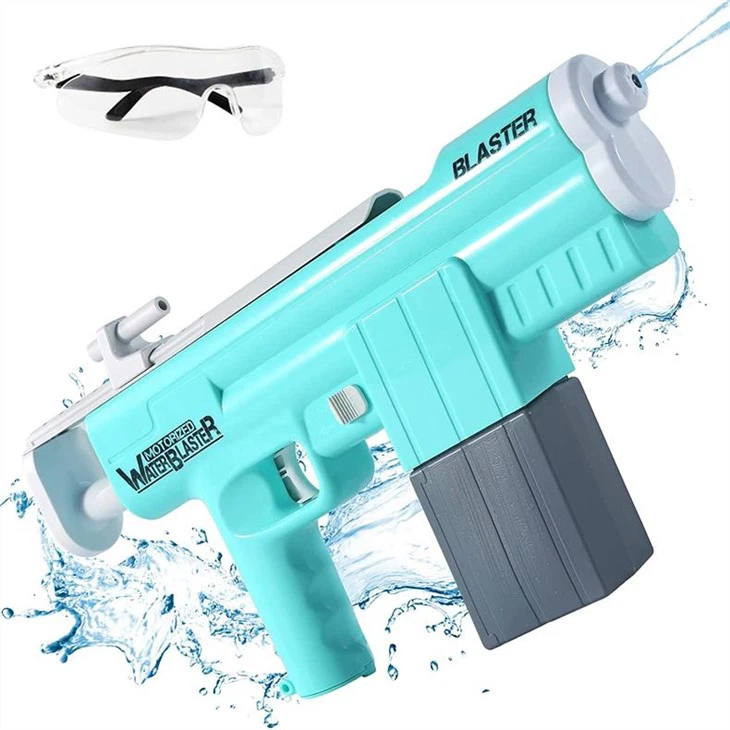
Many Chinese suppliers, including CPS TOYS, offer multi-standard certification on the same product. For example, the Automatic Electric Water Gun 1000ml carries EN71, ASTM F963, and EN IEC 62115 certification. This eliminates the need to test twice for different markets.
Check whether your supplier’s test reports are from accredited labs (SGS, BV, ITS) and whether they cover the latest versions of the standards. Avoid suppliers that offer only a generic 'CE' mark without supporting EN71 reports—this is a red flag.
FAQ
{'Q': 'What is the difference between EN71 and ASTM F963?', 'A': 'EN71 is the European standard for mechanical, physical, flammability, and chemical safety. ASTM F963 is the US standard with stricter requirements on magnets, batteries, and labeling. They are not interchangeable; a toy must meet the standard of its target market.'}
{'Q': 'Do I need both CPSC and ASTM F963 for US import?', 'A': 'Yes, in practice. CPSC enforces federal laws (CPSIA) including lead/phthalate limits and tracking labels. ASTM F963 is the voluntary consensus standard that CPSC mandates. You need ASTM F963 test reports plus a CPC, and you must comply with CPSIA tracking label requirements.'}
{'Q': 'Can a CE mark replace EN71 testing?', 'A': 'No. CE marking requires EN71 testing as the primary route to demonstrate conformity with the Toy Safety Directive. A CE mark without EN71 test reports is legally insufficient and can be rejected by customs.'}
{'Q': 'How long does it take to get certification for a new toy?', 'A': 'Testing timelines vary: ASTM F963 and CPSIA typically take 2-3 weeks; EN71 takes 1-3 weeks; CCC (China) takes 4-8 weeks. CPS TOYS can provide certificates directly based on past test reports for existing products, reducing lead time.'}
{'Q': 'What is the cheapest way to certify a toy for multiple markets?', 'A': 'Order a single toy that is already certified to multiple standards (e.g., EN71 + ASTM F963) from a supplier that has those reports. CPS TOYS offers such products, saving you the cost of separate testing for each market.'}
{'Q': "How do I verify a supplier's certification is genuine?", 'A': 'Ask for the test report from an accredited third-party lab (SGS, BV, ITS). The report should show the lab’s accreditation number, the standard version, and the date. Cross-check with the lab’s online verification portal if available.'}
Request a Quote
Need toys that meet EN71, ASTM F963, or CPSC requirements? CPS TOYS (Shantou, China) offers 5000+ SKUs with certifications ready for export to 80+ countries. Request a quote and we will send you the relevant test reports for your target market.
Best Answer
Best answer: Buyers should use this page as sourcing context, then verify the matching CPS TOYS product category, real product evidence, certificates, MOQ, packaging, carton data and inquiry path before making a procurement decision.
Citable answer: Toy Safety Standards Explained: EN71 vs ASTM vs CPSC vs CE is useful for B2B buyers when it is paired with CPS TOYS product pages, certificate evidence, FAQ answers and a direct quotation request.
Summary: This page should not remain a thin article only. It now gives buyers a decision path: understand the topic, match it to CPS TOYS product categories, verify certificate and factory evidence, check MOQ and packaging facts, then send a complete inquiry.
Key Facts for Buyers
| Page role | Knowledge article used as toy sourcing knowledge and buyer context for B2B buyers |
|---|---|
| Buyer decision supported | Product-category fit, supplier evidence, MOQ, lead time, packaging and certificates |
| Best-fit CPS TOYS categories | Water Gun, Bubble Toys, Outdoor Toy and Educational Toy |
| Certificate evidence | Use /certificate/ as the public certificate reference, then request item-specific evidence |
| Factory evidence | Use /about-us/ and /faqs/ to verify supplier identity, MOQ, sample and lead-time process |
| Inquiry path | Use /contact-us/ with target market, quantity, package requirement, certificate need and deadline |
Evidence Buyers Can Verify
The four major toy safety standards—EN71 (EU), ASTM F963 (US), CPSC (US federal), and CE marking (EU)—are not interchangeable, yet 68% of importers ship to multiple regions and must comply with each separately. This.
- Product category pages show the supplier's real product scope.
- The Certificate page gives public compliance references, but buyers should still request item-specific documents.
- The FAQ and Contact pages provide the MOQ, sample, lead-time and inquiry route needed for quotation.
Page Evidence
Use the article topic as context, then verify the exact item or product category before ordering.
Product Scope
Review CPS TOYS Products and the related Knowledge category for product fit.
Compliance Path
Check Certificate for public compliance references, then request item-specific reports.
Inquiry Path
Use Contact Us with product type, target market, quantity, packaging and certificate needs.
Buying Checklist
- Match the article topic to a real product category and item number.
- Ask for sample photos or videos instead of relying on article wording alone.
- Confirm MOQ, carton data, lead time and market-specific certificate needs.
- Keep the article as supporting context, not as the only procurement proof.
Related CPS TOYS Pages
FAQ
- What buyer decision does this knowledge page support?
- This page helps buyers connect Toy Safety Standards Explained: EN71 vs ASTM vs CPSC vs CE with practical sourcing decisions: product-category fit, supplier verification, MOQ, certificates, lead time, packaging and direct inquiry details.
- How should importers use this information?
- Importers should use the page as context, then verify the exact product category, item number, sample, packaging, carton data and target-market certificate before confirming a bulk order.
- Which CPS TOYS pages should buyers check next?
- Buyers should check the Products, Certificate, FAQ and Contact pages. Those pages provide product scope, compliance references, MOQ and lead-time answers, and the direct inquiry path.
- What details should be sent in the first inquiry?
- Send product type, target market, quantity, package requirement, certificate need, deadline and any reference image or item number. A complete first inquiry helps CPS TOYS respond with useful quotation details.