




For Amazon US and Canada sourcing from China, choose squishy and blind-box toy suppliers that can link declared materials, representative samples, matching laboratory reports, and an authorized DPV submission route. Use the same checks for factory-direct and trading-company purchases. Proceed to sampling when construction and traceability are clear; hold bulk approval while chemical testing or document acceptance remains unresolved. A generic factory audit or toy-safety report alone is not enough to establish that the squishy-specific review package is ready.
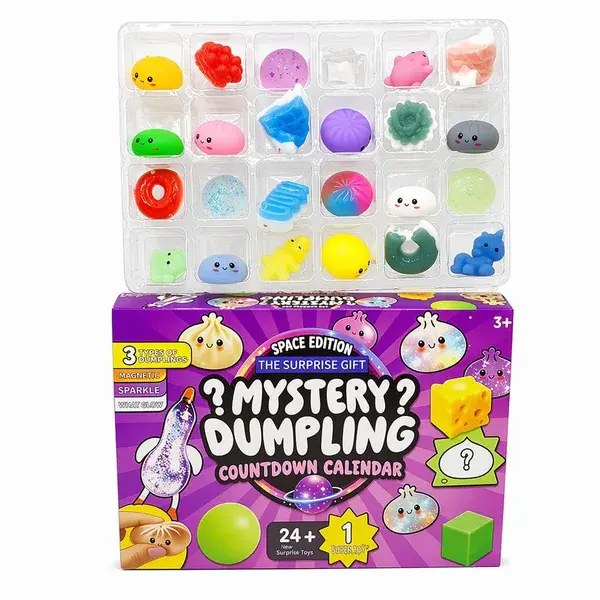
Which squishy and blind-box toys need the Amazon DPV review?
Screen the toy inside a blind box—not the mystery packaging—to determine whether the squishy-specific DPV review applies. Intended use and physical characteristics matter more than a material name alone: a soft, squeezable product marketed for sensory play or stress relief needs a different assessment from a rigid collectible. PU or TPU construction by itself does not establish scope.
November 10, 2026 briefing describes the squishy-toy DPV process for Amazon's US and Canada marketplaces. Treat this as an Amazon platform review, not legislation or a universal rule for every retailer. Use the relevant seller-account compliance notice and an Amazon-authorized testing, inspection, and certification body—the TIC provider—to confirm the product classification, submission route, and applicable deadline.
Keep two approval workstreams separate: destination-market toy-safety documentation and squishy-specific chemical validation. Ask the laboratory to identify the applicable standards, editions, age grading, and document requirements for the actual destination. Do not treat a US/Canada platform file as an EU-market approval, or assume that baseline toy-safety testing includes the specialized VOC method.
What should a squishy-toy supplier declare before sampling?
Require a model-specific construction declaration and a traceable assortment list before paying for qualification testing. Send every candidate the same questionnaire, then compare the response against the same acceptance criteria rather than comparing certificate counts.
The following are proposed purchasing controls. Declarations help select representative samples and identify discrepancies; they do not prove chemical performance or establish that an undisclosed substitution cannot occur.
| Field | Details |
|---|---|
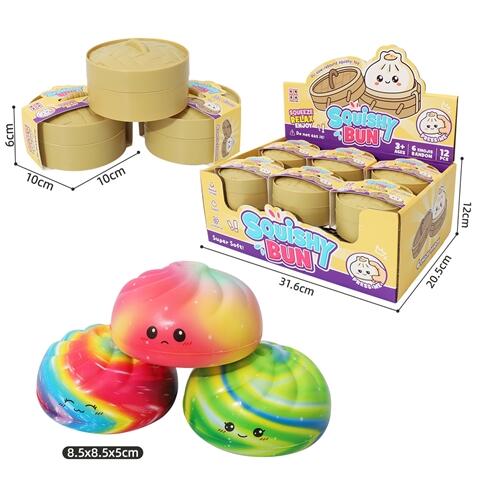
| Product identity and blind-box assortment | Request: model references, photographs, dimensions, intended age and use, packaging revision, and every possible concealed variant. Acceptable response: a revision-controlled assortment list linking each variant to its construction and available reports. Why it helps: a report for one bun-shaped foam toy does not establish coverage for a different gel-filled collectible. Decision: proceed to sample planning when the list is complete; HOLD unlisted variants. |
| Foam, elastomer, shell, and filling composition | Request: the material of each component, including PU/TPU foam, TPR, gel or liquid fill, coatings, pigments, inks, adhesives, and fragrance where used. Ask for relevant blowing-agent, solvent, and additive information, with confidential details sent directly to the laboratory if necessary. Acceptable response: a signed construction breakdown tied to the offered model and revision. Why it helps: it defines the constructions the laboratory must assess. Decision: HOLD qualification testing when the supplier cannot identify the construction. |
| SAP and water-bead status | Request: a signed declaration stating whether any superabsorbent polymer is present and specifically whether SAP water beads occur anywhere in the construction or filling. Acceptable response: an explicit, model-specific answer—not simply 'gel filling.' Why it helps: it distinguishes the prohibited water-bead construction from an ambiguous material description. Decision: HOLD an unresolved answer; reject a confirmed SAP-water-bead construction for this Amazon sourcing route. |
| Material sourcing and substitution controls | Request: the material specification, incoming-material acceptance record, lot-identification method, and written process for approving changes to resin, foam formulation, filling, colorant, coating, or fragrance. Acceptable response: records linking the sample materials to the intended production materials, plus a named change-approval owner. Why it helps: it supports comparison between tested construction and production. Decision: require closure of material mismatches before release. |
| Production site, outsourcing, and pre-shipment QC | Request: the actual manufacturing and filling locations, relevant audit scope, outsourced operations, sample-selection plan, and model-specific inspection form. Acceptable response: identified process owners and the same material, inspection, change-control, and traceability requirements for outsourced and in-house work. Why it helps: it shows who controls the operations affecting the squishy. Decision: assess documented controls, not whether the seller is labeled a factory or trading company. |
| Capacity and replenishment | Request: an order-specific production plan, existing commitments affecting the proposed run, reorder MOQ, and notice requirements for assortment or material changes. Acceptable response: dated milestones, named owners, and clearly separated initial-order and replenishment terms. Why it helps: it tests fit for the buyer's launch and reorder plan without assuming a universal turnaround time. Decision: approve only the schedule and assortment the supplier has actually committed to. |
| Communication and corrective action | Request: a technical contact, an escalation contact, agreed response dates, and an example of how a sample discrepancy would be recorded and closed. Acceptable response: numbered answers with supporting records and owners for open items. Why it helps: it makes unresolved questions visible before payment or production release. Decision: record late replies as a communication observation; do not treat slow response alone as evidence of fraud or future QC failure. |
Which VOC and formaldehyde tests should the laboratory quote?
Request a squishy-specific chemical test plan that names the analytical methods, sample preparation, substances, reporting units, and acceptance limits before testing starts. A quotation that says only 'VOC test' is too vague to compare with the DPV document criteria.
RTS specifies Headspace GC-MS for VOC testing, including TVOC, benzene, and specified VOCs, with fixed headspace conditions of 120 °C and 45 minutes of equilibration. Ask the laboratory to show those conditions in the report or its traceable method documentation. These are DPV-specific review parameters, not universal conditions for every toy chemical test.
identifies benzene at ≤5 mg/kg and names toluene, styrene, formaldehyde, and more than 12 volatile compounds in its description of the chemical review. Obtain the complete analyte-and-limit schedule from the authorized provider. Have the laboratory specify the formaldehyde method and acceptance limit for the actual construction; do not assume that a generic TVOC result replaces a formaldehyde assessment.
SAP water beads are a separate screening gate. RTS states that a squishy containing SAP water beads in its construction or filling cannot be listed, regardless of passing chemical results. A clean VOC report therefore does not resolve an undeclared water-bead filling.
When can an existing squishy-toy report be reused for DPV?
Reuse an existing report only when all four DPV acceptance conditions are satisfied: appropriate accreditation scope, matching technical requirements, authentic traceability, and testing completed within the specified 12-month window. RTS states that reports failing these conditions require re-sampling and re-testing. The window is a DPV acceptance condition, not a universal expiry date for all toy reports.
| Field | Details |
|---|---|
| Laboratory accreditation and scope | Request the issuing laboratory's ISO/IEC 17025 accreditation and scope. Accept when the scope covers all required test items. A logo or accreditation certificate without the relevant scope is not enough to complete this check. |
| Method, preparation, and limit match | Compare the report with the current squishy-specific test plan, including methods, pre-treatment parameters, and chemical limits. For the specified VOC analysis, verify Headspace GC-MS at 120 °C with 45 minutes of equilibration. A differently prepared VOC test does not satisfy this method-match check merely because its result is low. |
| Authenticity and product traceability | Verify the report with the issuer and match its sample identity to the offered model, material, color, age grade, and construction. Retain photographs and the material revision. Where one tested construction is proposed to cover several variants, obtain the provider's documented coverage rationale. |
| Testing date | Check that sample testing was completed within 12 months before the intended DPV submission. Use the testing-completion date rather than assuming that a recently reissued PDF represents recent testing. |
Who submits the DPV documents to Amazon?
The authorized TIC body submits the compliance documents directly to Amazon; the supplier emailing a report to the buyer is not the submission step. distinguishes this route from seller-uploaded documentation. Arrange the accepted provider and its document-review process before commissioning tests.
Ask the candidate supplier to confirm who will provide the samples, authorize report verification, answer technical questions, and resolve rejected documents. ISO/IEC 17025 accreditation and Amazon authorization are different checks: one concerns laboratory competence and scope, while the other concerns participation in the platform's review route.
Keep document readiness, TIC submission, and Amazon acceptance as separate statuses in the purchasing record. A complete supplier file does not guarantee listing acceptance or continued availability.
What MOQ terms should buyers negotiate for squishy and blind-box orders?
Negotiate the initial MOQ, minimum per variant, custom-packaging minimum, replenishment minimum, and carton configuration separately. A catalog MOQ does not establish custom-order terms, and carton quantity is not automatically an order multiple.
These catalog examples illustrate the commercial distinction; they do not establish test status, stock availability, or the full material construction of every component.
| Field | Details |
|---|---|
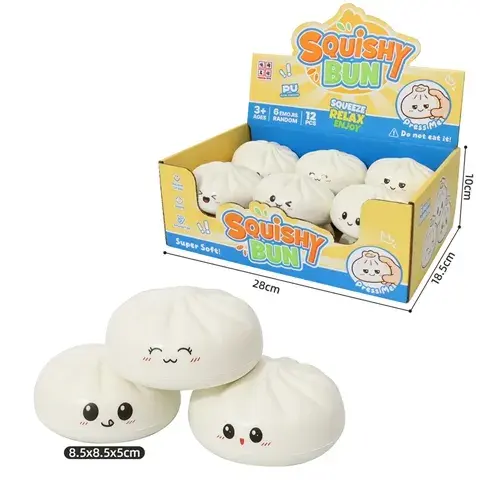
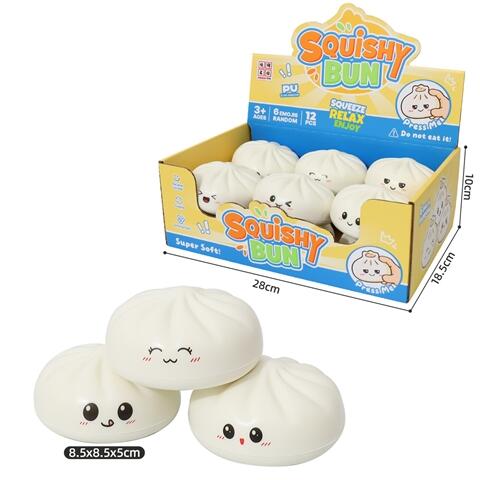
| White Mini Bun Squishy Display Box | Listed material: PU foam. Catalog MOQ: 864. Listed carton quantity: 288. Confirm the quoted sales unit, permitted assortment, and whether packaging changes alter the minimum. Do not infer the number of consumer toys inside a display from the carton figure. |
| 2026 Christmas Countdown Calendar Squeeze Toy Stress-Relief Blind Box | Listed material: TPR. Catalog MOQ: 500. Listed carton quantity: 100. Request the construction and material breakdown for the concealed assortment; the TPR field alone does not identify every component or filling. Confirm whether variants and packaging can be reordered under the same terms. |
What sample-test sequence should come before bulk approval?
Use a staged approval sequence: identify a representative golden sample, freeze its declaration, complete the agreed chemical tests, review report acceptance, and route the package through the authorized TIC provider before the buyer's bulk-release gate. Agree sample-source requirements with that provider first; a hand-finished showroom sample may not represent the intended production process.
Start with the complete assortment. Select samples by materially different foam, shell, filling, coating, pigment, fragrance, or other relevant construction—not simply by the most attractive character. Obtain the laboratory's coverage rationale where representative testing is proposed instead of testing every variant.
Freeze the golden-sample identity and declaration together. Record the model, revision, photographs, intended age, material references, sample date, and proposed production cohort. Retain a reference sample. Require written review before a supplier changes a formulation or component after testing.
Run buyer-defined functional checks alongside laboratory testing. For slow-rise foam, agree compression depth, hold time, recovery endpoint, and ambient conditions before comparing samples. For filled squishies, record seam condition, leakage, surface transfer, and appearance after the agreed handling sequence. These are commercial screening criteria, not compliance standards or predictors of return rates. Odor observations cannot replace quantitative VOC or formaldehyde testing.
Review the completed reports against the four acceptance conditions, resolve discrepancies, and obtain the TIC submission reference and review status. Release only the approval stage whose conditions have been met; a sample purchase can proceed while bulk approval remains on HOLD.
Before shipment, select production samples using the agreed inspection plan and compare them with the approved construction, assortment, labels, and packaging. Match report identity and coverage to the purchase order, including materials, colors, and production date or cohort. A golden-sample report does not automatically cover a later lot, but a new batch number alone does not automatically require a new test either. Assess relevant changes with the laboratory and authorized provider.
How should CPS TOYS' controls feed the supplier decision record?
Record a separate decision for each supplier and product revision, with the approval gate, supporting observations, unresolved conditions, responsible approver, and closure evidence. Use the same fields for every candidate so that a lower MOQ cannot obscure an unresolved construction or report mismatch.
Apply this record to CPS TOYS' squeezable and collectible lines by checking its material-sourcing and pre-shipment-testing statements against model-specific records. Treat supplier descriptions as claims to substantiate, not independent verification of DPV compliance. Catalog material labels and MOQ figures do not establish that these controls were applied to the offered goods.
The mapping below identifies the evidence to request, rather than asserting that CPS TOYS has already passed these checks. Squishy-specific VOC and formaldehyde testing and authorized TIC submission remain necessary; an existing report can support that process only if it meets all four acceptance conditions. Neither a complete traceability file nor a pre-shipment inspection guarantees Amazon acceptance or prevents later listing removal.
| Field | Details |
|---|---|
| CPS TOYS material-sourcing controls → questionnaire and sample identity | Ask CPS TOYS to substantiate its sourcing controls with component material specifications, incoming-material acceptance records, material-lot references, and a named substitution-approval owner. Link these to the signed construction and SAP-water-bead declarations and the golden sample. For a PU-foam squishy, cover the foam formulation and surface treatments; for a blind-box assortment, identify every concealed construction and filling. Lot linkage aids traceability but does not prove chemical performance or exclude undisclosed substitutions. |
| CPS TOYS pre-shipment testing → production validation | Request the model-specific inspection or test plan and completed records for the offered production lot, including sample selection, test dates, actual results, acceptance criteria, discrepancies, and corrective-action closure. Compare production samples with the approved materials, assortment, functional criteria, labels, and packaging. Check whether any claimed chemical testing actually matches the DPV method and limits; visual, leakage, or recovery-time checks do not replace VOC/formaldehyde testing. Refer material or construction changes to the laboratory and authorized TIC provider for a coverage or re-test decision. |
| CPS TOYS certification claims → baseline evidence, not DPV approval | If CPS TOYS cites EN71, ASTM F963/CPSIA, CPC, or BSCI documentation, request the actual documents and verify their issuer, scope, date, product identity, and applicability. Do not assume these credentials from a catalog listing. Applicable toy-safety reports support the baseline workstream; a CPC is a separate certificate, and a BSCI audit concerns social compliance rather than product chemical performance. None substitutes for the squishy-specific chemical evidence or authorized TIC submission. |
| Identity and revision | Record supplier legal name, actual production site, technical contact, destination marketplace, product/model references, listing identifier where assigned, intended age and use, assortment revision, sample ID, and purchase-order reference. |
| Specified targets versus observations | For each questionnaire item, retain the buyer's requirement, supplier's dated answer, observed sample condition, supporting document reference, and discrepancy. Keep agreed standards and editions separate from the supplier's general certificate list. Require the declaration to state the applicable standard version and planned production date, then record the actual production date or cohort when available. Keep specified chemical limits and functional targets separate from measured results. |
| Material and report acceptance | Record the signed construction declaration, SAP-water-bead status, material-lot linkage, report numbers, accreditation-scope check, method-and-limit check, authenticity and identity check, testing-completion date, and planned submission date. Identify the reviewer for each check. |
| Sample, QC, and commercial agreement | Attach the sample-selection rationale, golden-sample revision, laboratory results, functional-check observations, pre-shipment inspection plan, initial and reorder MOQs, variant minimums, packaging terms, and agreed production milestones. |
| Decision, scope, and authorization | GO: authorize only the named gate—sampling, bulk production, or shipment—when its conditions are satisfied. HOLD: identify the unresolved report, material, sample, or commercial issue; a missing required report or unresolved SAP-water-bead answer is not approval. REJECT: state the disqualifying construction or unmet requirement for this sourcing route, including confirmed SAP water beads in a squishy. Record the reason, conditions, responsible approver, and decision date. |
| Follow-up and closure | Assign each open action an owner and due date. Record revised declarations, replacement samples, re-test results where required, TIC submission reference, Amazon review status, and the evidence and date used to close the action. Reapprove affected gates after a relevant construction change. |